
The Hidden Hazards of Industrial Dust Generation
When bulk solids, powders, and granular materials are moved across a factory floor, friction and impact inevitably generate fine particulate matter. If the conveying system is open or poorly sealed, this dust escapes into the ambient air. The consequences of uncontrolled industrial dust are far-reaching and can severely impact a company’s bottom line and reputation.
Worker Health and Respiratory Safety
The primary concern regarding airborne dust is the health and safety of the workforce. Prolonged exposure to fine particulates — such as silica, flour, chemical powders, or metal dust — can lead to severe respiratory illnesses, including asthma, chronic obstructive pulmonary disease (COPD), and silicosis. Protecting employees from these hazards is not only a moral obligation but a legal one, heavily scrutinized by occupational health organizations worldwide.
The Threat of Combustible Dust Explosions
Perhaps the most catastrophic risk associated with industrial dust is the potential for combustible dust explosions. When fine particles of flammable materials — such as sugar, grain, plastics, or certain metals — accumulate in an enclosed space and are exposed to an ignition source, the resulting explosion can be devastating. According to OSHA, combustible dust incidents have caused numerous fatalities and massive property damage across industries.[1] Preventing dust accumulation is the first and most crucial step in mitigating explosion risks.
Key Fact: The NFPA recently consolidated several combustible dust standards into NFPA 660: Standard for Combustible Dusts (2024). Facilities handling fine powders of sugar, grain, plastics, or metals must demonstrate active dust containment measures to remain compliant.
Product Contamination and Quality Control
In highly regulated industries like pharmaceuticals and food processing, cross-contamination is a critical issue. If an open belt conveyor is transporting a specific ingredient, airborne dust can easily settle on nearby equipment or mix with other product lines. This compromises product purity, violates Good Manufacturing Practices (GMP), and can lead to costly product recalls. A dust-free facility ensures that materials remain isolated from the ambient environment from the point of entry to the final packaging stage.
The Limitations of Traditional Open Conveying Systems
For decades, open belt conveyors and bucket elevators were the standard for moving bulk materials. While these systems are effective for transporting large, heavy, or wet materials over long distances, they are fundamentally flawed when it comes to handling dry, fine powders in a clean environment.
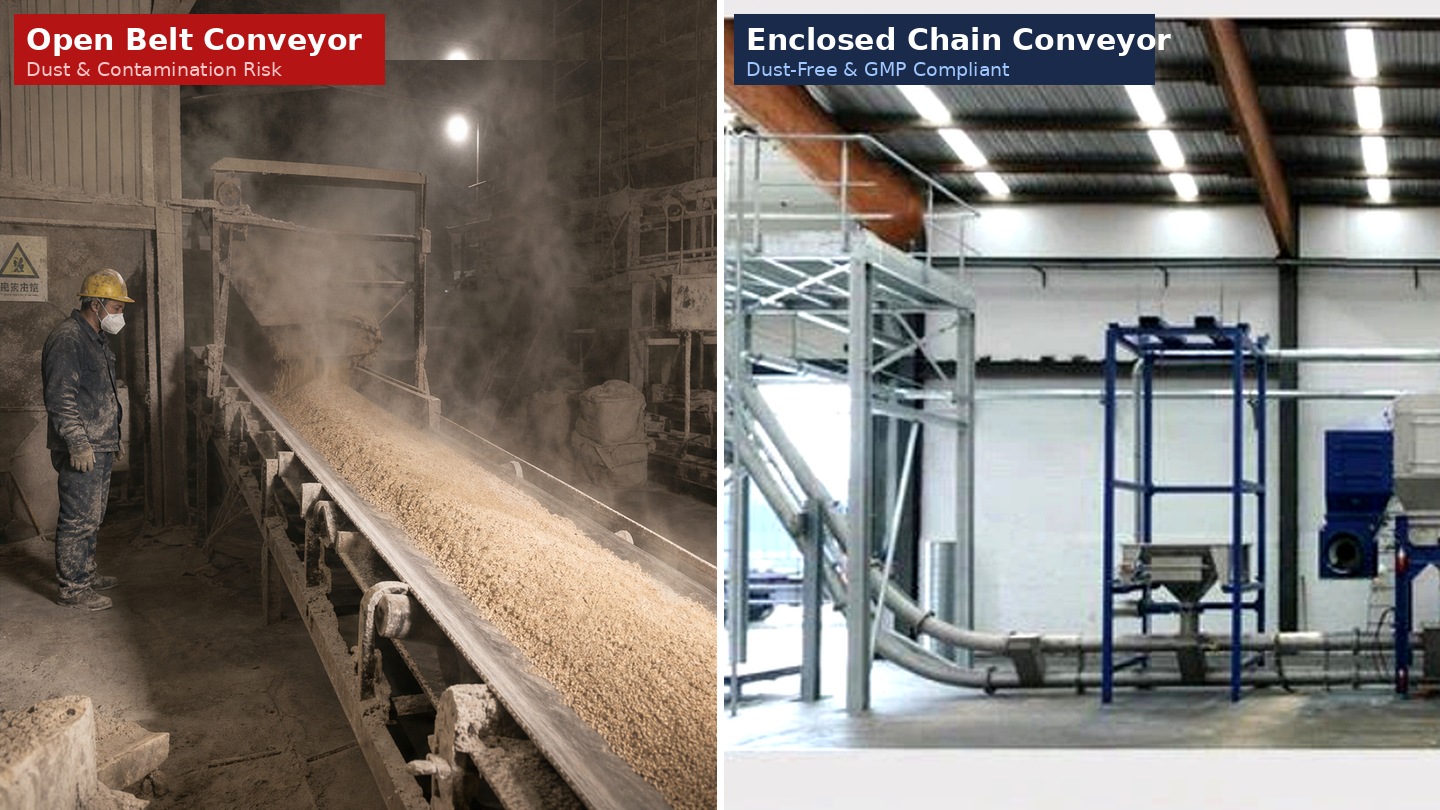
Open belt conveyors expose the material to the open air throughout the entire journey. Even with the addition of dust hoods or localized exhaust ventilation, it is nearly impossible to capture 100% of the fugitive dust, especially at transfer points where material is dropped from one belt to another. Bucket elevators, while partially enclosed, involve aggressive scooping and throwing actions that aerate the material, creating a highly concentrated dust cloud within the casing that can leak out through access doors or joints.
Furthermore, these traditional systems require extensive housekeeping. Facilities using open conveyors often employ dedicated cleaning crews to constantly sweep, vacuum, and wash down surfaces to prevent dust buildup, adding significant labor costs and downtime to the operation.
How Enclosed Chain Conveyors Ensure a Dust-Free Environment
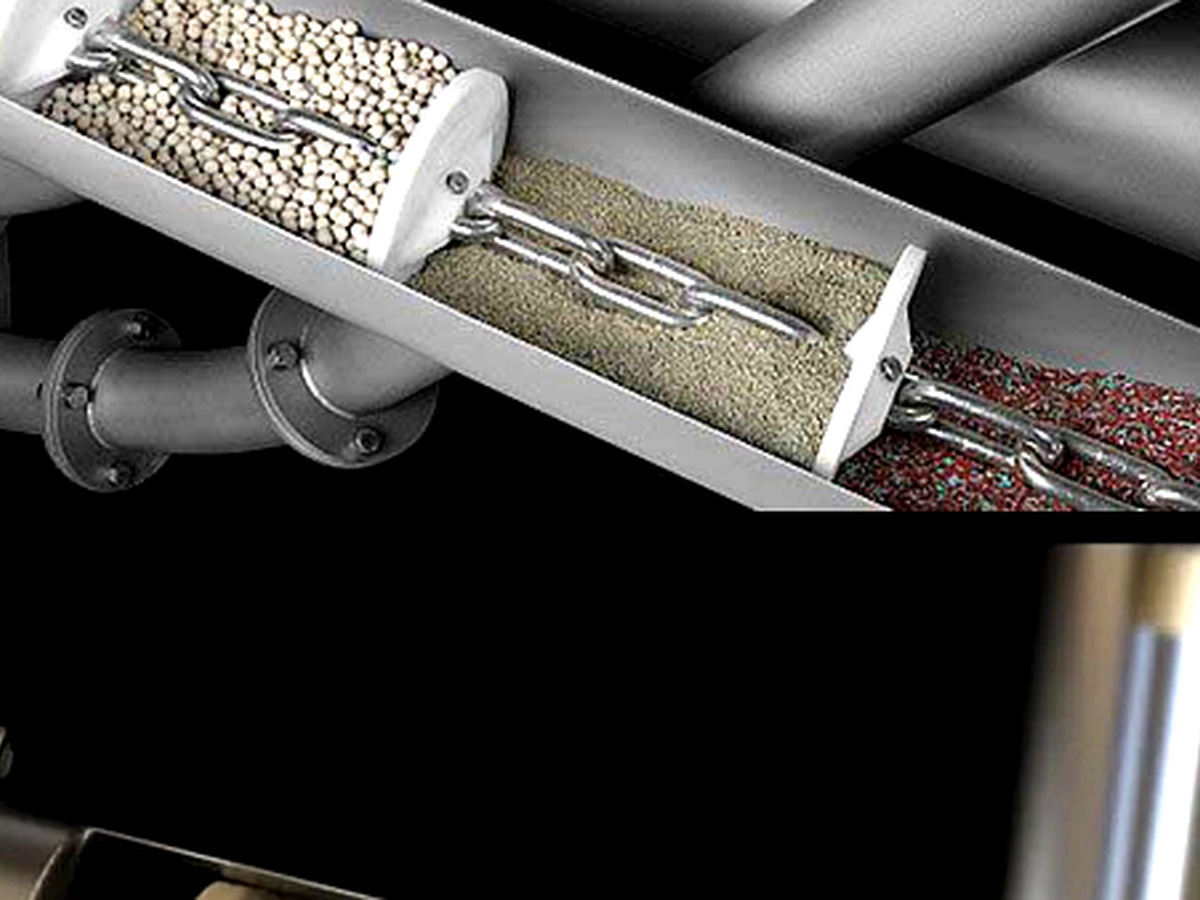
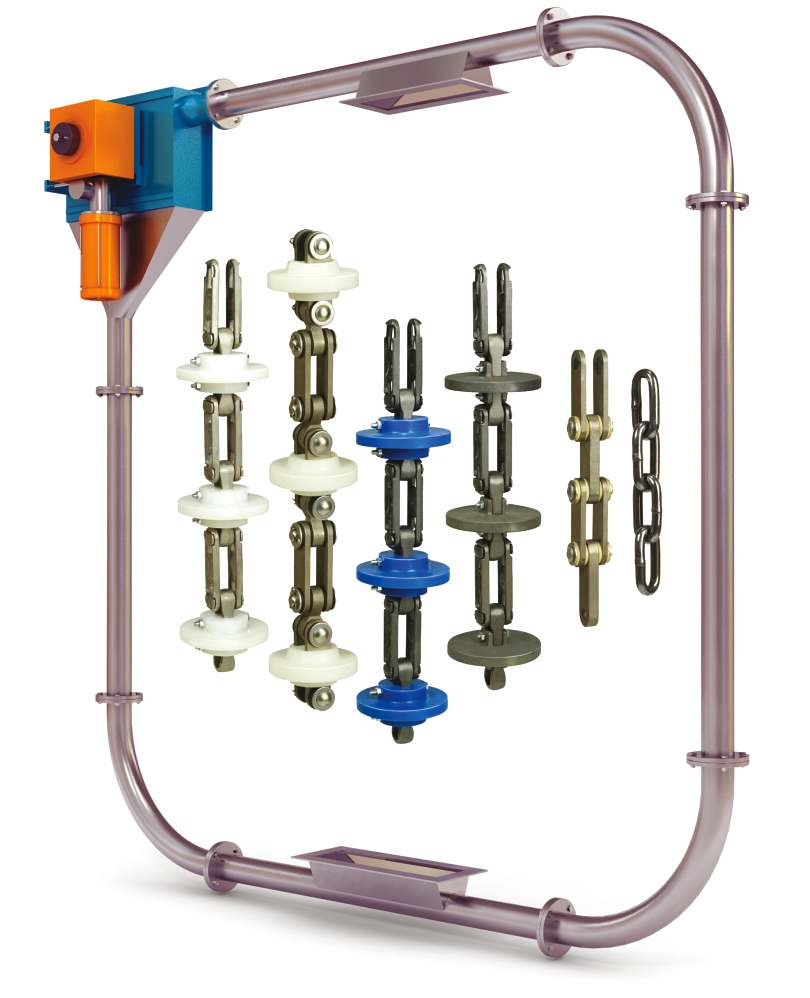
To truly eliminate dust generation during material transport, the system must be completely sealed. The tubular drag chain conveyor is engineered specifically for this purpose. This system consists of a continuous, fully sealed steel tube through which a high-strength chain — fitted with evenly spaced circular disc flights made of UHMWPE (ultra-high molecular weight polyethylene) — is pulled by a motor-driven sprocket at the drive head.
The Mechanism of Dust-Tight Transport
As the chain moves, the discs gently drag the bulk material through the enclosed pipeline. Because the material is trapped in the spaces between the discs and surrounded by the solid tube wall, it cannot escape into the atmosphere. The system operates on a principle of mass flow, meaning the material moves cohesively at a slow, steady speed, rather than being thrown or blown. This gentle handling significantly reduces material degradation and attrition, which in turn minimizes the creation of new dust particles during transit.
Environmental Control and Inert Gas Purging
Beyond simply keeping dust in, the dust-tight design of enclosed chain conveyors also keeps environmental contaminants out. This is vital for hygroscopic materials that absorb moisture from the air, or sensitive chemicals that might react with ambient humidity. For materials that are highly prone to oxidation or pose an extreme explosion risk, the enclosed nature of the tubular drag conveyor allows for active environmental control — plant engineers can purge the sealed tube with an inert gas such as nitrogen, creating an oxygen-free environment inside the conveyor.[2]
Key Advantages of Tubular Drag Chain Conveyors in Facility Design
When architects and engineers set out to design a modern, dust-free manufacturing plant, the choice of material handling equipment heavily influences the overall layout and operational efficiency. The enclosed chain conveyor offers several unique advantages that make it the premier choice for bulk material transport.
1. Multi-Directional Flexibility in a Single System
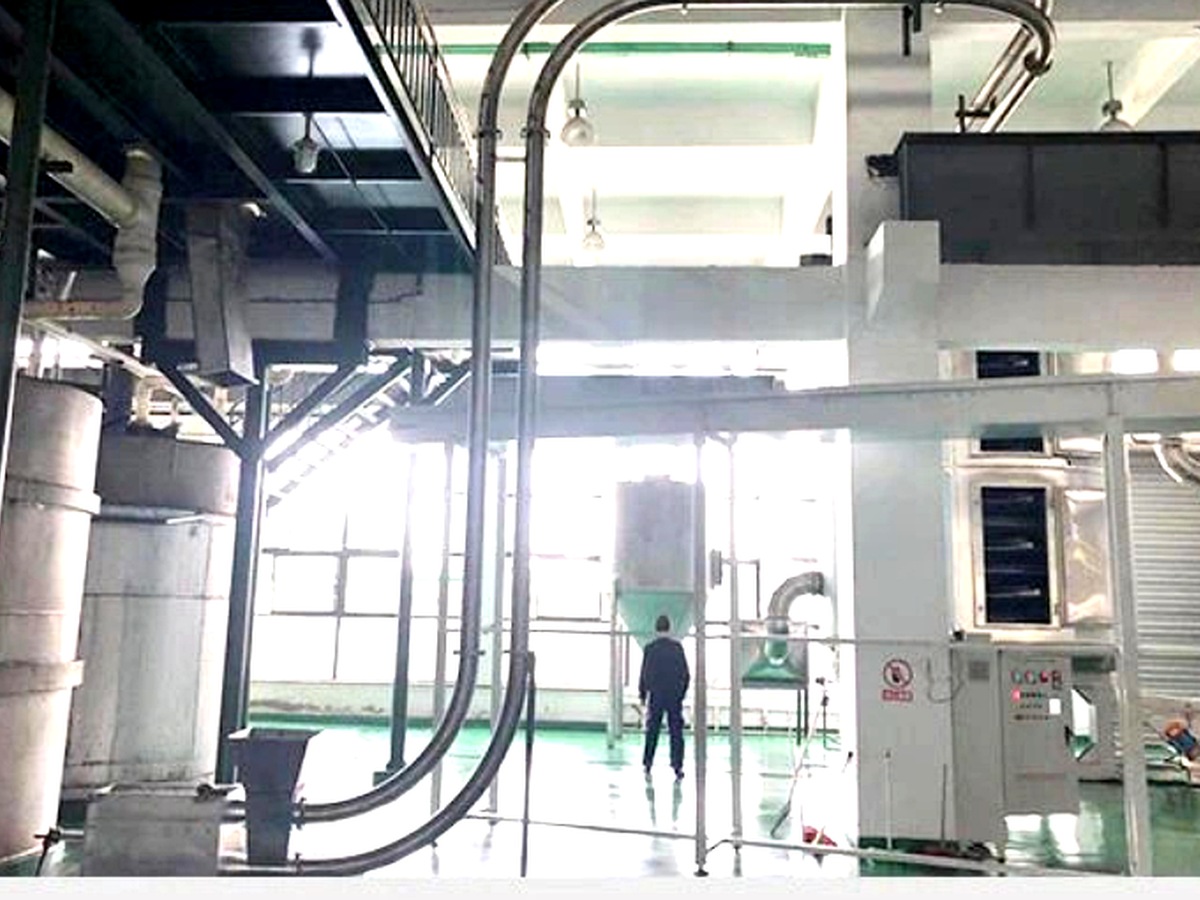
One of the most significant engineering challenges in facility design is routing conveyors around existing equipment, structural columns, and varying floor levels. Traditional conveyors typically operate in a straight line; changing direction requires transferring the material to a completely separate conveyor, which creates a drop point — a major source of dust. Enclosed chain conveyors utilize a continuous chain that navigates through precision-engineered large-radius bend sections. A single tubular drag conveyor can move material horizontally across the floor, turn 90 degrees to travel vertically up a wall, and then turn again to run across the upper level before discharging into a silo or mixer.
2. Energy Efficiency vs. Pneumatic Conveying
When facility managers look for enclosed conveying solutions, pneumatic conveying systems are often considered. Pneumatic systems use high-velocity air streams or vacuums to blow or suck materials through pipes. While they are enclosed and dust-free, they come with significant drawbacks. Pneumatic conveyors require massive amounts of electrical power to run the heavy-duty blowers and compressors needed to maintain air velocity — consuming up to 10 times more energy than mechanical cable or chain conveying systems.[3] Furthermore, the high-speed impact of particles against the pipe walls in a pneumatic system can severely damage fragile materials. In contrast, the low-speed, high-torque operation of an enclosed chain conveyor is highly energy-efficient and preserves the integrity of delicate bulk solids.
3. GMP Compliance and Easy Cleaning
For the pharmaceutical and food processing sectors, equipment must adhere to strict sanitary standards. Enclosed chain conveyors can be constructed entirely of 304 or 316 stainless steel with polished internal finishes to prevent material buildup. To facilitate rapid changeovers between different product batches without cross-contamination, these systems can be equipped with advanced Clean-In-Place (CIP) mechanisms — specialized cleaning discs, brushes, and wiper flights that run through the tube, followed by washing and sanitizing solutions, ensuring thorough cleaning without requiring complete disassembly.
Comparing Conveyor Technologies for Dust Control
The following table summarizes how different conveying technologies compare regarding dust control, material handling, and operational features to assist in equipment selection:
| Conveyor Type | Dust Containment | Material Degradation | Energy Efficiency | Multi-Direction | Best Suited For |
|---|---|---|---|---|---|
| Open Belt Conveyor | Very Poor | Low | High | Poor | Heavy ores, aggregates, long distances |
| Bucket Elevator | Moderate | Moderate | High | Vertical Only | Grain, fertilizers, non-fragile bulk |
| Pneumatic Conveyor | Excellent | High | Very Low | Excellent | Fine powders over long distances |
| Screw Auger | Good | High | Moderate | Poor | Semi-solids, waste, short distances |
| ⭐ Enclosed Chain Conveyor | Excellent | Very Low | High | Excellent | Fragile foods, pharma powders, chemicals |
Frequently Asked Questions
References
- Occupational Safety and Health Administration (OSHA). Combustible Dust: An Explosion Hazard. https://www.osha.gov/combustible-dust/standards
- MPE Chicago. Dust-tight Design and Environmental Control in Tubular Drag Conveyors. https://www.mpechicago.com/dust-tight-design-and-environmental-control-in-tubular-drag-conveyors/
- Cablevey Conveyors. How Tubular Drag Conveyors Compare to Other Conveyor Types. https://cablevey.com/how-tubular-drag-conveyors-compare-to-other-conveyor-types/