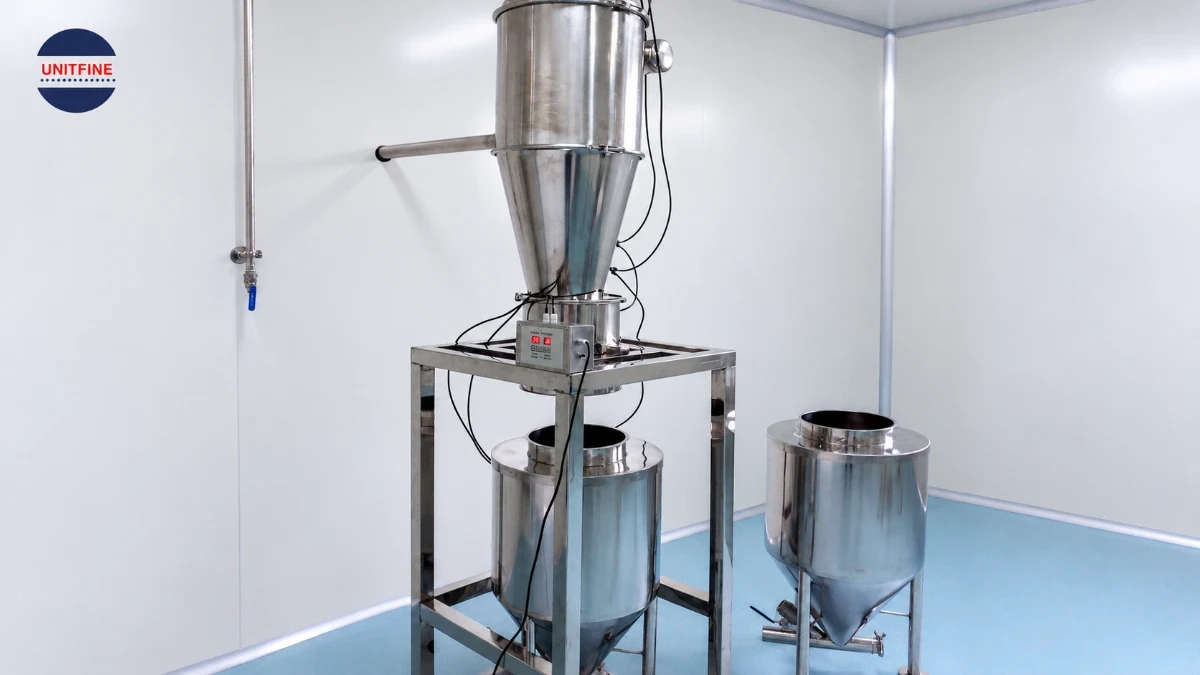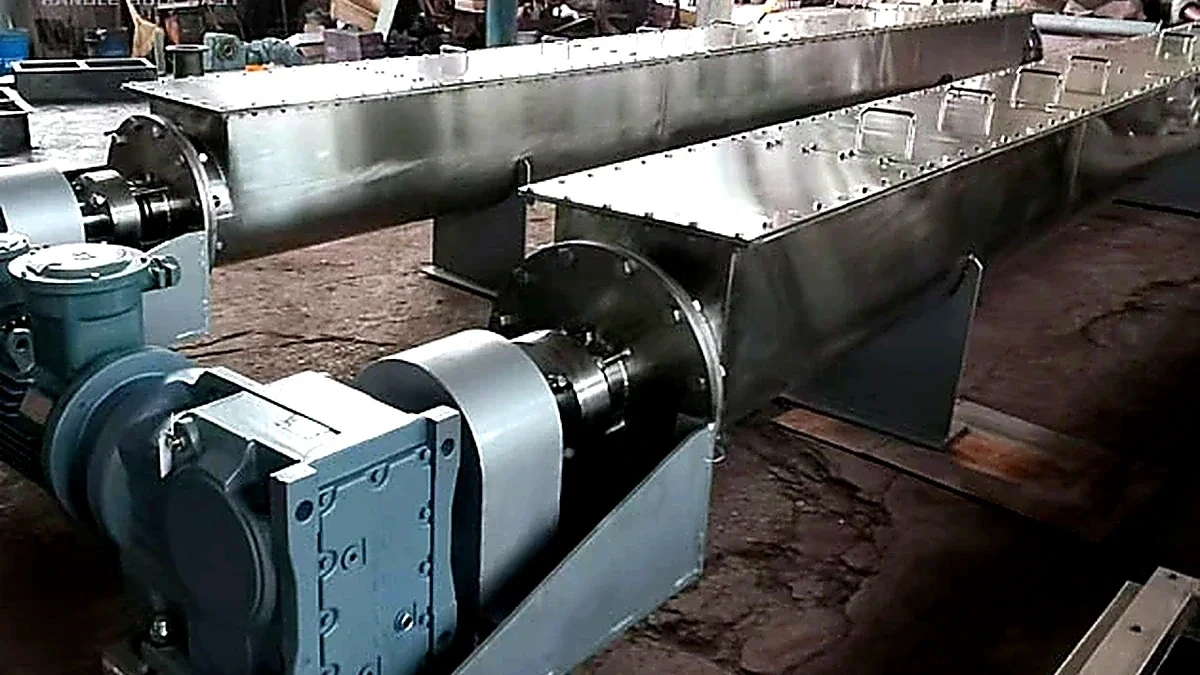
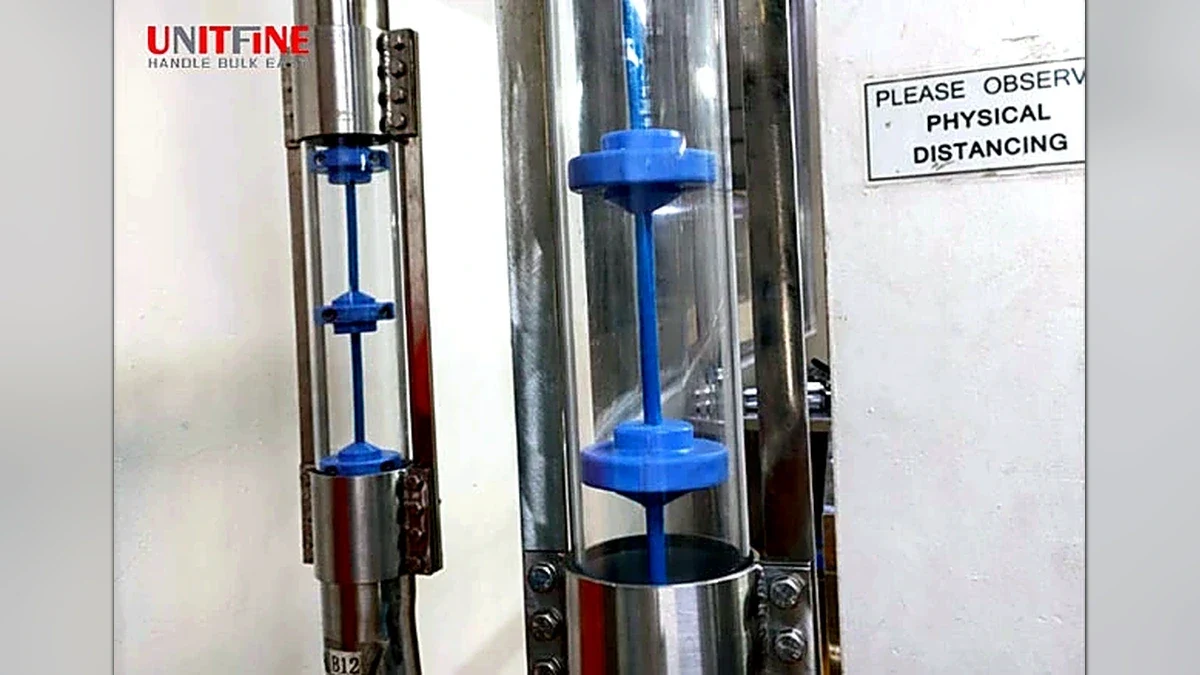


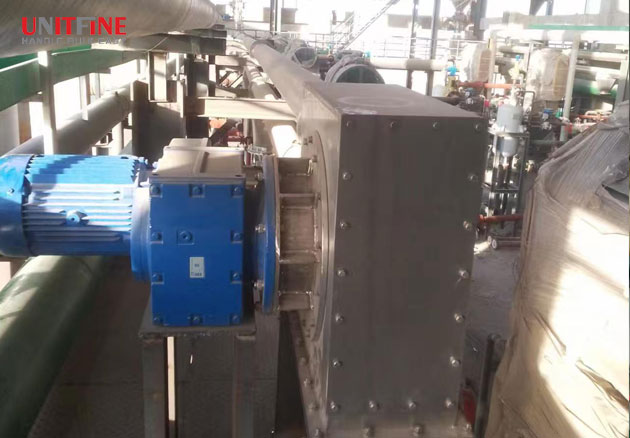

The UNITFINE tubular cable drag conveyor uses a cable fitted with discs to move suitable bulk solids through enclosed tubing. It can be evaluated for fragile or sensitive products, but material suitability, breakage, containment and cleaning requirements must be confirmed for the proposed configuration.
The modular routing design supports horizontal, vertical, and angled conveying paths. Typical applications include food ingredients, pharmaceutical materials, fine chemicals, plastics, pellets, flakes, and other bulk materials that require contained transfer.

UNITFINE Tubular Cable Drag Conveyor
A drive moves an endless cable-and-disc assembly through a tubular circuit. The inlet, discharge, turn components, tensioning and access points must match the approved layout. Enclosure can help limit exposure during transfer, but does not by itself establish zero leakage, product purity or sanitary compliance.

Features and Configuration Considerations
- Product handling: Assess breakage and fines using representative material at the proposed feed, speed, route and discharge conditions. Fragile products are not automatically damage-free.
- Enclosed transfer: Review inlet connections, outlets, seals, inspection covers and displaced-air handling against an agreed containment requirement.
- Route flexibility: Horizontal sections, lift and changes in direction require review as a complete circuit. Drive count and permitted route are configuration-specific.
- Contact materials and cleaning: Ask UNITFINE to confirm cable, discs, tubing, seals and contact construction for the material. Stainless-steel grade, dry-cleaning methods or CIP must not be assumed to be standard supplied features.
- Drive and energy: Confirm motor power, permitted speed range and duty cycle. Energy comparisons require the same material, route, throughput and measurement basis.
- Access and maintenance: Confirm interfaces, tensioning, inspection points and wear-part replacement access before finalizing the installation.
Tube Size and Capacity: Confirm the Selection Basis
Provide normal and peak mass flow, representative bulk density, feed pattern and a dimensioned route. Tube size alone does not establish usable capacity; loading, material behavior, lift, turns and discharge must be evaluated together.
Specification verification pending: The retained legacy image below contains capacity figures. Its current applicability and operating basis have not been verified. Do not use it as a guaranteed UNITFINE rating. This image requires confirmation before publication.


Applications: Evaluate the Actual Material
- Food ingredients: Coffee, cereals, seeds, spices and similar bulk solids may be evaluated. Confirm contact materials, allowable breakage, carryover and cleaning requirements.
- Pharmaceutical materials: Any proposed application needs configuration-specific suitability and cleaning or contamination-control evidence; this page makes no pharmaceutical compliance claim.
- Chemicals: Check compatibility, abrasivity, temperature and moisture. Where combustible dust or other hazards exist, obtain a competent installation-specific assessment; enclosure is not explosion protection.
- Plastics and other solids: Confirm feeding, particle condition, wear and discharge for the actual pellets, flakes or regrind.
Other transfer methods may also be relevant: compare tubular chain conveying, vacuum conveying and screw conveying on the same material, route and acceptance criteria.

Frequently Asked Questions
What Is the Maximum Operating Speed of a Cable Drag Conveyor?
Ask UNITFINE to confirm the permitted speed for the proposed cable, discs, drive, route and material. A general industry maximum is not a verified rating for this configuration. Increasing speed can change wear, loading, breakage and discharge behavior.
Should I Choose a Larger Conveyor for Certain Types of Materials?
Sticky, cohesive or abrasive material needs a suitability assessment, not just a larger tube. Review feeding, adhesion, residue, wear and conveying components, and test representative material where necessary. Tube size and speed must be selected together for the proposed duty.
When Is It Suitable to Use Smaller Conveyor Sizes and Faster Cable Speeds?
Free-flowing material may allow different size and speed combinations, but the choice still depends on required flow, effective loading, route, permitted product damage and drive limits. Do not assume a smaller, faster conveyor will meet the duty without confirmation.
How Can Future Capacity Requirements Be Addressed?
Include future normal and peak flow in the initial specification. Ask which drive, cable, tubing, feed and discharge components would need modification. A later speed increase is not a guaranteed capacity upgrade.
How Do Surge Hoppers Affect the Choice of Conveyor Size?
A suitably sized hopper and controlled feeding arrangement may reduce short-term inlet surges. Confirm buffer volume, metering, level control and upstream/downstream coordination. A hopper alone does not establish that a smaller conveyor will be suitable.
Can I Adjust the Speed of the Conveyor After Installation?
Only within the limits confirmed for the supplied drive and conveying assembly. Consult UNITFINE before adding a variable-frequency drive, changing gearing or changing the operating range; control changes do not remove mechanical or material limits.
Contact UNITFINE for a Conveying Review
Send your material name, particle distribution, bulk density, moisture, normal and peak output, route drawing with lift and turns, inlet/outlet locations, cleaning requirements, power supply and product-quality acceptance limits. Representative samples can help identify questions that need testing before quotation.