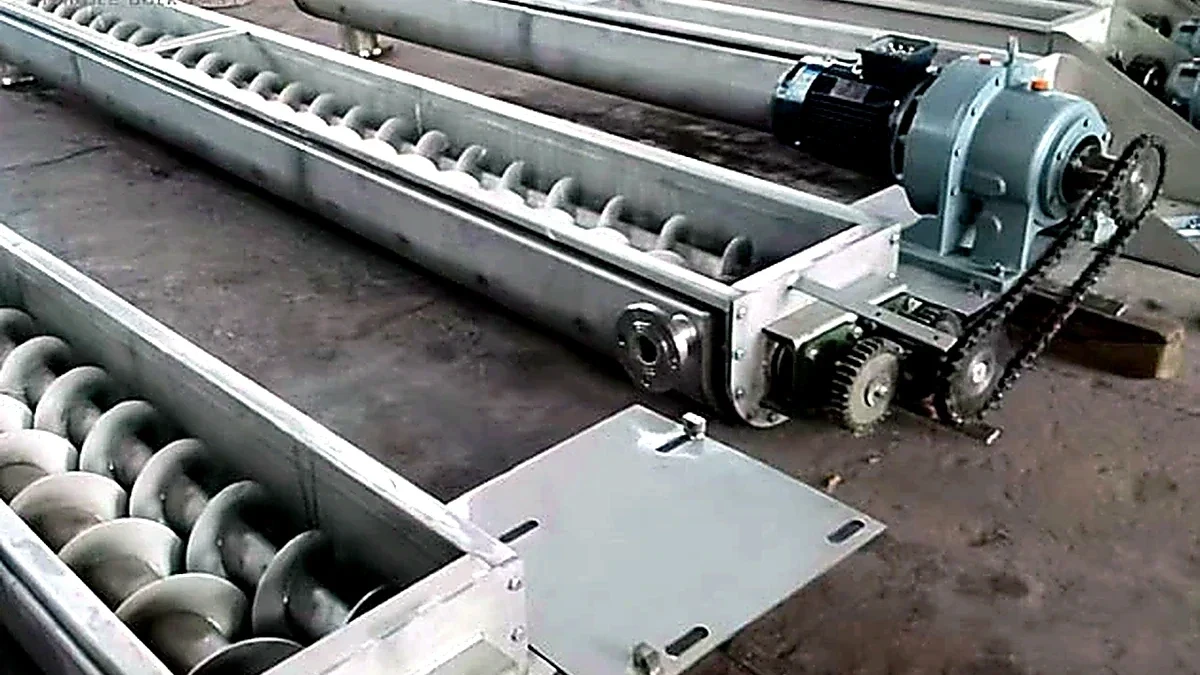
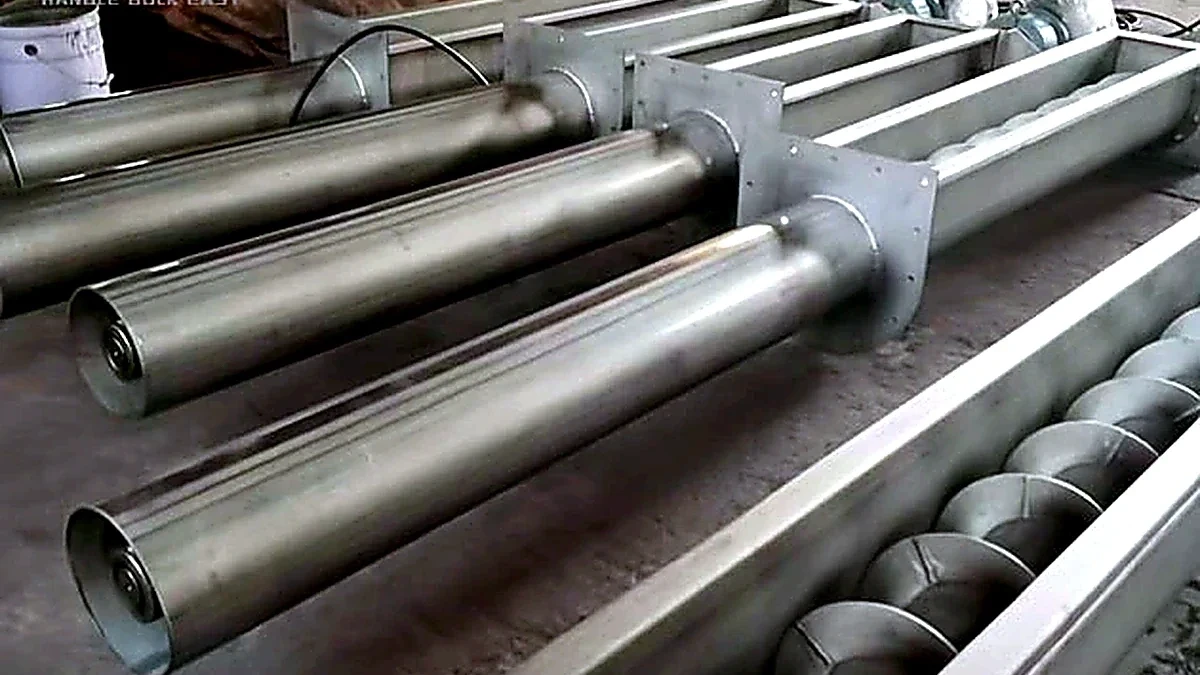
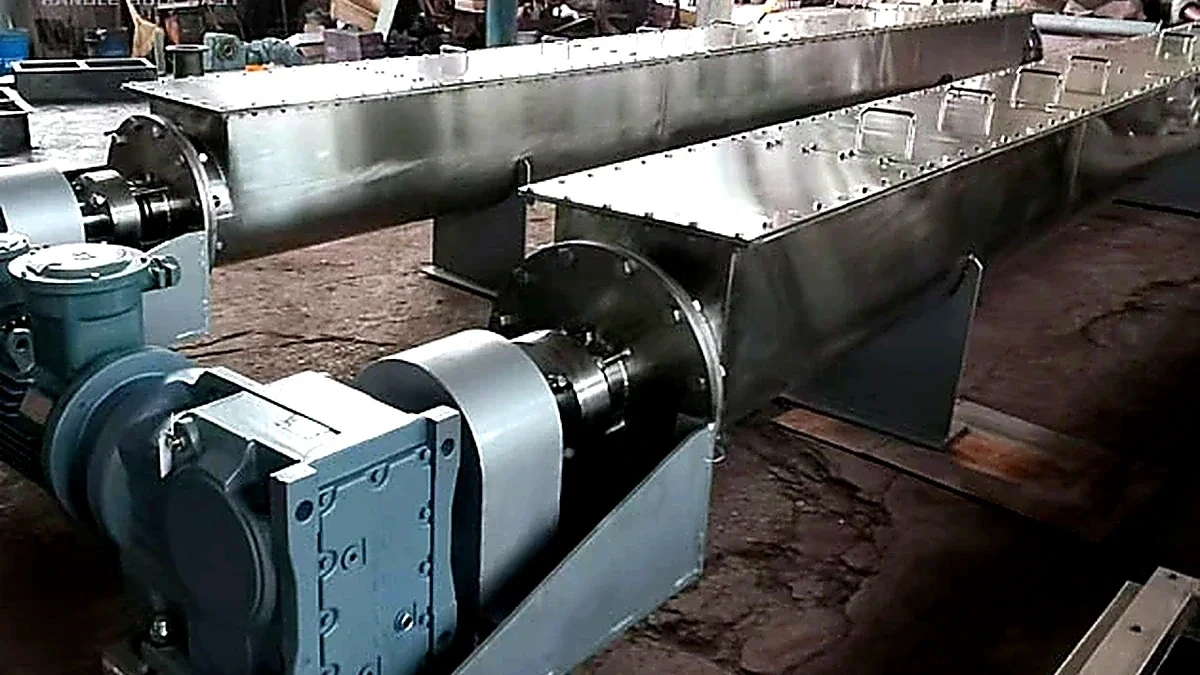
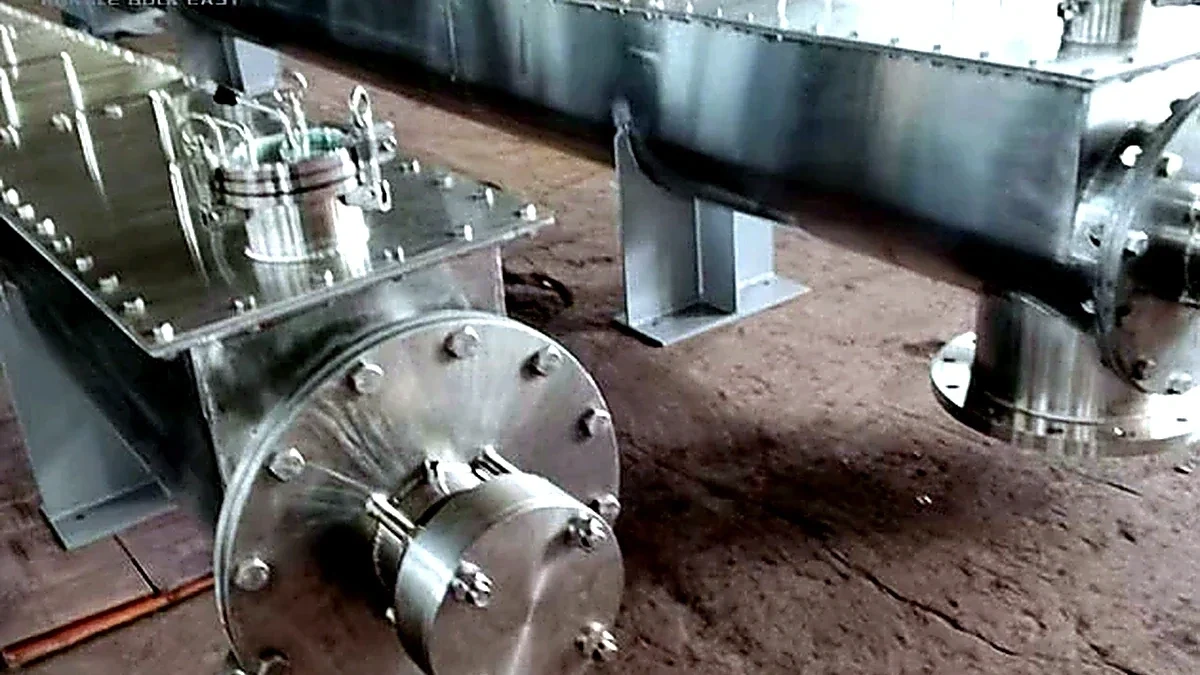
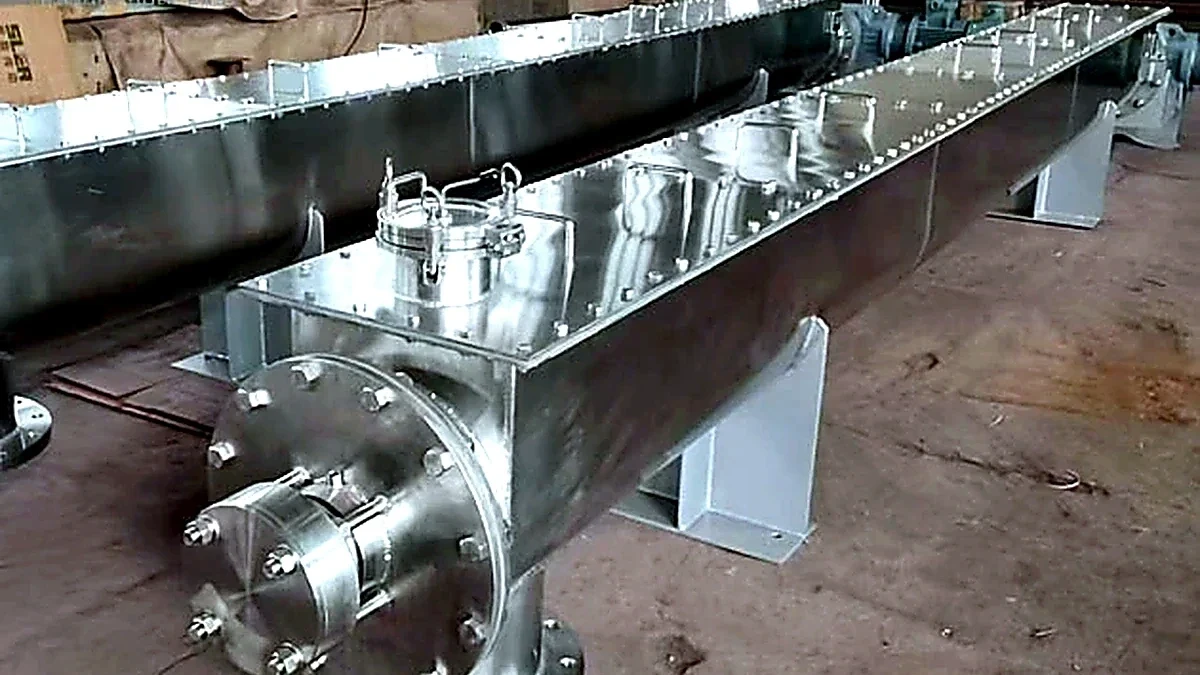

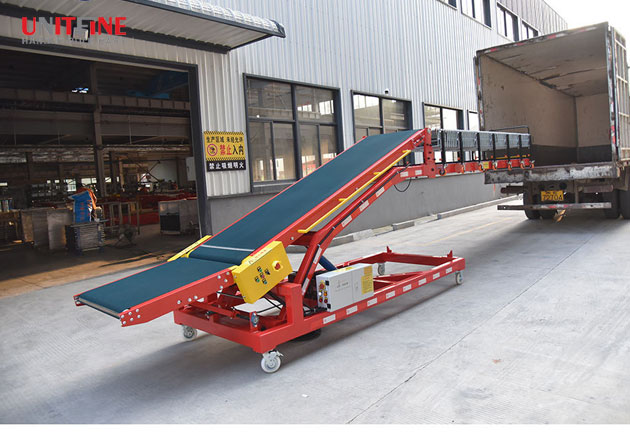
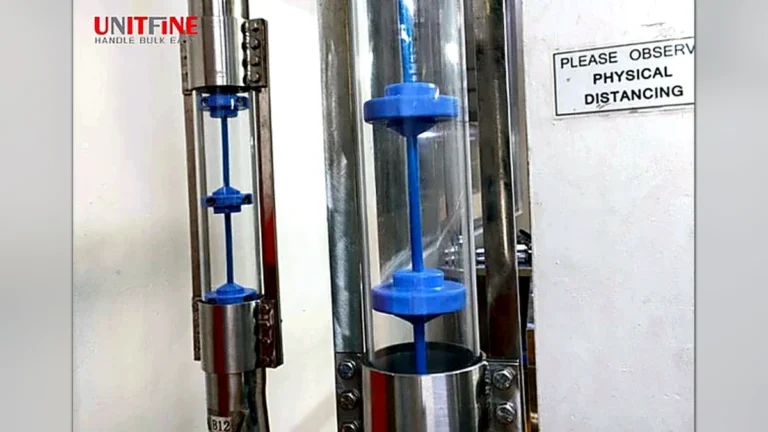
A U type screw conveyor, also called a U trough screw conveyor, is a candidate for moving bulk solids along a defined route when a screw-and-trough arrangement suits the material and the receiving process. The UNITFINE product uses a U-shaped casing, with the inlet, outlet and supporting components selected for the proposed installation. Start with the actual conveying duty before choosing a nominal size.

Quick answer: when should you consider a U trough conveyor?
Consider a U trough screw conveyor when a mechanical transfer route fits your layout and the material can tolerate the proposed screw action. Confirm feed conditions, required delivery, incline and maintenance access together. A catalog capacity, industry application list or equipment photograph cannot establish the performance of an unreviewed installation.
How does the U type screw conveyor work?
The drive rotates the screw inside the trough to advance material toward the discharge. A complete specification must also define where material enters, how it is supplied and how the next process receives it. Multiple connection positions are configuration choices; they do not mean that every inlet and outlet can operate in any combination without review.
Transfer duty and dosing duty are different questions
Tell UNITFINE whether the upstream machine provides a controlled feed or whether a hopper can flood the inlet. Also state whether the process requires transport alone, a controlled delivery rate or a particular weighing accuracy. Do not substitute a variable-speed conveyor for a verified feeder or dosing system solely because its speed can change.
Define what the quotation includes
Request a layout identifying the trough sections, screw, drive, support arrangement, inlet and discharge interfaces, covers and controls included in the supply. Ask which site supports, upstream devices and receiving equipment are outside the quotation. Confirm any intermediate bearing arrangement instead of inferring its presence or quantity from a general component list.
How should capacity and incline be specified?
Specify a required delivery under stated material and operating conditions. The original listing includes reference size and speed/capacity information, but it does not establish the output for your material. Ask for a configuration-specific calculation or trial basis rather than selecting the largest catalog number.
| Selection input | What to provide | What must be confirmed |
|---|---|---|
| Required delivery | Normal and peak mass rate, operating schedule and permissible variation. | The agreed duty at the receiving process, including interruptions. |
| Material basis | Representative bulk density, particle distribution, moisture and flow behavior. | Which density and condition are used for volume-to-mass conversion. |
| Route | Conveying length, lift, actual inclination and connection positions. | Geometry, speed, drive and restart conditions for this layout. |
| Published references | Request the project-specific inclination and loading basis for the offered configuration. | Material, speed, loading and inclination must be reviewed together; catalog references do not guarantee project output. |
For unit conversion, mass flow equals volume flow multiplied by the bulk density expressed in compatible units. This relationship converts units; it does not predict the volume flow that the conveyor will achieve. A change in density or handling condition can change the delivery and loading assumptions, so retain both the mass-rate requirement and its material basis in the enquiry.
Incline requires a separate review
Do not apply a horizontal reference rate unchanged to an inclined route. Material fallback, loading and restart behavior need consideration alongside the selected geometry and drive. The KWS screw-conveyor engineering guide discusses incline-related design considerations; its correction factors are not UNITFINE performance data. Do not compensate by increasing speed without an approved design review.
Request the current model designation, drawing revision, dimensions and matching speed/capacity basis for the offered assembly. Use the supplier-confirmed specification for the purchase rather than resolving inconsistent catalog labels by assumption.

Which materials need closer evaluation?
The product is offered for powder, granule and bulk-material transfer. That description is a starting point for enquiry, not acceptance of every material in those categories. Send a representative description of the feed as supplied to the inlet, including changes caused by storage or upstream processing.
- For cohesive or moisture-sensitive material, describe bridging, buildup and changes in flow during storage.
- For abrasive or corrosive material, identify the relevant properties so wear and contact requirements can be reviewed.
- For fragile granules, specify the acceptable fines or breakage criterion and how it will be measured.
- For food or pharmaceutical ingredients, state carryover limits, contact requirements and cleaning documentation needed.
- For hazardous dust or reactive material, provide the available hazard data and site requirements; no protection rating is implied by the product name.
Cleaning and maintenance: review the supplied assembly
Cleaning access depends on the actual covers, interfaces, support and bearing arrangement. A U-shaped trough does not prove tool-free access, complete emptying or validated sanitation. Ask to review the proposed access points and the method for reaching areas where material may remain.
Agree maintenance access before installation
Leave the space required by the supplied maintenance instructions for inspection and component removal. Discuss seals, bearing service, wear inspection and spare-part identification with the supplier. Follow the equipment-specific isolation and guarding procedure before any access; this page is not a maintenance procedure and does not authorize operating with covers removed.

U trough, tubular screw, chain or vacuum conveying?
Compare alternatives against the same feed, route and receiving requirement. The preferred option depends on the whole duty, not a universal ranking of conveying technologies.
| Option | Question to investigate | Comparison boundary |
|---|---|---|
| U trough screw | Does the proposed mechanical layout provide suitable transfer and required access? | Confirm contact, wear, retained material and incline performance for the supplied design. |
| Other screw arrangements | Would a different casing, inlet or installation arrangement better fit the route? | Review the separate UNITFINE screw conveyor range against the same duty, and confirm the casing, feed arrangement and specification of each offered assembly. |
| Tube chain | Would the proposed route and discharge arrangement suit a tube drag chain conveyor? | Confirm material response, residual material and cleaning requirements for that system. |
| Vacuum transfer | Does a vacuum conveying system suit the pickup and receiving duty? | Compare the complete system and cycle, including utilities and the receiving process. |
Prepare a quotation and acceptance basis
A useful enquiry defines the product that must arrive at the receiving process, the conditions under which it is transferred and the evidence needed for acceptance. A photograph and a nominal throughput alone leave important design decisions unresolved. The following list is a starting point; agree the final project data and acceptance criteria with the supplier.
- Material data: description, representative bulk density, particle distribution, moisture, flow, wear and hazard information.
- Required delivery: normal and peak rate, operating hours and any dosing tolerance or process interruption.
- Route and lift: length, elevations, incline, available space and supporting layout.
- Inlet and outlet: upstream feed arrangement, connection sizes to be agreed, discharge points and receiving equipment.
- Utilities: power supply and site control/interface requirements.
- Cleaning and hazards: changeover, carryover limits, access constraints, relevant documentation and site safety requirements.
Where a trial is needed, agree the representative feed, the route or test arrangement, delivery measurement and product-quality criteria beforehand. Identify what the trial does and does not represent. Confirm the final acceptance basis in the quotation rather than treating an illustrative photo or a generic catalog rate as test evidence.

Frequently asked questions
What is a U type screw conveyor?
It is a mechanical conveyor that moves bulk material with a rotating screw inside a U-shaped trough. Specify the material, feed arrangement, route and required delivery before selecting the screw and drive. The trough shape alone does not establish capacity or suitability.
How much material can it convey?
Capacity depends on the selected geometry, speed, loading, material behavior and installation. State the required mass rate and representative bulk density, then ask UNITFINE to confirm the design basis. Published volume-rate figures are not a guaranteed mass rate for every powder.
Can it work at an incline?
An inclined installation requires a duty-specific review. Confirm the angle, lift, material behavior, restart conditions and drive selection for the supplied configuration. Do not assume that a horizontal reference duty will provide unchanged output on an incline.
Is it the same as a screw feeder?
Not necessarily. A conveyor transfers material under its intended inlet conditions; a feeder must control withdrawal from its upstream supply. A flooded hopper inlet changes the design task. Specify whether controlled dosing is required rather than assuming that a conveyor will meter accurately.
Can it handle food or pharmaceutical ingredients?
These are potential applications, not automatic suitability approvals. Review ingredient properties, contact surfaces, seals, cleaning method, carryover limits and documentation for the proposed assembly. Industry labels alone do not establish hygienic design, certification or regulatory compliance.
Can I remove covers to clean it?
Use only the supplied maintenance and isolation procedure. Access for cleaning depends on the actual cover, bearing, seal and drive arrangement. Never treat this page or a photograph of an open trough as an operating instruction or evidence of validated cleanability.
Discuss your U type screw conveyor duty
Send your material data, required delivery and route drawing to UNITFINE for a configuration review. Request confirmation of the supplied assembly, capacity basis and acceptance requirements before ordering. Explore the conveying equipment range if the route requires a different transfer method.