

The UNITFINE UZSF Series linear vibrating screen is intended for screening duties where material moves along a rectangular screening surface toward the discharge. To evaluate a proposal, define the feed, required fractions and receiving arrangement together. This guide explains how to prepare a material review, compare configuration choices and establish the basis for a useful quotation.
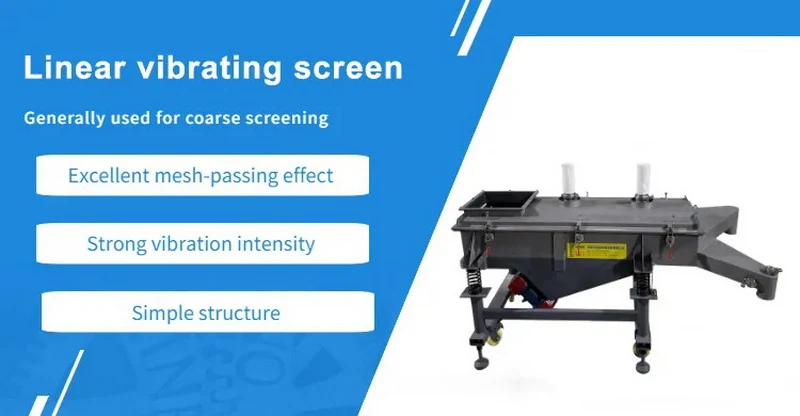
Quick answer: is a linear vibrating screen right for your duty?
Consider a linear screen when a straight-through screening route fits the process and a material trial can demonstrate the required separation. Specify the feed condition, aperture for each deck, required delivery and acceptable misplaced material. Ask UNITFINE to confirm the assembly and trial basis; the words linear screen do not establish a universal capacity, moisture limit or separation efficiency.
How does the UZSF linear screen work?
The existing UZSF description identifies a dual-vibration-motor arrangement that drives the screening body and advances material along the deck. Particles that pass the selected openings enter the corresponding undersize stream, while retained material travels toward its discharge. The supplied deck arrangement determines the actual product streams and interfaces.
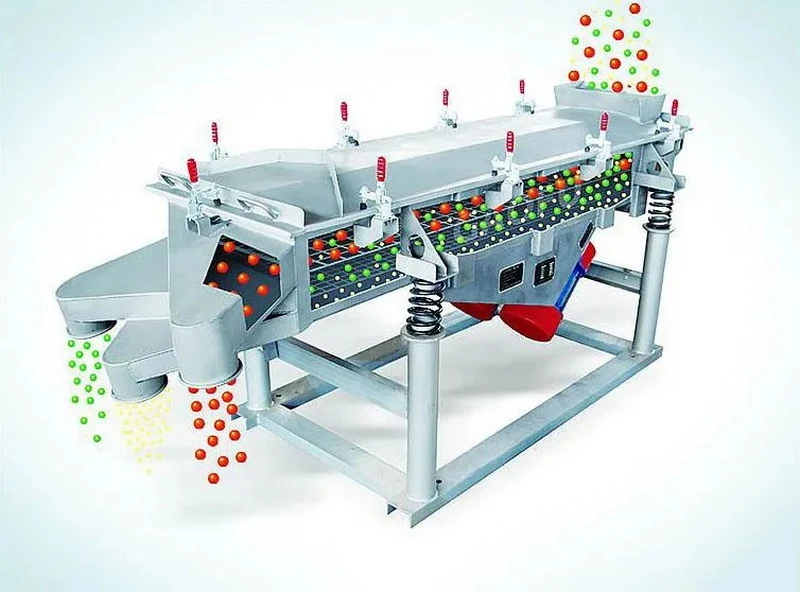
The retained operating illustration is a conceptual view of material travel and separation. Confirm the actual motor arrangement, screen supports, deck count and outlet routing on the offered drawing. It does not establish particle trajectories, capacity or separation results for your material.
Specify the separation task before selecting a size
Distinguish a protective screening duty from production grading. For protective screening, explain what oversize or foreign material you want to remove. For grading, define every required fraction and the permissible amount of material outside each fraction. A request for a mesh number without a product specification leaves the acceptance target unclear.
For UZSF selection, confirm the proposed drive, screen decks and outlet arrangement against your material and required fractions. Use the offered configuration and representative trial results to assess the duty.
Define the feed, aperture and required output
Provide representative material in the condition in which it reaches the inlet. Report particle distribution, bulk density, moisture, stickiness and changes during storage. Include fragile pieces, agglomerates or abrasive constituents where relevant. For powders with a hazard assessment, send the available data and site requirements before the equipment scope is finalized.
| Enquiry input | What to provide | What to confirm |
|---|---|---|
| Feed condition | Material description, representative samples, particle distribution, bulk density and moisture. | Which sample and condition represent the production duty. |
| Required fractions | Target size ranges, acceptable oversize/undersize contamination and the receiving process. | Aperture and screen construction for each required cut. |
| Feed and delivery rates | Normal and peak inlet rate, feed pattern, operating schedule and required product output. | Trial or calculation basis, including the rate at which product quality is maintained. |
| Decks and outlets | Number of fractions and where each stream must go. | Screen stages, outlet arrangement and connection dimensions on the offered drawing. |
| Interfaces and utilities | Inlet height/width, upstream feeder, downstream equipment, available power and space. | Supply boundary, supports, clearances and control interfaces. |
Aperture, mesh and screen construction
Ask for the opening specification and the screen medium used in the quotation. A mesh count alone does not fully specify a woven screen; the opening also depends on the wire arrangement and diameter. Keep the required product fraction separate from the screen-opening description, and agree how each will be measured. Do not treat a published mesh range as evidence that every UZSF configuration can make the same fine separation.
Capacity and efficiency require an agreed test basis
State both the feed rate and the accepted product rate. A machine can convey material through its outlets without meeting the required fraction quality. Agree the sampling points, test method and definition of efficiency before comparing figures. A catalog output or an unqualified efficiency percentage is not a guarantee for a different feed condition or screen arrangement.
For a trial, record the material condition, screen openings, deck configuration and steady operating rate. Compare feed and separated streams using the agreed method, including the disposition of off-specification material. Where the production line has surges or interruptions, explain which of those conditions the trial represents and which need additional assessment.
Read the model specification as a matched configuration
The existing listing includes model references such as UZSF-520, UZSF-1020 and UZSF-1235. Use these names to identify the proposed unit, then request a current specification and drawing revision. A model name or screen-surface dimension alone does not establish motor power, deck count, permitted adjustment range or output for your material.
| Specification field | Purchase-stage explanation |
|---|---|
| Screen surface and overall dimensions | Confirm active screening area separately from overall installation and service dimensions. |
| Drive, inclination and amplitude | Request the values and permitted adjustments for the actual assembly. Do not combine settings from unrelated catalog rows. |
| Deck count and fraction arrangement | Confirm the number of required cuts and the path of each outlet. Ask which arrangement the supplier recommends for the duty. |
| Contact materials and screen medium | Identify offered contact parts, screen construction and relevant supporting documents. Appearance does not verify a material grade. |
| Special options | List the covers, inspection access, dust interfaces, motor/control provisions and wear protection included in the quotation. Options are not assumed to be standard. |
Resolve inconsistent ranges with UNITFINE before using them as purchase criteria. The appropriate feed-size, moisture and operating limits belong to the offered configuration and material review. For equipment comparisons, retain the same separation target instead of selecting whichever catalog shows the largest number.
Visible details, access and installation
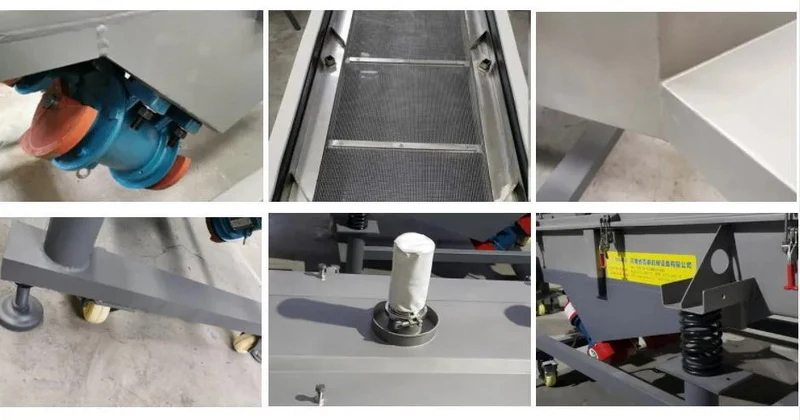
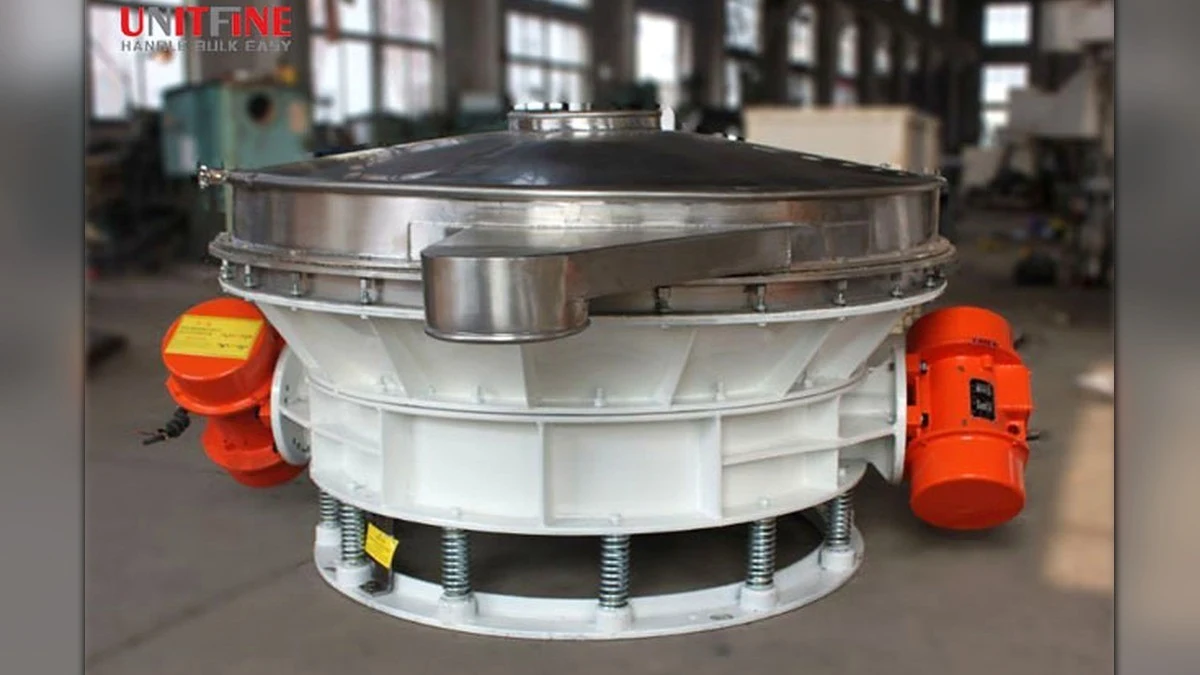
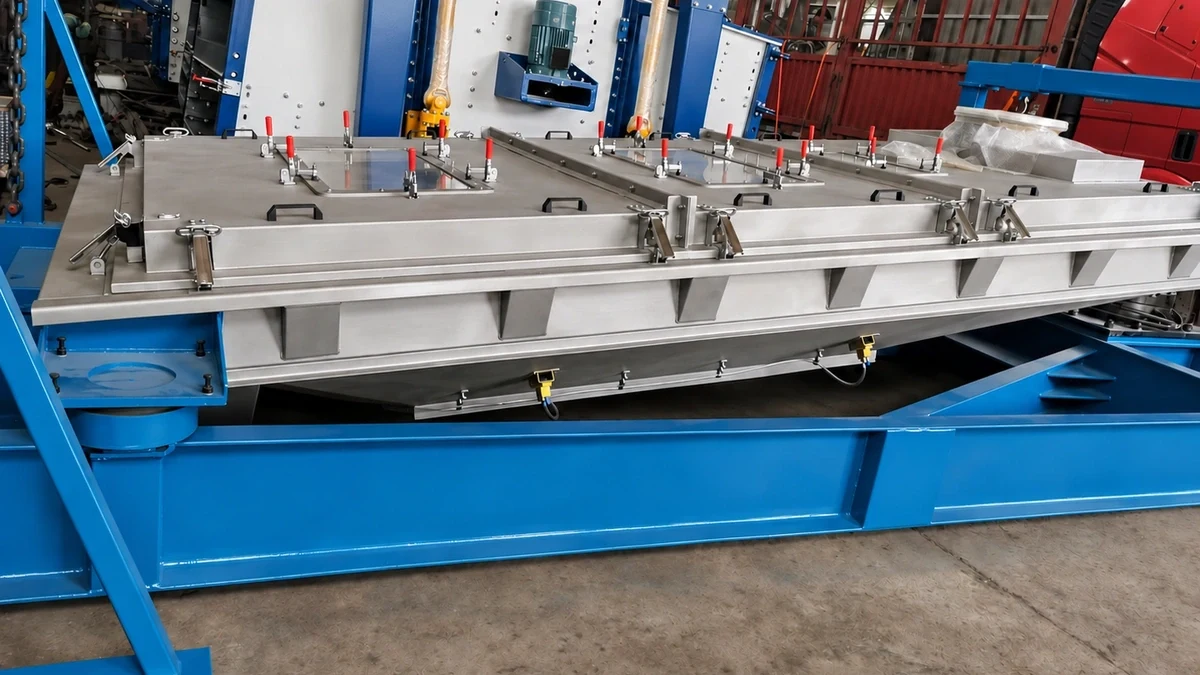
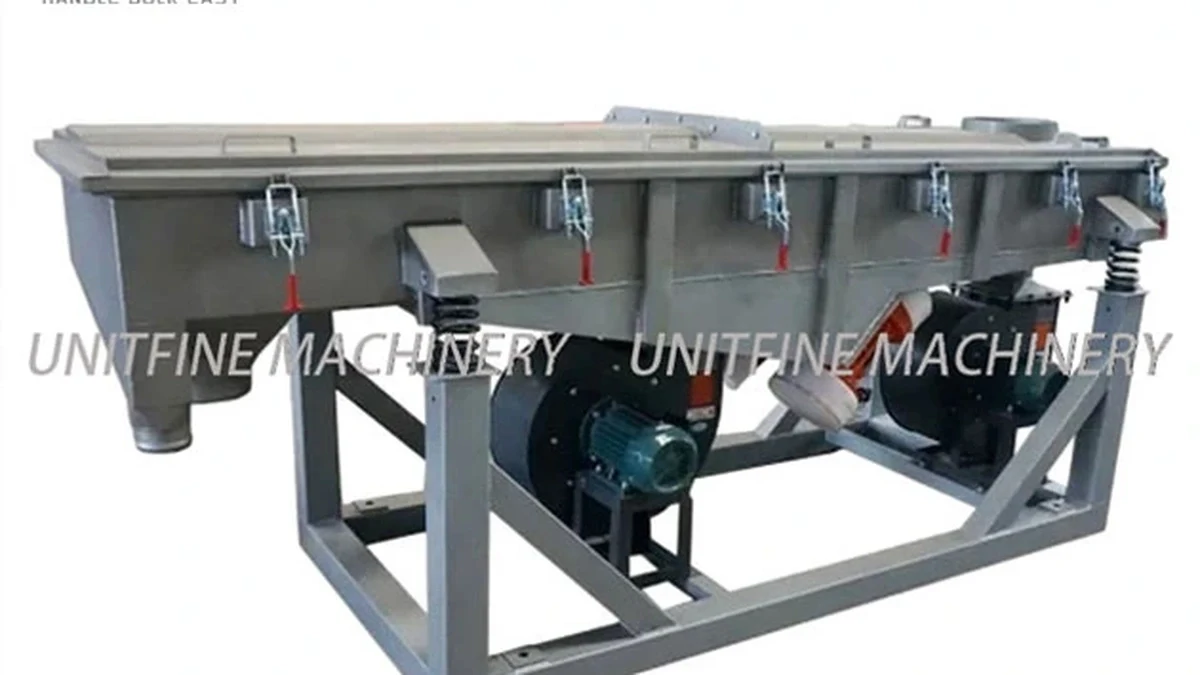
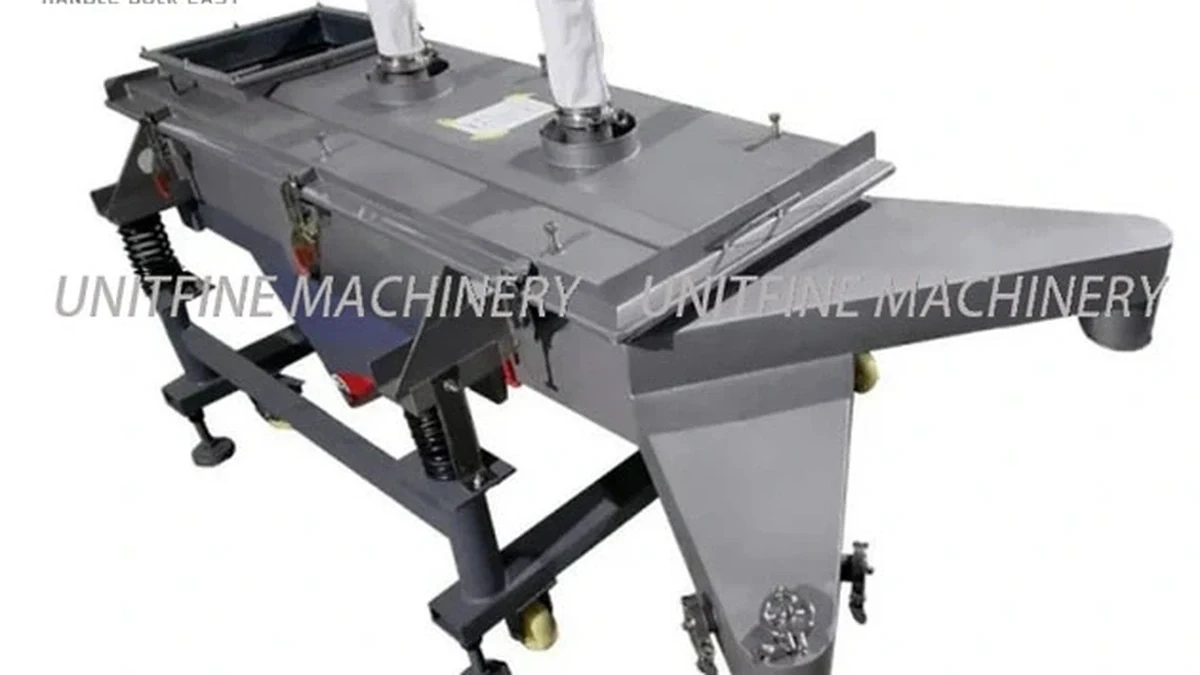
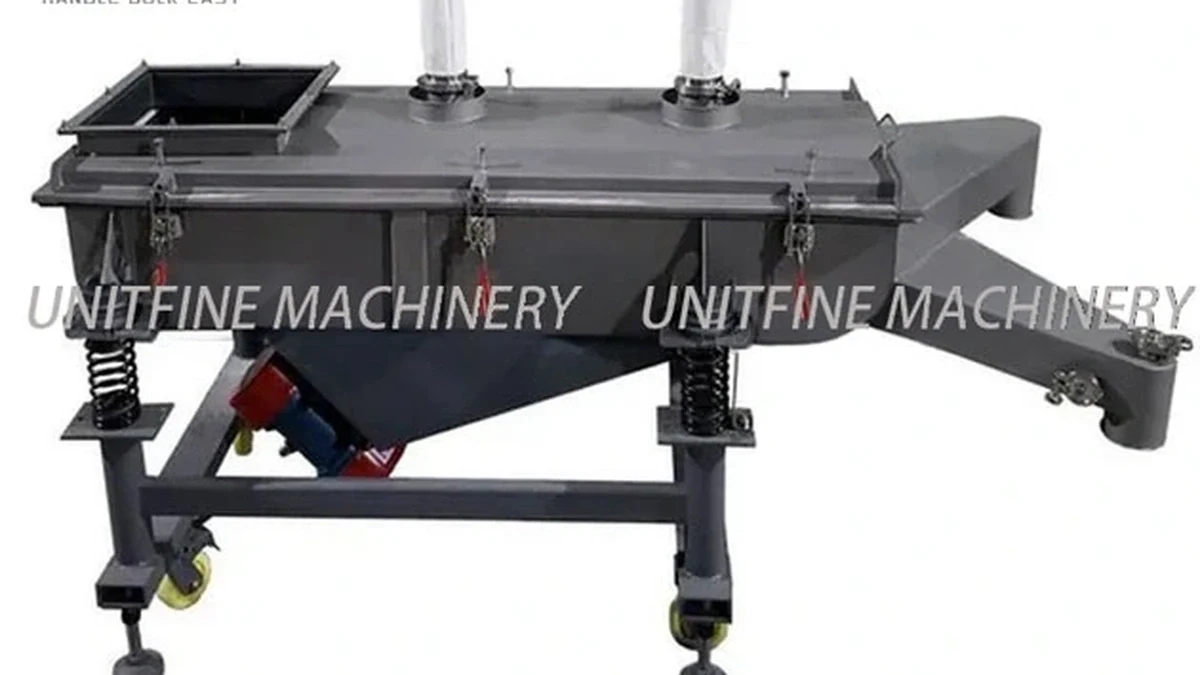
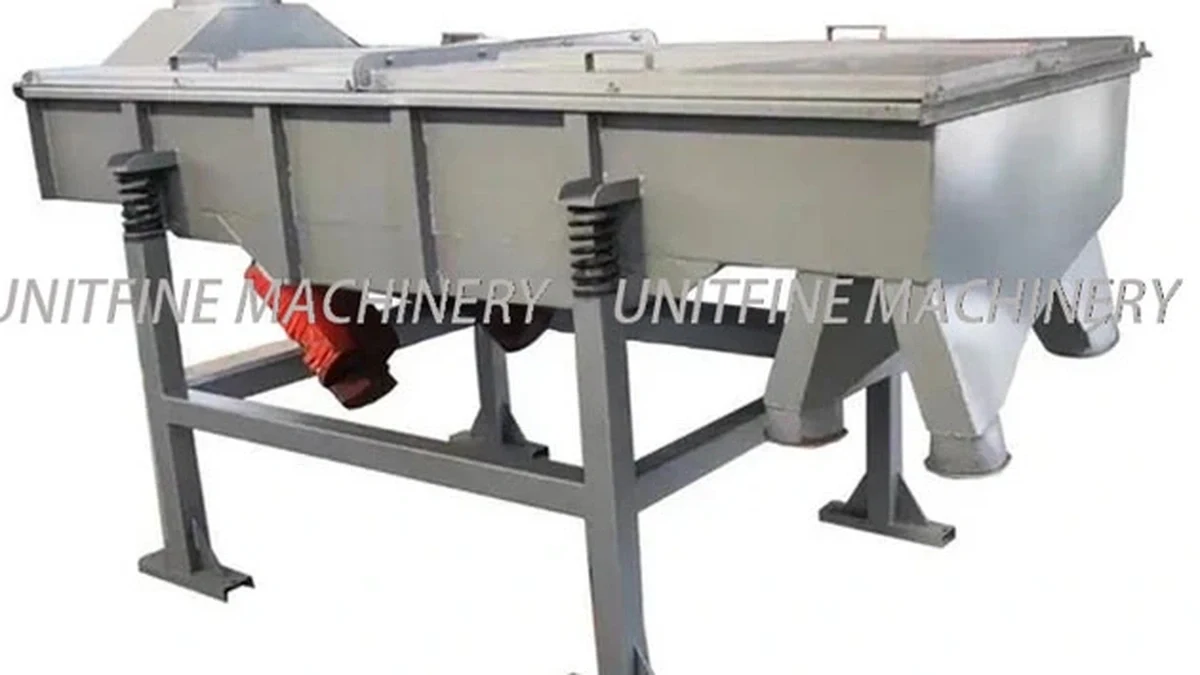
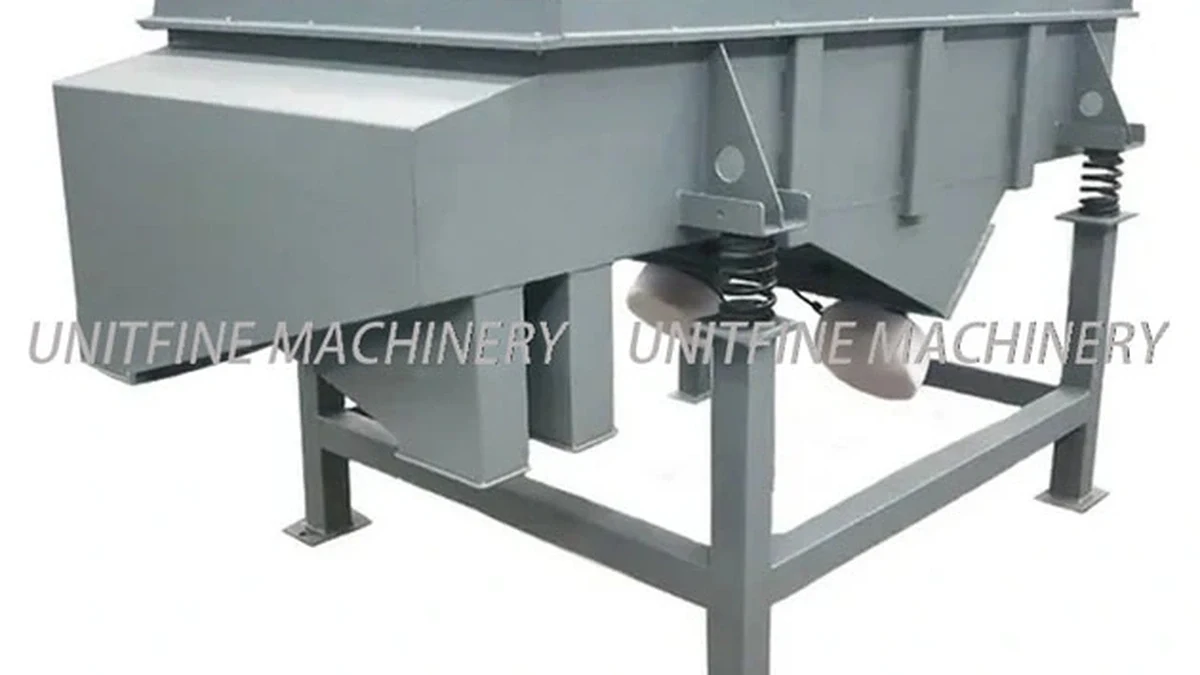
The retained detail photographs show visible construction from the existing product page. Use them to discuss access and connection requirements, not to infer internal dimensions, sealing performance or a complete bill of materials. Ask for the supply drawing and equipment-specific instructions for the assembly you are buying.
Plan the installation around the vibrating assembly
Identify the inlet and outlet positions, supporting structure and space needed for inspection and screen replacement. Ask how the supplier’s installation requirements apply to the upstream and downstream connections. Resolve the connection and support arrangement before site fabrication rather than treating a general product photograph as an installation drawing.
Cleaning and routine service
Describe product changes, contact requirements and the cleaning method expected at your site. Ask which covers and screen components can be removed, how retained material can be reached and how the assembly must be reassembled. Confirm wet-cleaning suitability for the complete supplied unit if required; a stainless exterior is not evidence of a washdown rating or validated hygiene.
Follow the supplied isolation, guarding and service instructions before access. This page is a purchasing guide and does not authorize adjustment or opening of running equipment. Request component identification, inspection requirements and spare-screen information for the actual configuration. Confirm the warranty, exclusions and delivery schedule in the current quotation rather than assuming a generic website term applies.
Existing product and installation views
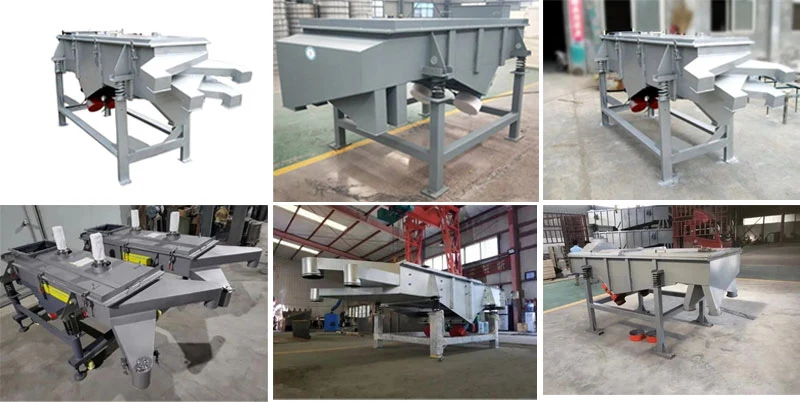
The original photo collage provides exterior and installation references. Individual views can show different configurations or surrounding equipment. Confirm which features belong to the proposed supply, and use the project drawing to settle interfaces and service clearances.
Which materials need a closer screening review?

The application illustration groups possible enquiry materials; it is not a blanket suitability approval. Review the actual feed rather than relying on its industry label. Describe how moisture, adhesion, particle shape, abrasion and storage changes could affect flow or separation. Agree any product-damage or contamination criterion before a representative trial.
For food or pharmaceutical enquiries, state the contact-documentation, cleaning and carryover requirements for the proposed assembly. For cohesive powders or feeds that blind the screen, describe the observed problem and ask whether feed conditioning, a different screen arrangement or another screening technology should be evaluated. Do not assume ultrasonic assistance, wet screening or dewatering is included because it appears in a broad application list.
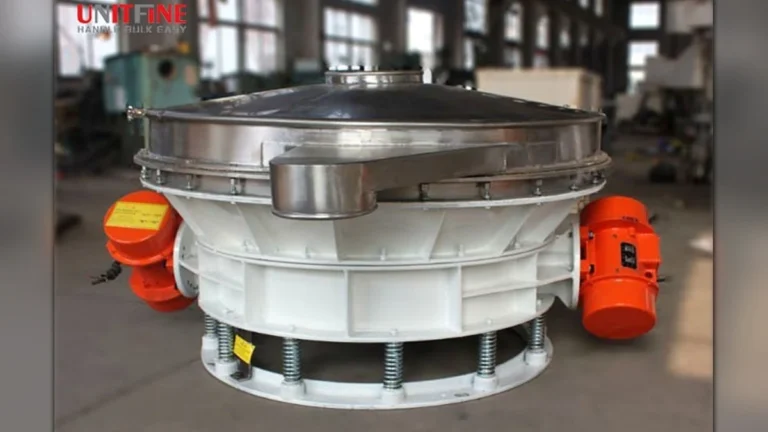
Linear screen, rotary sieve or another screening arrangement?
Compare alternatives against the same sample, fraction specification, required delivery and cleaning objective. Straight material travel may fit a particular line, but it does not establish that a linear screen is always faster or less precise than a circular machine. The appropriate comparison is the proposed equipment under the agreed duty.
| Option | Question to investigate |
|---|---|
| UZSF linear vibrating screen | Does the offered deck and outlet arrangement achieve the required fractions within the available layout? |
| Rotary vibrating sieve | Would its proposed screening area, outlets and material travel fit the duty? Keep material and acceptance conditions consistent. |
| Ultrasonic vibrating sieve | If fine-mesh blinding recurs, would an independently matched ultrasonic assembly help under a representative trial? |
| Gyratory screener | Would a different material-motion and deck arrangement better meet the proposed grading and handling requirements? |
Prepare a quotation and screening trial brief
Send UNITFINE the material data, required fractions, feed rate and a layout sketch. Include the acceptance method, connection constraints and required contact or cleaning documentation. The checklist below is a starting point; agree the final project data and supply boundary before ordering.
- Material data: representative samples, particle distribution, bulk density, moisture, flow behavior and available hazard data.
- Separation target: required fractions, screen-opening preferences and acceptable misplaced material.
- Rate and feeding: normal/peak feed, upstream equipment and required accepted product output.
- Layout: inlet/outlet positions, receiving equipment, installation envelope and service access.
- Utilities and controls: power supply and site interface requirements.
- Verification: trial conditions, sampling method, contact documents and cleaning acceptance.
Frequently asked questions
What does a linear vibrating screen do?
It separates material by size while moving the feed along a screening surface toward the outlets. Specify the required fractions, feed condition and accepted output before selecting the screen arrangement. The motion description alone does not establish capacity or separation quality.
What information is needed to select a UZSF model?
Provide material samples and properties, required fractions, normal and peak feed rate, inlet/outlet layout, utilities and cleaning requirements. Ask UNITFINE to match these inputs to a current drawing and specification for the offered assembly.
What capacity can it achieve?
Capacity depends on the material, screening arrangement, feed distribution and required fraction quality. State the feed rate and accepted product rate, then request a configuration-specific trial or calculation basis. A catalog maximum is not a guaranteed output for every feed.
How many decks do I need?
Start with the required product fractions and cut points. Ask UNITFINE to confirm the deck and outlet arrangement for those streams, including which layouts are suitable for the duty. Do not infer the supplied deck count from a photograph or a general series range.
Can it handle sticky or wet material?
Describe the actual moisture, adhesion and feed behavior before selection. Wet screening, dewatering and fine-mesh deblinding are distinct duties that need an appropriate arrangement and acceptance basis. A general application list does not approve every wet or sticky feed for a standard UZSF unit.
Is it better than a rotary vibrating sieve?
Compare both proposed machines using the same material, target fractions, delivery requirement and cleaning objective. Select using the trial result and installation fit rather than a universal ranking of linear and circular screening.
Does an enclosed screen guarantee dust-free operation?
No. Review the complete feed, discharge, covers, seals and any dust-control connections for the supplied configuration and site conditions. An enclosed appearance does not establish zero dust release, a protection rating or regulatory compliance.
How do I confirm delivery time and warranty?
Request the current quotation and contract terms for the specified configuration, including the delivery basis, commissioning responsibilities, warranty scope and wear-part exclusions. Generic website lead times or warranty periods should not replace those project documents.
Discuss your linear screening duty
Send your material data, target fractions, required delivery and layout sketch to UNITFINE for a screening review. Ask for the proposed model, screen specification and agreed acceptance basis. Browse the screening equipment range if you are evaluating another arrangement.