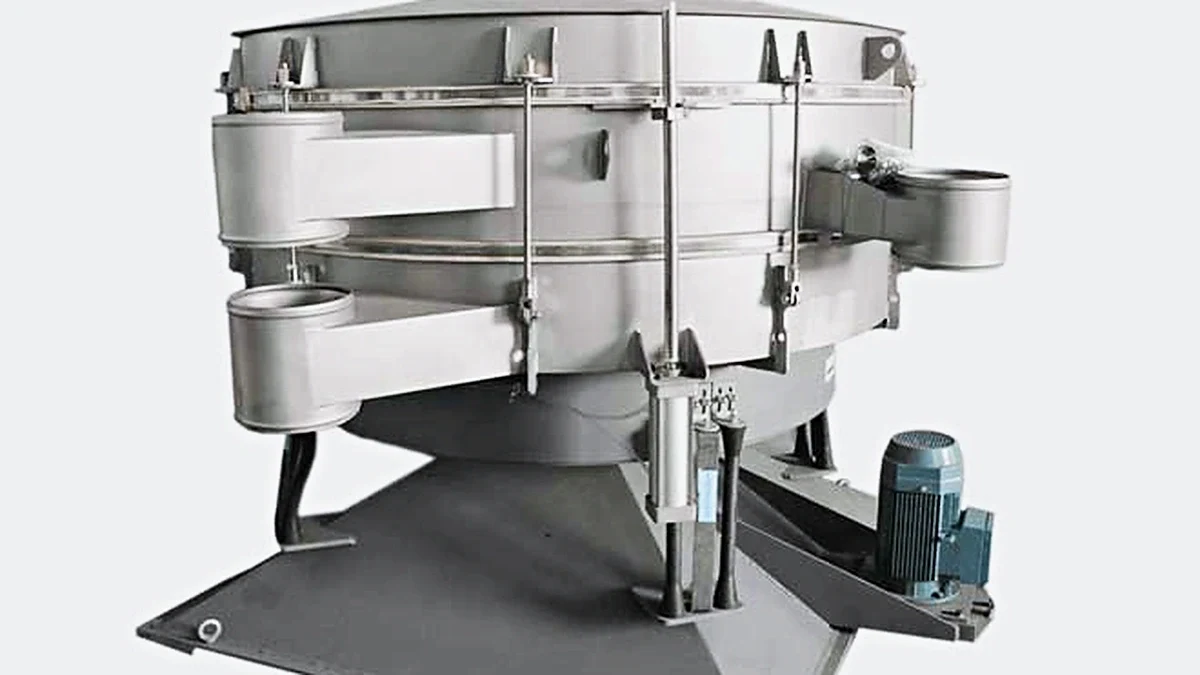
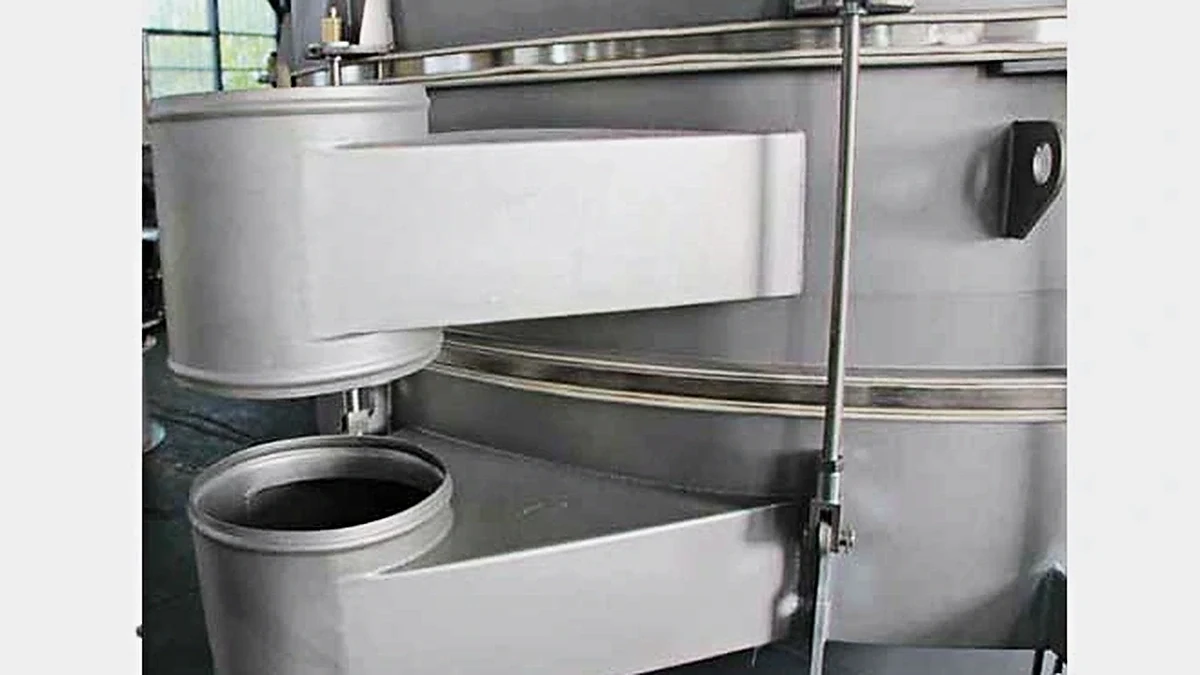
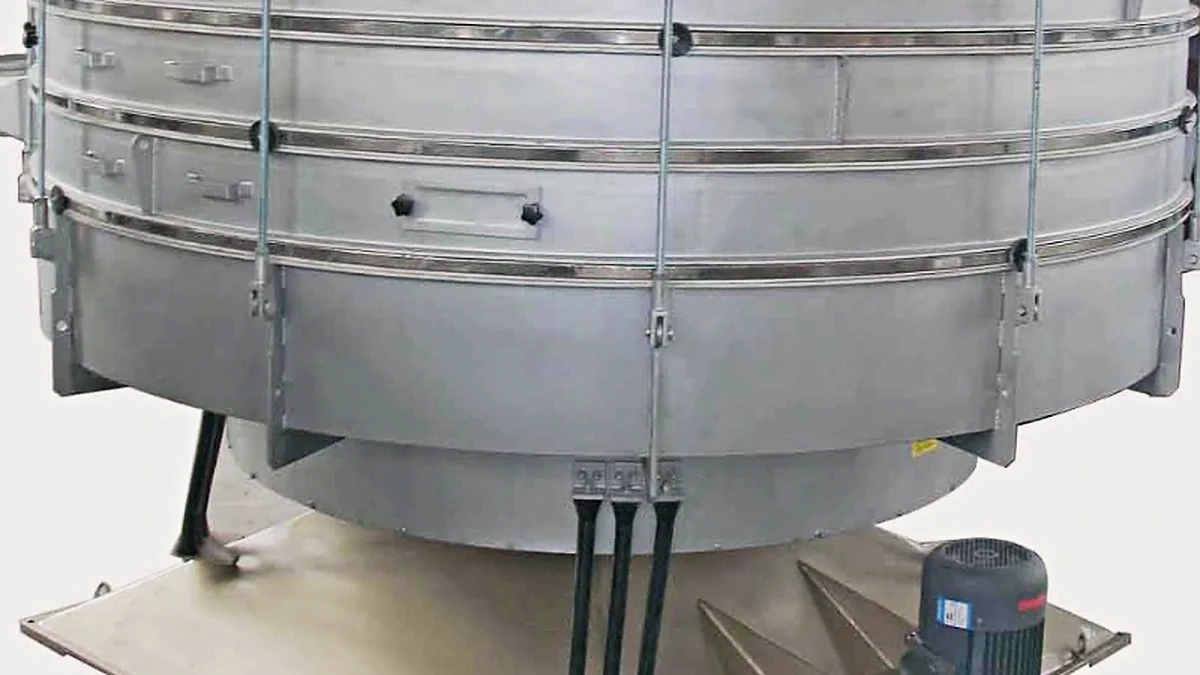
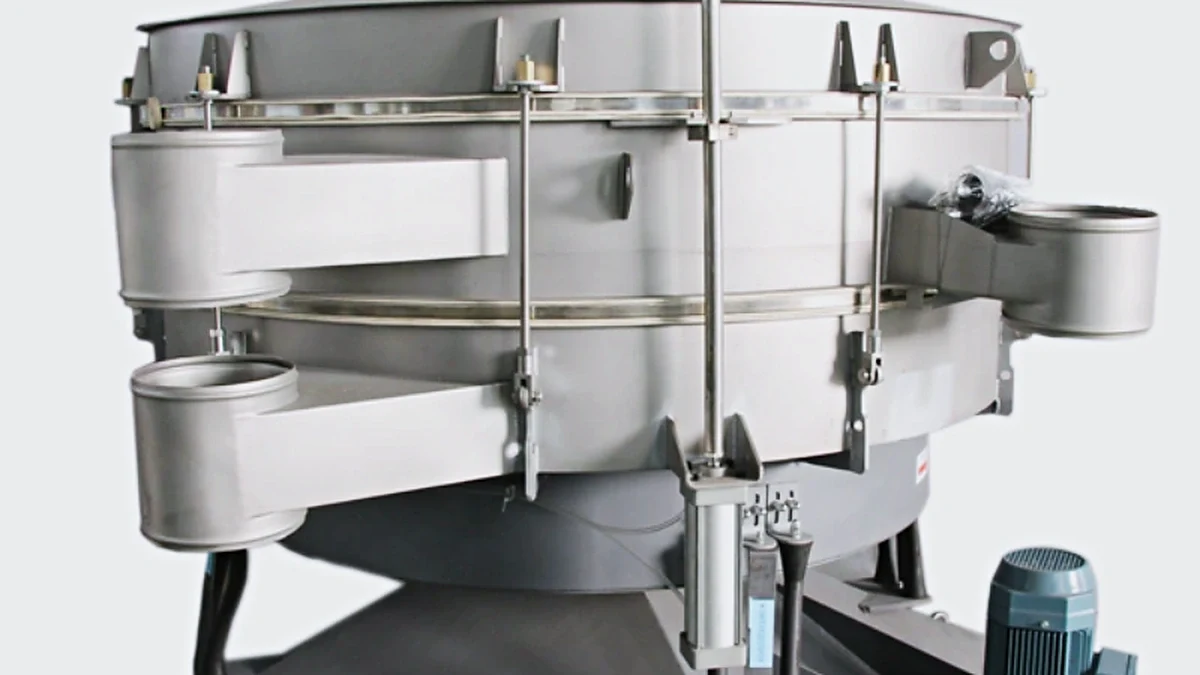
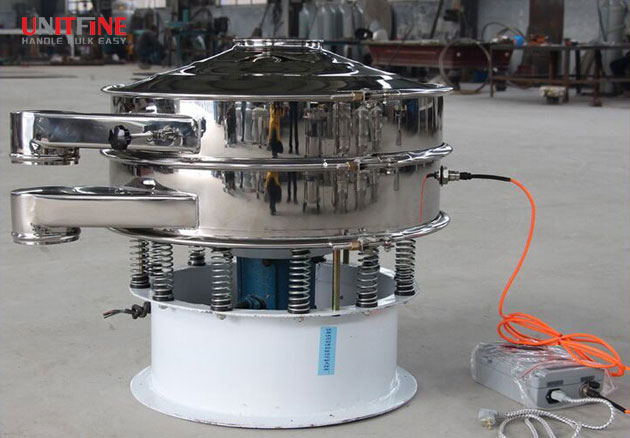
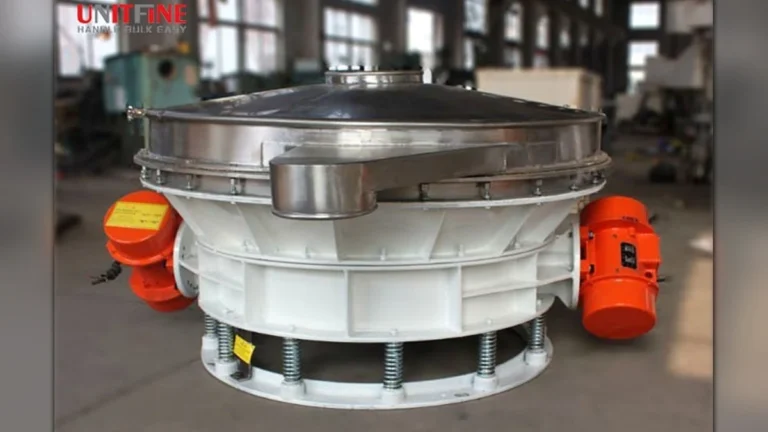
The UNITFINE Tumbler Fine Sieve (UFT Series) is a tumbler screening machine designed for gentle, continuous multi-deck separation of fine, light, and difficult-to-screen powders. By reproducing the three-dimensional radial and tangential motion of manual hand sieving, it helps classify delicate or low-bulk-density materials without subjecting them to harsh high-frequency impact. Published UFT models span seven sizes from UFT-600 to UFT-2600 (600 mm to 2600 mm diameter, 0.29 m² to 5.31 m² screening area, up to 5 sieve layers, and 0.25 kW to 5.5 kW drive power).
Quick Selection Summary
- Best evaluated for: Fine, ultra-fine, light, or fragile dry powders that need gentle multi-fraction classification across up to 5 sieve layers.
- Published UFT range: 7 models (UFT-600 to UFT-2600), 600–2600 mm diameter, 0.29–5.31 m² screening area, 0.25–5.5 kW.
- Key engineering checks: Confirm feed particle distribution, target mesh, blinding tendency, cleaning accessories, dust sealing, and sample trial results before finalizing model size.
How a Tumbler Screening Machine Works
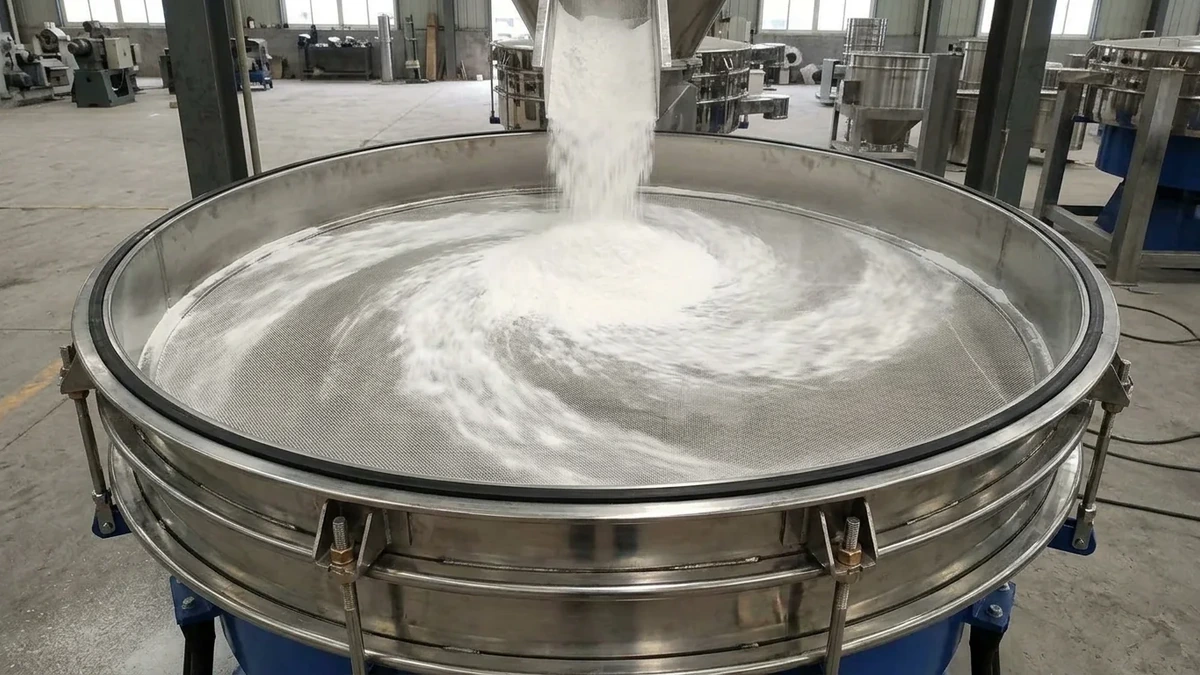
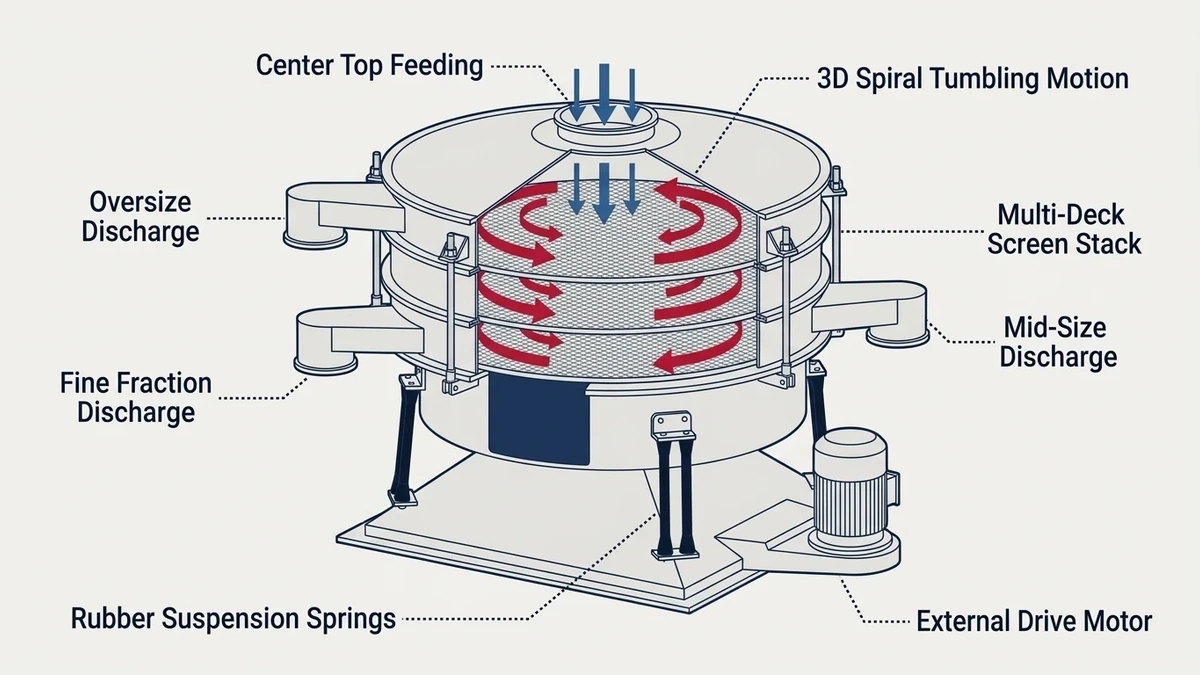
Manual sieving separates fine particles by combining a horizontal circular sweep with a gentle vertical tossing movement. The UNITFINE Tumbler Fine Sieve replicates this hand-sieving principle mechanically. Material enters at the center of the upper screen deck and travels outward in a controlled spiral path toward the perimeter discharge spouts.
Because the radial and tangential tilt angles govern residence time on the mesh, smaller particles get repeated opportunities to pass through screen openings while oversize or fragile granules experience lower mechanical impact than in aggressive high-frequency vibration. A sealed housing structure helps limit dust escape and protect product consistency during continuous operation.
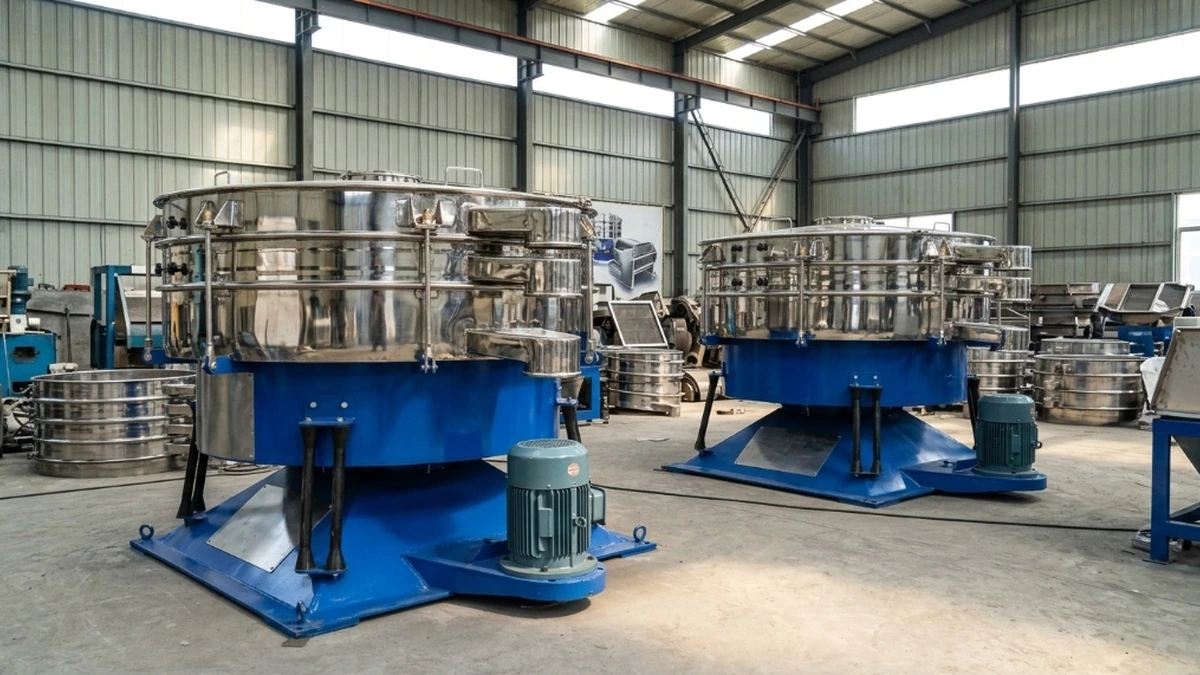
Published UFT Series Models and Specification Range
The UNITFINE Tumbler Fine Sieve is offered across seven models from UFT-600 to UFT-2600. The table below summarizes the published range from UNITFINE product documentation. Exact per-model dimensions, net weight, mesh opening, and achievable throughput depend on the configured deck count and material properties and are confirmed during quotation.
| Parameter | Published UFT Series Range | Selection Note |
|---|---|---|
| Model Range | 7 models (UFT-600 to UFT-2600) | Shortlist by required screening area and plant footprint. |
| Machine Diameter | 600 mm to 2600 mm | Verify ceiling height and deck-lifting clearance on larger diameters. |
| Sieving Area | 0.29 m² to 5.31 m² | Actual capacity depends on powder flowability, bulk density, and target mesh. |
| Sieve Layers (Decks) | Up to 5 layers across all models | Configure deck count to match required particle fractions and discharge routing. |
| Motor Power | 0.25 kW to 5.5 kW | Confirm local voltage, phase, and frequency in the inquiry. |
| Filter / Cleaning Accessory Layers | UFT-600 to UFT-1200: 2 layers; UFT-1600 to UFT-2600: 1 layer | Confirm exact cleaning mechanism (balls, brush, or ultrasonic) by powder trial. |
Tumbler Fine Sieve vs. Rotary Vibrating Sieve and Ultrasonic Screening
Buyers comparing fine powder screeners often need to decide between a tumbler screening machine, a standard rotary vibrating sieve, or an ultrasonic vibrating sieve. Each machine addresses a different screening challenge, and for larger rectangular grading duties a UF gyratory screener may also be evaluated.
| Comparison Point | Tumbler Fine Sieve (UFT) | Rotary Vibrating Sieve | Ultrasonic Vibrating Sieve / Deblinding |
|---|---|---|---|
| Screening Motion | Low-frequency 3D tumbling motion simulating manual sieving | Higher-frequency 3D vibration from a vertical vibrating motor | Mechanical screening assisted by high-frequency ultrasonic mesh excitation |
| Particle Handling | Gentler on fragile, light, or low-density powders | Versatile for general dry powders, granules, and slurries | Targets mesh blinding from ultra-fine, electrostatic, or sticky powders |
| Typical Role | Multi-deck fine dry classification (up to 5 layers) | Check-screening, scalping, dewatering, or standard grading | Anti-blinding upgrade or dedicated fine-mesh separation |
| When to Combine | Can be evaluated with ultrasonic deblinding when fine meshes blind | Can add a GTS30 ultrasonic deblinding system on fine meshes | Confirm mesh wire diameter, frame type, and sample behavior first |
For a broader engineering breakdown of fine-powder screening choices and anti-blinding methods, see How to Select a Vibrating Screen for Fine Powder and How to Prevent Mesh Blinding in Vibrating Sieves.
Fine Powder Trial Screening, Mesh Selection, and Cleaning Inputs
No single screening machine guarantees universal cut precision or a fixed throughput multiplier across all powders. Fine and ultra-fine powders behave differently depending on particle shape, bulk density, moisture, static electricity, and agglomeration. Before locking in a model from UFT-600 to UFT-2600, confirm four practical inputs:
1. Representative Sample Trial Screening
Whenever screening fine, light, or near-size powders, a sample trial is the most reliable way to verify whether material passes the target mesh cleanly, how quickly blinding occurs, and what screening area is needed for your target hourly rate. Contact UNITFINE before shipping samples so sample weight, safety sheets, and test targets can be confirmed.
2. Screen Mesh and Deck Configuration
Define the exact target mesh or micron cut for each deck, whether you need scalping (removing oversize lumps) or multi-fraction grading (up to 5 decks), and how discharge spouts should align with downstream hoppers, conveyors, or packing stations.
3. Screen Cleaning and Deblinding Method
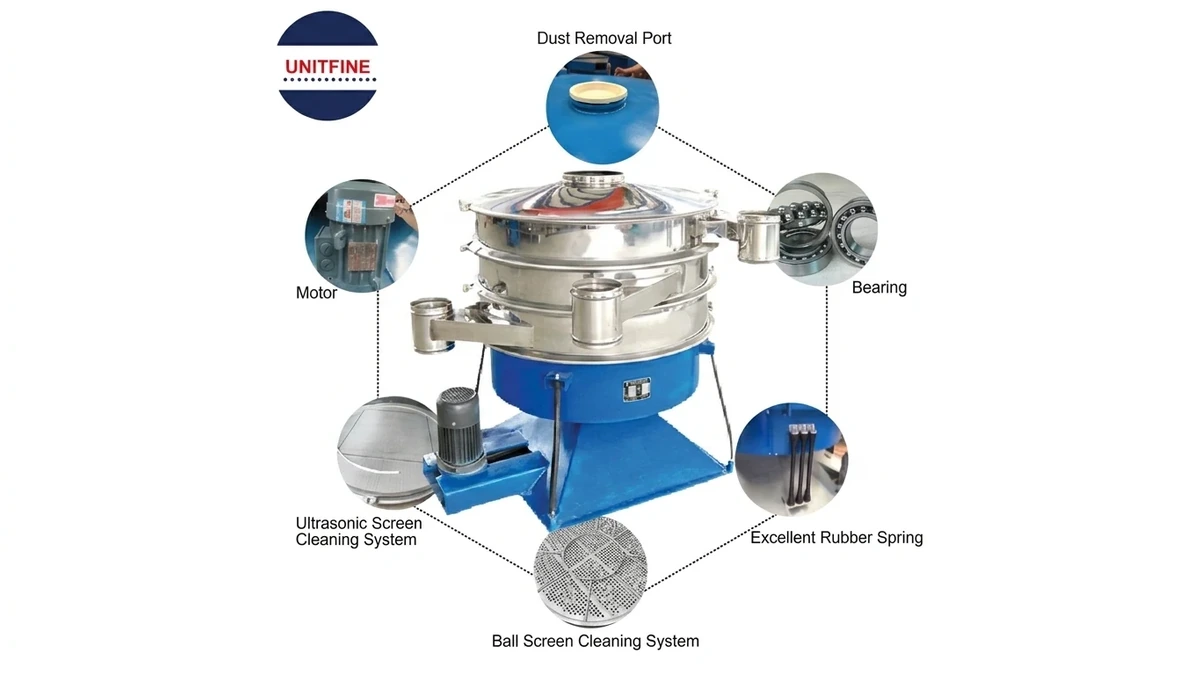
Depending on the powder and mesh opening, tumbler screeners are typically evaluated with bouncing balls, rotary brushes, air-knife systems, or ultrasonic deblinding. In the published UFT specification, UFT-600 through UFT-1200 support two layers of filter/cleaning accessories while UFT-1600 through UFT-2600 use one layer—confirm the exact cleaning setup for your mesh count during technical review.
4. Dust Sealing, Deck Access, and Cleaning Routine
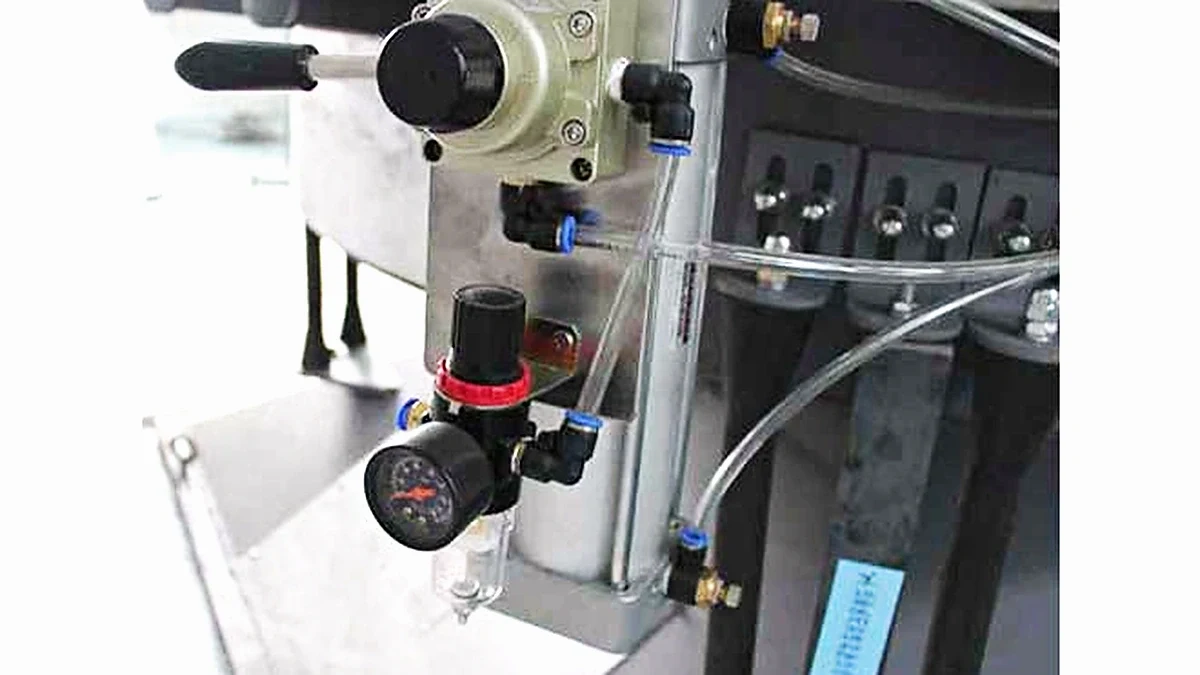
The enclosed sealing structure helps reduce dust leakage and protect product purity. For multi-deck machines or frequent product changeovers, review pneumatic deck-lifting access, clamping hardware, gasket compatibility, and whether dry wipe-down or wet washdown is required at your facility.
Typical Industry Applications
According to published UNITFINE application data, the Tumbler Fine Sieve is used across dry powder and granular separation duties in:
- Food and spices
- Chemical powders
- Pharmaceutical / medicine ingredients
- Sugar and salt
- Plastics and rubber powders
- Fertilizer and fodder / feed
- Wood and plywood particles
- Mining and metallurgy
- Renewable / recycling materials
Suitability for a specific grade, hygienic standard, or hazardous-area requirement depends on material characteristics and project specifications and must be confirmed during engineering review.
What to Include When Requesting a Quote
To receive an accurate UFT model recommendation and written quotation, please share the following process details with the UNITFINE engineering team:
- Material details: Material name, particle-size range, bulk density, moisture content, stickiness, or static behavior.
- Screening goal: Scalping, dedusting, or multi-fraction grading; target mesh/micron cuts and number of decks (1–5).
- Capacity target: Required hourly throughput (kg/h or t/h) and operating hours per day.
- Construction & cleaning: Preferred product-contact material (for example, SUS304 or SUS316 where required), dust-sealing needs, and washdown or changeover routine.
- Site & utilities: Local voltage, phase, and frequency; compressed-air availability if pneumatic deck lifting is required; available floor area and headroom.
- Upstream / downstream interfaces: Feeding method (hopper, conveyor, or vibratory feeder) and discharge outlet orientation.
Discuss Your Fine Powder Screening Duty with UNITFINE
Share your material characteristics, target mesh sizes, deck count, and required throughput. Our team will review whether a UFT tumbler screening machine, rotary vibrating sieve, or ultrasonic deblinding configuration fits your line.
Frequently Asked Questions
What is the difference between a tumbler screening machine and a rotary vibrating sieve?
A tumbler screening machine uses low-frequency three-dimensional elliptical tumbling motion that simulates manual sieving, keeping fragile or fine particles on the mesh longer with gentler mechanical action. A rotary vibrating sieve uses higher-frequency motor-driven vibration and is often selected for general dry or wet screening where higher vibration intensity is acceptable. Final selection should be confirmed by material behavior and trial screening.
When should I consider ultrasonic deblinding on a tumbler fine sieve?
Ultrasonic deblinding is worth evaluating when fine, light, electrostatic, or cohesive powders tend to blind or plug fine screen openings during standard mechanical cleaning. Whether bouncing balls, a rotary brush, or an ultrasonic system is required depends on particle size, moisture, static behavior, and target mesh, and should be verified on a representative sample.
How many screen decks and models are available in the UNITFINE UFT series?
The published UNITFINE UFT series covers seven models from UFT-600 to UFT-2600, with machine diameters from 600 mm to 2600 mm, screening areas from 0.29 m² to 5.31 m², motor power from 0.25 kW to 5.5 kW, and up to 5 sieve layers depending on process requirements.
Can you guarantee a specific screening accuracy or throughput increase before testing?
No universal screening accuracy or fixed capacity gain applies to every powder. Actual throughput and cut precision depend on particle-size distribution, bulk density, moisture, static charge, target mesh, number of decks, and cleaning accessories. UNITFINE confirms model sizing and expected performance through material review or sample trial screening.
What information should I provide to request a tumbler screening machine quotation?
Please share the material name, feed particle-size range, target mesh or cut size, bulk density, moisture or static characteristics, required capacity, number of fractions or decks, preferred product-contact material, local voltage and frequency, cleaning or dust-sealing requirements, and available installation space.