
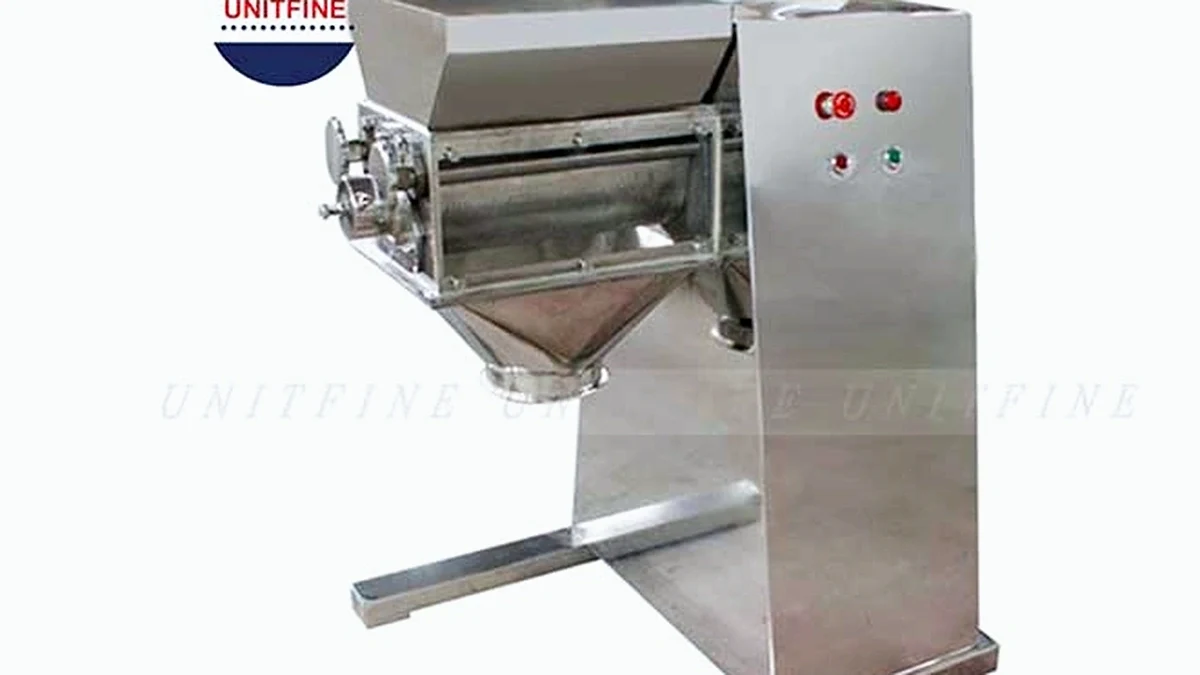
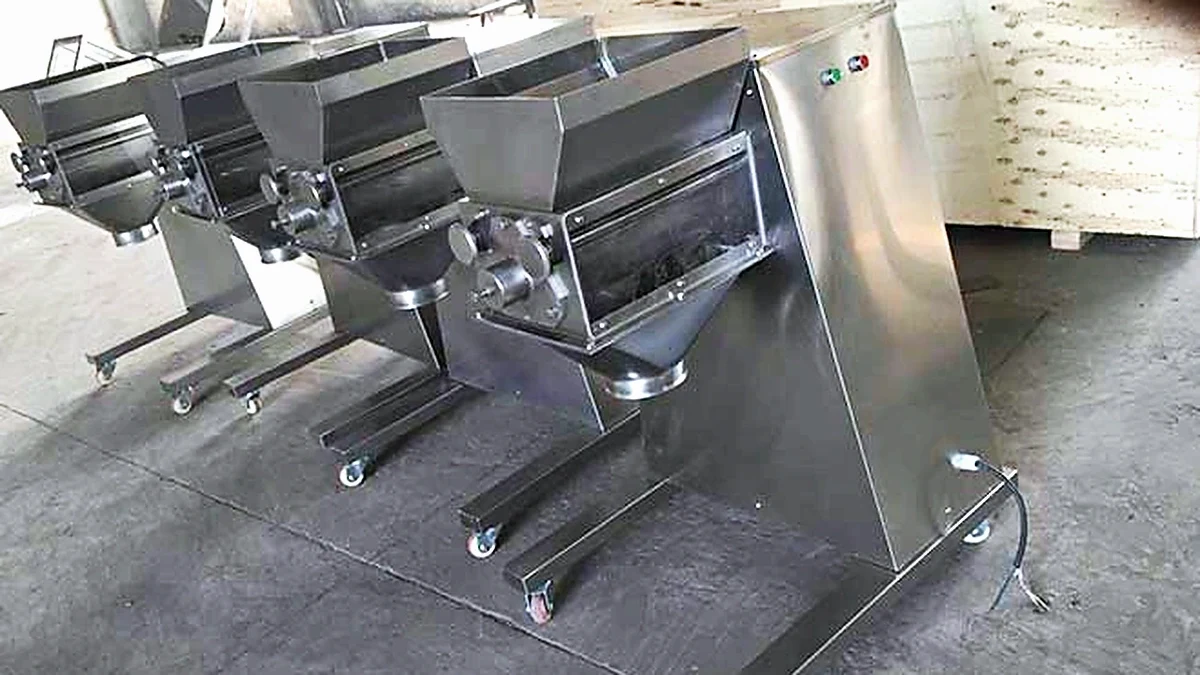
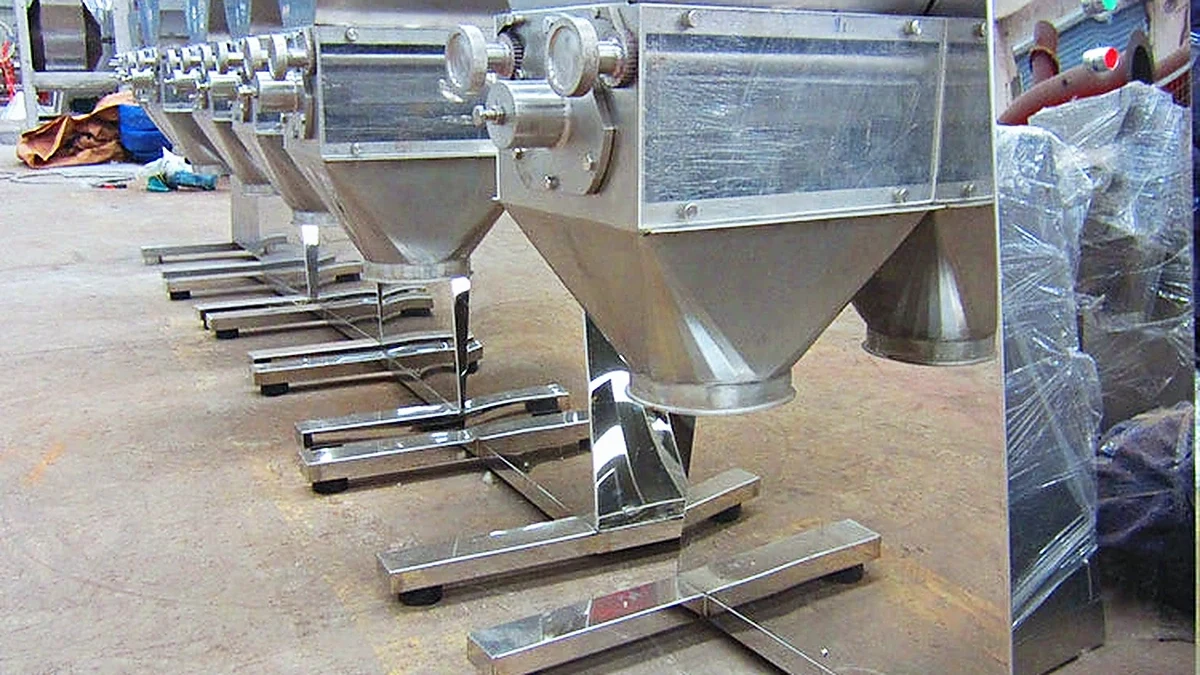
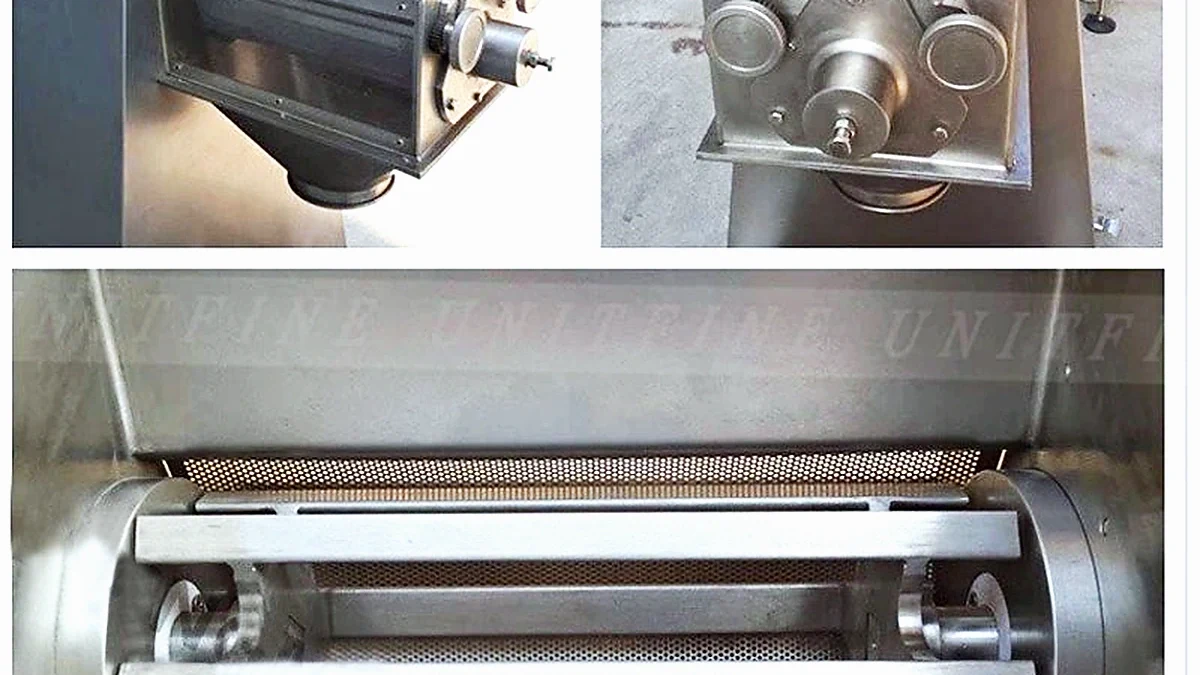

The UNITFINE YK series oscillating granulator forces wet powder masses or dry lumps through a wire screen to produce granules of a controlled size. An oscillating rotor works the material against the screen, and the sized granules discharge into a container below the machine. The series covers five models, from the YK-60 to the YK-350.
The same machine is used for two different duties: forming wet granules after a binder has been mixed in, and sizing dried granules, lumps or rejected tablets. These duties use different screens, feed conditions and settings, so the selection starts by defining which one applies to your process.
How the oscillating granulator works
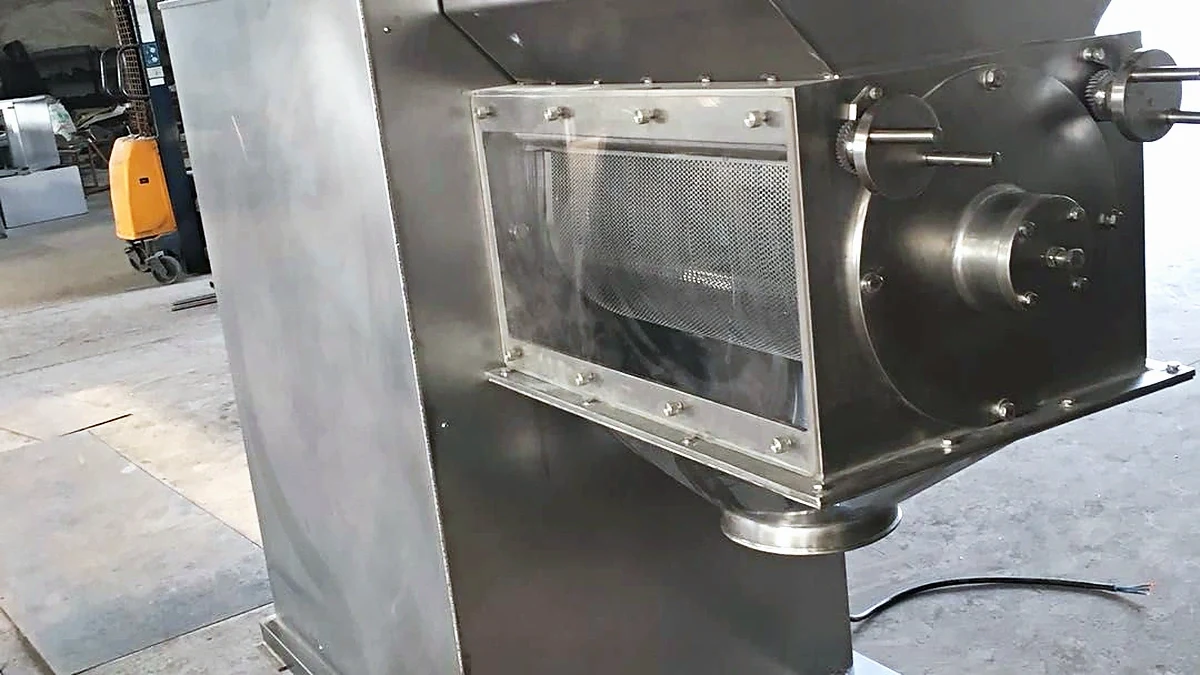
Material enters through the feed hopper above the granulating chamber. Inside the chamber, the rotor turns back and forth and presses the material against a wire mesh screen that wraps around the rotor. Only particles small enough to pass the screen openings leave the chamber; larger pieces stay in the chamber until they are reduced. The finished granules fall through the discharge outlet into a container or a downstream connection.
The screen is tensioned on the chamber and can be removed and replaced, which allows different openings to be used for different products. The drive, with a motor, belt and gear reducer, sits in an enclosed stainless-steel body with a lubrication system.

Wet granulation and dry sizing are different duties
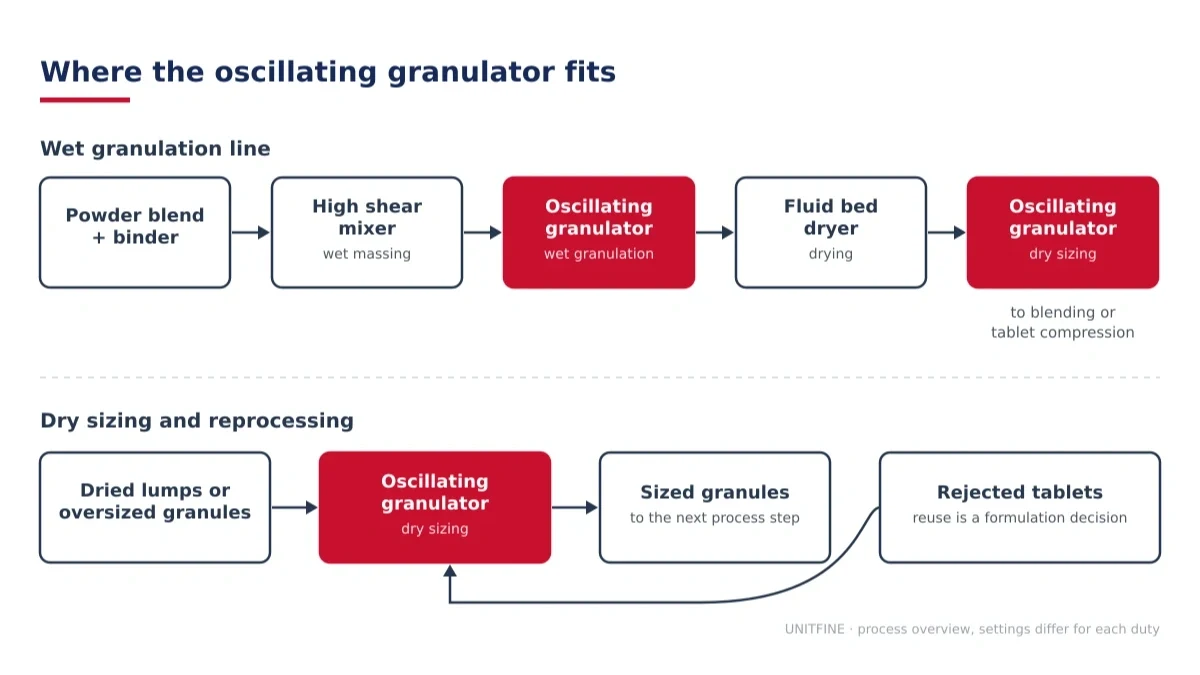
Wet granulation
In wet granulation, the powder blend is first mixed with a binder solution in a mixer. The oscillating granulator then forces the wet mass through the screen to form granules of a consistent size before drying. The result depends strongly on the wet mass: if it is too wet, it smears and blocks the screen; if it is too dry, it breaks down into fines. The granulator does not add liquid or control the binder content, so the mixing step needs to deliver a suitable mass.
Dry sizing and reprocessing
In dry sizing, the granulator breaks oversized dried granules or lumps down to the required size, usually after a dryer and before blending or tablet compression. The original product description also lists breaking down rejected tablets into granules so the material can be reformulated. For dry duty, the main concerns are the hardness of the material, the amount of fines produced and dust at the inlet and outlet.
Do not transfer a screen, feed rate or capacity figure from one duty to the other. If your process needs both, describe each step separately in your enquiry.
Screen, feed condition and target granule size
The screen opening is the main setting for granule size, but it is not the only one. The same screen can give a different result when the material is wetter, harder or fed faster. For a reliable selection, describe the material as it actually enters the granulator:
- Feed condition: wet mass after mixing, dried granules, compacted lumps or tablets, with moisture content where it is known.
- Target size: the required granule size range and how much fine material is acceptable.
- Material behaviour: stickiness, hardness, heat sensitivity and any tendency to block the screen.
- Feeding method: manual feeding from containers or a connection to an upstream mixer or dryer.

A trial with your own material is the most dependable way to confirm the screen opening and the expected output before the order is finalised.
YK series oscillating granulator models
The table lists the published data for the five YK models. Capacity ranges are given per model; the output achieved on a specific product depends on the material, the screen and the feeding method, and is confirmed for your duty in the quotation.
| Model | YK-60 | YK-100 | YK-160 | YK-250 | YK-350 |
|---|---|---|---|---|---|
| Production capacity (kg/h) | 5-30 | 30-200 | 100-300 | 150-500 | 300-1500 |
| Power (kW) | 0.37 | 1.1 | 3 | 5.5 | 15 |
| Rotary drum rotation speed (r/min) | 55 | 55 | 55 | 55 | 55 |
| Oscillating angle (°) | 360 | 360 | 360 | 360 | 360 |
| Rotary drum diameter (mm) | 60 | 100 | 160 | 250 | Φ350 |
| Dimensions (mm) | 460x550x570 | 700x400x1050 | 1000x700x1160 | 1450x750x1420 | 1220x1100x1760 |
| Weight (kg) | 65 | 280 | 380 | 750 | 1200 |

Oscillating granulator compared with related equipment
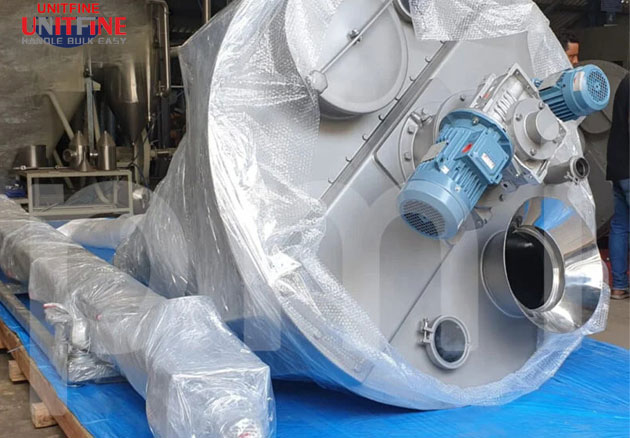
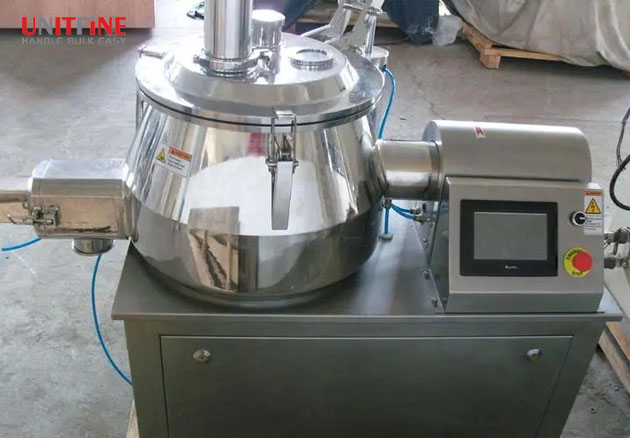
High speed shear mixer granulator: mixes the powder with the binder liquid and forms the wet mass in one bowl. The oscillating granulator does not mix or add liquid; it sizes the mass produced by the mixer. In many wet granulation lines the two machines work in sequence.
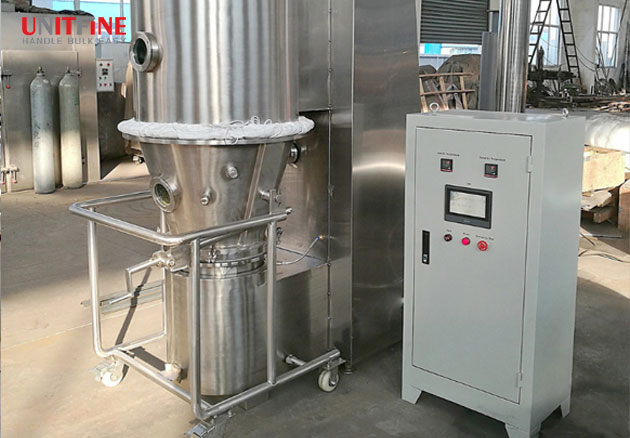
Fluid bed dryer: dries the wet granules formed by the granulator. After drying, the oscillating granulator can be used again to size the dried granules.
Hammer mill: reduces material by impact at higher speed and is used where finer size reduction is needed. The oscillating granulator works at low speed and is used where the aim is a granule of a set size rather than a fine powder.
See the granulating machine category for the other granulation equipment in the UNITFINE range.
Construction, cleaning and documentation
The YK series is built from stainless-steel plate, and the screen can be removed for cleaning and replacement. Define the cleaning method you use between products (dry cleaning, washing or a validated cleaning procedure) and the parts that must be removed, so the proposal can show how the screen, rotor and chamber are accessed.

The original product description presents the machine for use under Good Manufacturing Practice (GMP). If your site needs specific documents, such as material certificates for product-contact parts, drawings or a qualification package, list them in your enquiry so they can be confirmed in the quotation. If the machine will be installed in an area with flammable dust or solvent vapour, state the area classification; standard equipment should not be assumed to be suitable for it.
What to send for an oscillating granulator quotation
Provide the following information so the model, screen and supply scope can be confirmed:
- Material: product name, bulk density, and whether it is a wet mass, dried granules, lumps or tablets.
- Duty: wet granulation, dry sizing, tablet reprocessing, or more than one of these.
- Required capacity: output per hour or per batch, with the operating hours.
- Target granule size: the required size range and the acceptable amount of fines.
- Material behaviour: moisture, stickiness, hardness and heat sensitivity.
- Line connection: upstream mixer or dryer, feeding method, discharge container and available height.
- Site requirements: power supply, cleaning method, documentation and any hazardous-area classification.
Contact UNITFINE with your material data and process step. Ask for a model and screen recommendation, and for a trial with your material where the result needs to be confirmed before ordering.
Frequently asked questions about oscillating granulators
Can an oscillating granulator be used for both wet granulation and dry sizing?
Yes, the YK series is described for wet powder masses and dry block materials, but the two duties need separate settings. Wet granulation needs a screen and rotor setting that forms granules without smearing; dry sizing needs a setting that breaks lumps with limited fines. Specify which duty applies, or both, when you ask for a proposal.
How is the final granule size controlled?
Granule size is set mainly by the screen opening, together with the material condition and the feed rate. The screen is replaceable, so different openings can be fitted for different products. Confirm the screen selection with a trial on your own material rather than relying on the opening alone.
What is the difference between an oscillating granulator and a high shear mixer granulator?
A high shear mixer granulator mixes the powder with the binder liquid and forms the wet mass. The oscillating granulator does not add liquid or mix; it forces a prepared wet mass or dried material through a screen to set the granule size. Many lines use both machines in sequence.
Can rejected tablets be reprocessed with the granulator?
The original product description lists breaking down rejected tablets into granules for reformulation. Whether the regranulated material can be reused is a formulation and quality decision for your own process; send tablet samples so the screen and feed can be checked.
Which capacity figure applies to my material?
The model table gives published capacity ranges for each YK model. Actual output depends on the material, its moisture or hardness, the screen opening and the feeding method. Send the material data and target granule size so the model can be confirmed for your duty.
