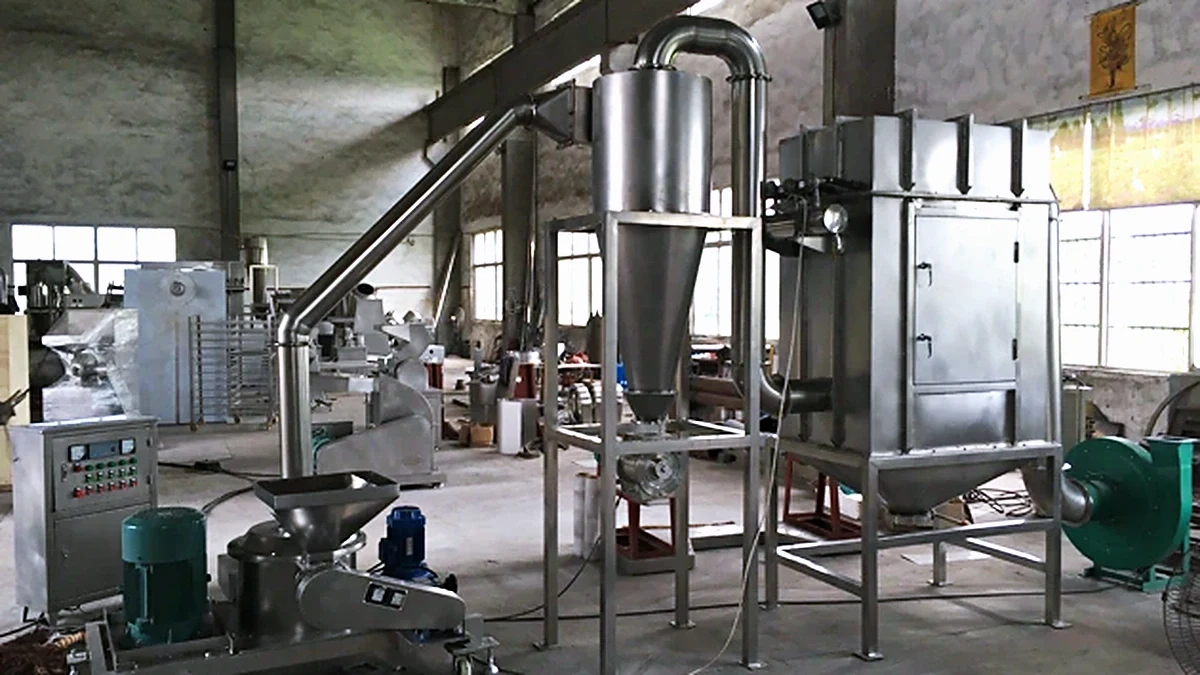
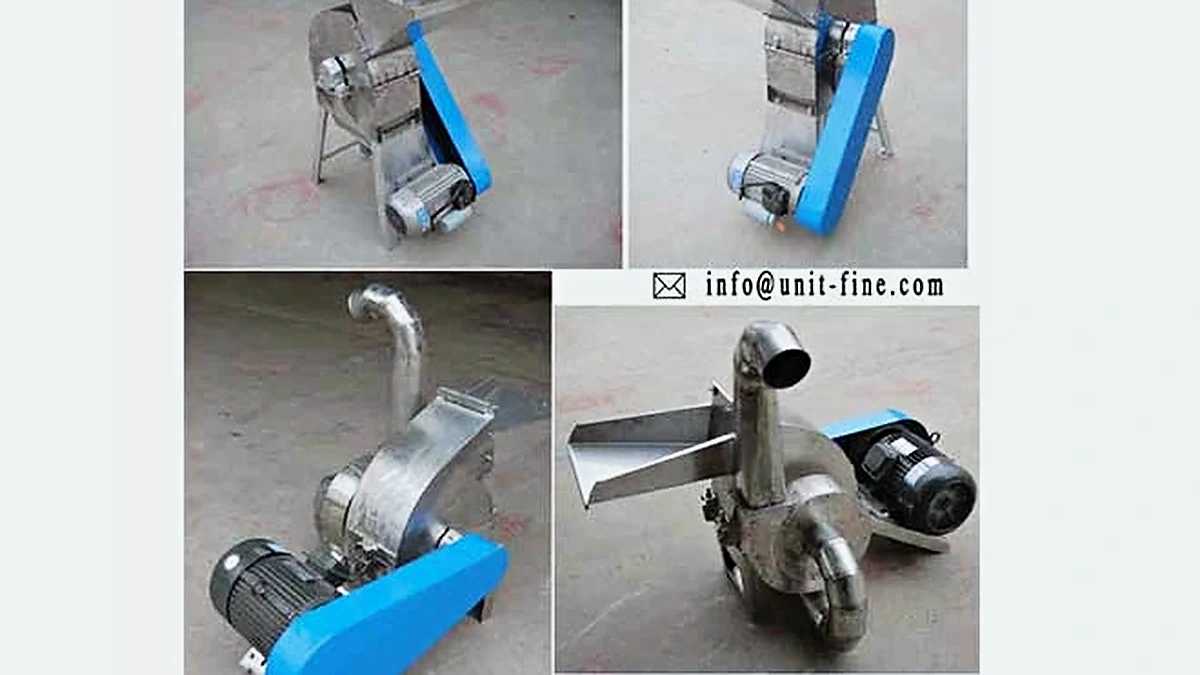
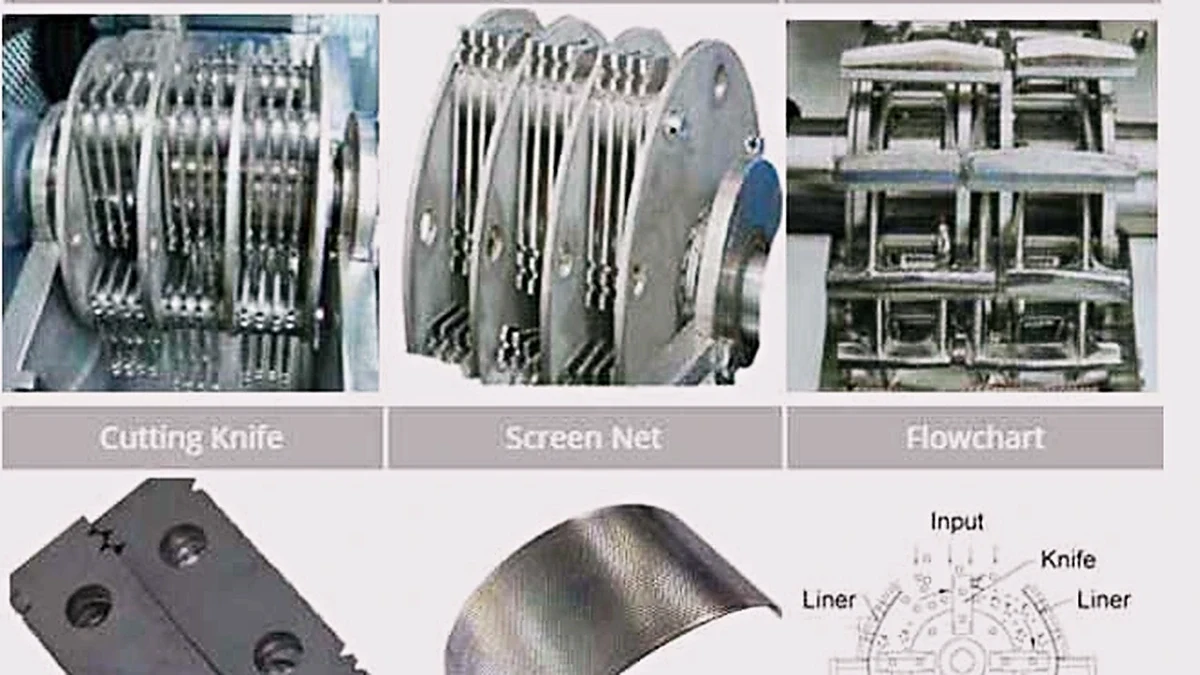
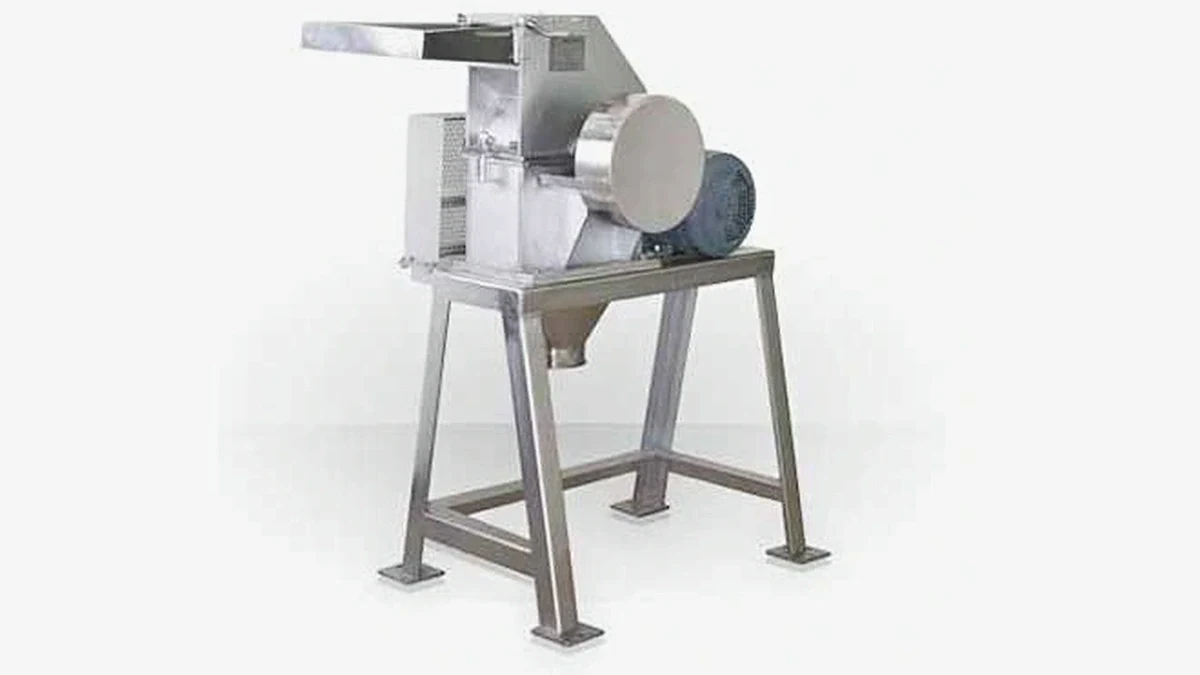
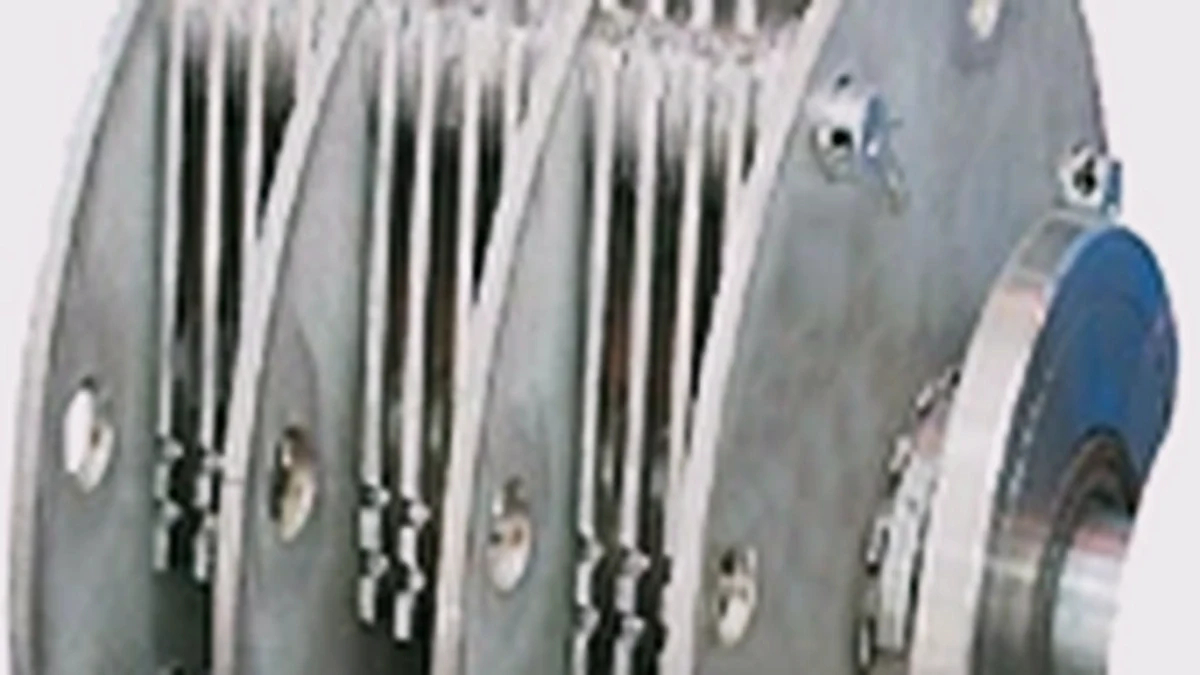
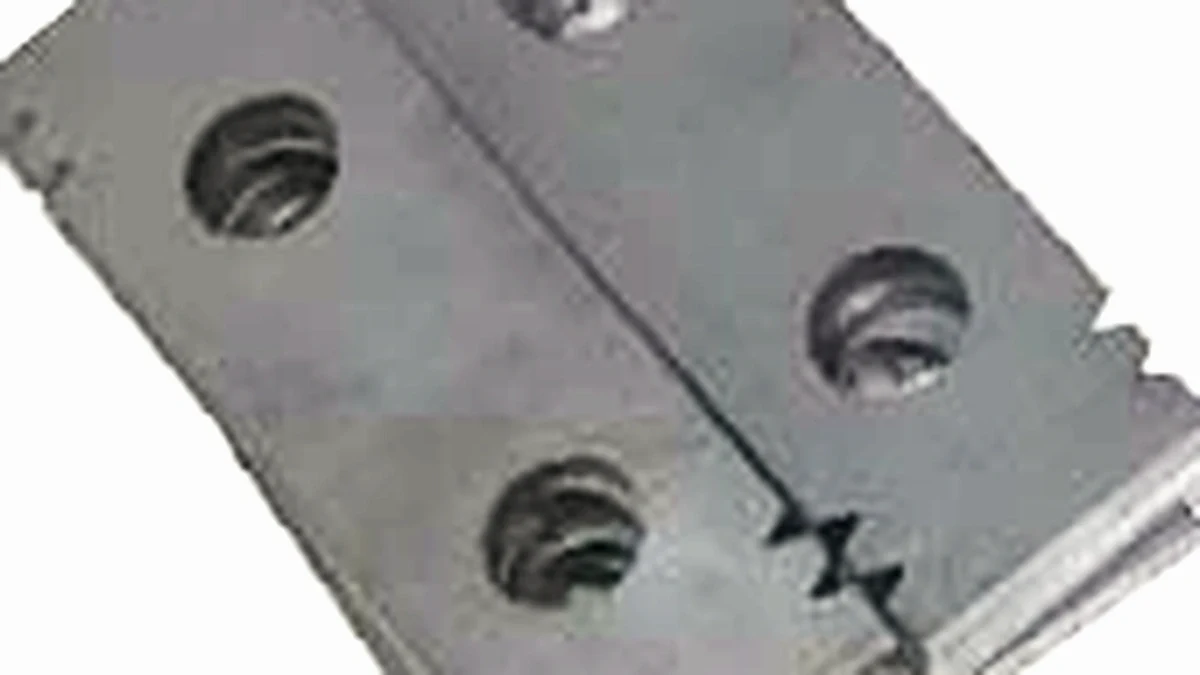


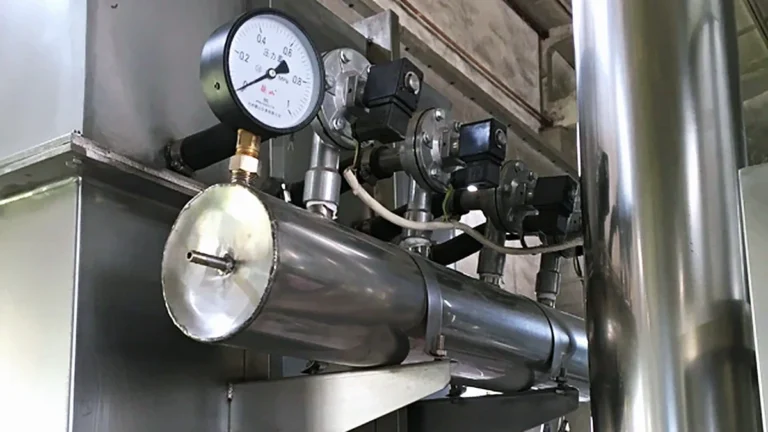
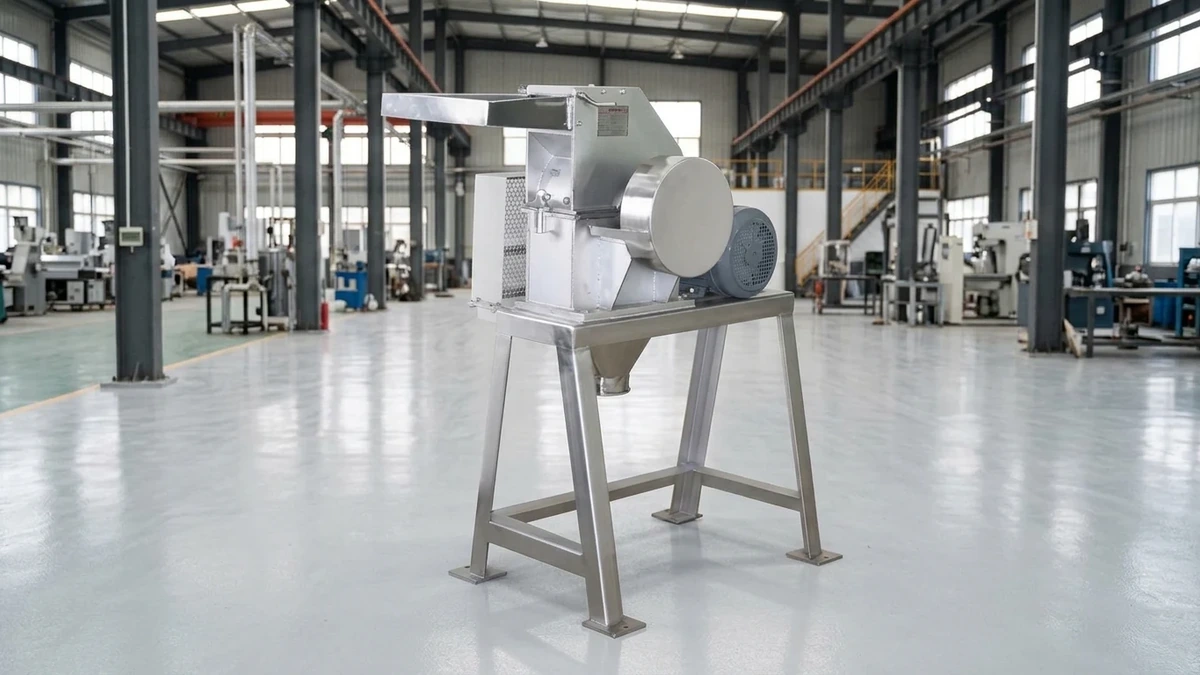
The UNITFINE Industrial Hammer Mill (UHM36 to UHM50-60) is a mechanical size-reduction machine engineered for grinding, crushing, and shattering dry bulk solids—including grains, medicinal plants, herbs, animal feeds, salt, and selected food or industrial materials. Using high-speed rotating cutting knives, hammer discs, and an interchangeable discharge screen net, the hammer mill delivers repeatable coarse-to-medium particle sizing with straightforward access to replaceable wear parts.
Quick Technical Overview
- Published Models: 7 standard models — UHM36, UHM40, UHM42, UHM50, UHM50-40, UHM50-50, and UHM50-60 (5.5–45 kW motor range; 12–36 hammers; 85–380 kg machine weight).
- Size-Reduction Mechanism: High-speed rotating cutting knives and swinging hammers impact and shear incoming solids inside the crushing chamber until particles pass through the replaceable screen net.
- Core Advantage: Receding knife protection against oversized hard impacts, generous chamber clearance to reduce material buildup, and modular replaceable blade discs, hammer discs, cutting knives, and screens.
- When to Evaluate an Alternative: For ultra-fine micronized powder targets, evaluate the UNITFINE UF Super Fine Micro Pulverizer; for hard abrasive mineral grinding, compare with a ball mill or continuous vibration mill.
How the UNITFINE Hammer Mill Works
Material enters the machine through a top feeding hopper—configured for either gravity feeding or metered feeding—and drops directly into the crushing chamber. Inside the chamber, a motor-driven rotor (5.5 kW to 45 kW depending on model) spins 12 to 36 cutting knives and hammers at high speed.
Particles are repeatedly struck by impact and cutting forces until they are reduced smaller than the openings of the replaceable screen net lining the discharge zone. Once sized, finished material exits through the output. If a piece of feed remains oversized and generates an impact force greater than centrifugal force, the swinging knives recede momentarily to protect the knife shaft and maintain stable crushing operation.

Hammer Mill Technical Specifications (UHM36 to UHM50-60)
The table below lists the published baseline specifications for all seven standard UNITFINE hammer mill models. Actual throughput and achieved particle size distribution depend on feed hardness, moisture level, bulk density, feed rate, and selected screen configuration.
| Model | Weight (kg) | Dimension (mm) | Match Power (kW) | Match Power (HP) | Hammer Qty | Screen Mesh* |
|---|---|---|---|---|---|---|
| UHM36 | 85 | 900 × 750 × 1070 | 5.5–7.5 | 10 | 12 | 0.5–5 |
| UHM40 | 160 | 945 × 835 × 768 | 7.5–11 | 12 | 12 | 1.2–8 |
| UHM42 | 125 | 730 × 650 × 920 | 11–15 | 18 | 16 | 1.2–20 |
| UHM50 | 280 | 1150 × 1200 × 1090 | 11–15 | 20–28 | 16 | 1.2–20 |
| UHM50-40 | 275 | 1100 × 930 × 1030 | 22–37 | — | 24 | 1.2–30 |
| UHM50-50 | 360 | 1157 × 1250 × 1030 | 30–37 | — | 30 | 1.2–30 |
| UHM50-60 | 380 | 1157 × 1355 × 1030 | 37–45 | — | 36 | 1.2–30 |
*Specification data may vary depending on material characteristics and project-specific equipment configuration. HP values for UHM50-40, UHM50-50, and UHM50-60 are not listed separately in the baseline table; confirm exact motor voltage, frequency, screen aperture, and capacity during quotation.
Key Structural Features & Replaceable Interior Parts
- Heavy-Duty Housing & Oversized Bearings: Built with a heavy-duty steel housing and oversized bearings to support continuous mechanical impact loads and extend service life under demanding crushing schedules.
- Clearance-Optimized Flow Path: Adequate internal clearance across the feeding inlet, crushing chamber, and discharge outlet supports smooth material passage and helps reduce clogging-related stoppages on dry granular feeds.
- Receding Knife Shaft Protection: When hard or oversized pieces generate impact force exceeding centrifugal force, the swinging knives pivot back rather than locking rigidly—helping protect the knife shaft and maintain stable grinding performance.
- Modular Replaceable Wear Components: Blade discs, hammer discs, cutting knives, and screen nets can all be removed and replaced independently, simplifying routine maintenance and allowing quick screen changeovers between target output sizes.
- Interchangeable Screen Sizing: Swapping the discharge screen net adjusts the finished particle size range across published screen options without replacing the core mill housing.

Typical Industrial Applications
Because screen nets and rotor power (5.5–45 kW) can be matched to material toughness and target coarseness, UNITFINE hammer mills are used across four primary processing sectors:
- Pharmaceutical-Material & Botanical Processing: Grinding dried medicinal plants, roots, leaves, and selected pharmaceutical-material ingredients prior to extraction, blending, or downstream screening.
- Food & Beverage Ingredients: Crushing dry grains, dried fruit pieces, salt, dehydrated plant ingredients, and suitable dry food materials (stainless-steel contact parts and sanitary requirements are configured per project specification).
- Agriculture & Animal Feed: High-throughput crushing of feed grains, cereal crops, oilseed cakes, and fibrous agricultural raw materials.
- General Industrial Size Reduction: Pre-crushing or medium grinding of dry salts, friable industrial solids, and intermediate bulk materials before downstream classification or mixing.

Engineering Selection Boundaries: Moisture, Heat & Screen Limits
Hammer mills excel at dry, friable, and moderately fibrous feeds, but every impact mill has physical boundaries. Reviewing these four factors early prevents screen blinding, overheating, or unexpected wear:
1. Moisture, Oil & Stickiness
High-moisture, high-fat, or sugar-rich sticky feeds can smear across the perforated discharge screen and reduce airflow. If the feed contains elevated moisture or natural oils, confirm pre-drying or test a representative sample before finalizing screen aperture and feeder metering.
2. Screen Aperture vs. Final Particle Size Distribution
A hammer mill’s screen controls maximum discharge size, while rotor speed, hammer clearance, and material friability determine the fine tail of the distribution. If your downstream process requires a strict particle cut or removal of fines, pair the hammer mill with a downstream linear vibrating screen or tumbler fine sieve.
3. Temperature Rise on Heat-Sensitive Materials
High-speed impact and friction inside the crushing chamber naturally generate heat, especially when grinding through finer screens. For heat-sensitive spices, botanicals, or low-melting-point compounds, evaluate feed rate control, screen open area, and auxiliary airflow or cooling requirements during engineering review.
4. Hardness, Abrasiveness & Dust Handling
Very hard or abrasive minerals accelerate hammer and screen wear and may be better suited to media-based grinding. In addition, fine dry grinding of grains, starches, or botanicals produces airborne dust—plan appropriate dust collection, grounding, and local safety compliance for your facility.
Hammer Mill vs. Micro Pulverizer vs. Ball Mill & Oscillating Granulator
Selecting the right size-reduction machine from UNITFINE’s mills, grinders, and pulverizers range depends on feed size, material hardness, and target fineness:
| Equipment Type | Primary Action | Best-Fit Materials & Target Range | When to Choose |
|---|---|---|---|
| UNITFINE Hammer Mill (UHM36–UHM50-60) | High-speed impact & cutting with replaceable screen | Dry grains, herbs, feeds, salt, and friable solids; coarse-to-medium grinding | Versatile bulk size reduction with simple screen changeovers and easy wear-part access |
| UF Super Fine Micro Pulverizer | Fine impact/shear pulverizing with classification | Dry materials requiring fine-to-superfine powder output | When target fineness goes beyond standard hammer-mill screen limits |
| Ball Mill / Vibration Mill | Grinding-media impact & attrition | Hard, brittle, or abrasive minerals, ceramics, and industrial powders | When feed abrasiveness would rapidly wear steel hammers and screens |
| Oscillating Granulator | Gentle oscillating rotor pressing through screen | Wet granulation or controlled dry de-lumping into uniform granules | When you need controlled granule sizing with minimal fines rather than high-impact crushing |
What to Include When Requesting a Hammer Mill Quote
To recommend the right UHM model, motor rating, and screen configuration—and avoid oversizing or screen clogging—please share the following engineering details when contacting our team:
- Material Name & Properties: Raw material description, hardness or fibrousness, bulk density, and moisture or oil content.
- Feed Size & Target Output Size: Maximum incoming lump/grain size and desired final particle size or mesh range (plus any strict oversize or fines limits).
- Throughput Requirement: Required hourly capacity (kg/h or t/h) and expected daily operating schedule.
- Feeding & Discharge Interface: Whether gravity feeding or metered feeding is planned, and whether discharge connects to bagging, conveying, dust collection, or downstream screening.
- Construction & Electrical Specs: Required contact-material grade (carbon steel or stainless steel per project needs), local power supply (voltage, phase, frequency), and any plant safety or washdown requirements.
Need Help Sizing a UHM36 to UHM50-60 Hammer Mill?
Share your material details, feed size, target mesh, and required hourly output through our engineering inquiry page. Our team will recommend a matched UHM model, screen configuration, and spare-parts list—or arrange sample grinding verification when needed.
Frequently Asked Questions About UNITFINE Hammer Mills
What models and motor powers are available in the UNITFINE Hammer Mill series?
The published UNITFINE Hammer Mill lineup includes seven models—UHM36, UHM40, UHM42, UHM50, UHM50-40, UHM50-50, and UHM50-60—spanning matched motor powers from 5.5 kW up to 45 kW, 12 to 36 hammers, and machine weights from 85 kg to 380 kg.
How is the final particle size controlled on a hammer mill?
Finished particle size is primarily controlled by the interchangeable discharge screen net installed inside the crushing chamber, together with material friability, feed rate, and rotor speed. Swapping the screen net lets one machine produce different coarse-to-medium grinds as production needs change.
Which interior parts of the UNITFINE Hammer Mill are replaceable?
The key interior wear parts—blade discs, hammer discs, cutting knives, and discharge screen nets—are designed to be removed and replaced individually. The receding knife mechanism also helps protect the knife shaft if an unusually hard or oversized lump enters the crushing chamber.
When should I choose a micro pulverizer instead of a hammer mill?
Choose a hammer mill when you need robust coarse-to-medium size reduction of grains, botanicals, animal feed, or dry industrial solids with straightforward screen changes. If your process requires ultra-fine powder below standard screen-mill capability or tighter top-size classification, evaluate a fine grinding system such as the UNITFINE UF Super Fine Micro Pulverizer.
What information is needed to get an accurate hammer mill quotation?
Please provide your raw material name, moisture or oil content, incoming feed size, target output particle size or mesh range, required throughput (kg/h), feeding method (gravity or metered), preferred construction material, and local electrical specifications so our engineers can size the appropriate UHM model and screen set.