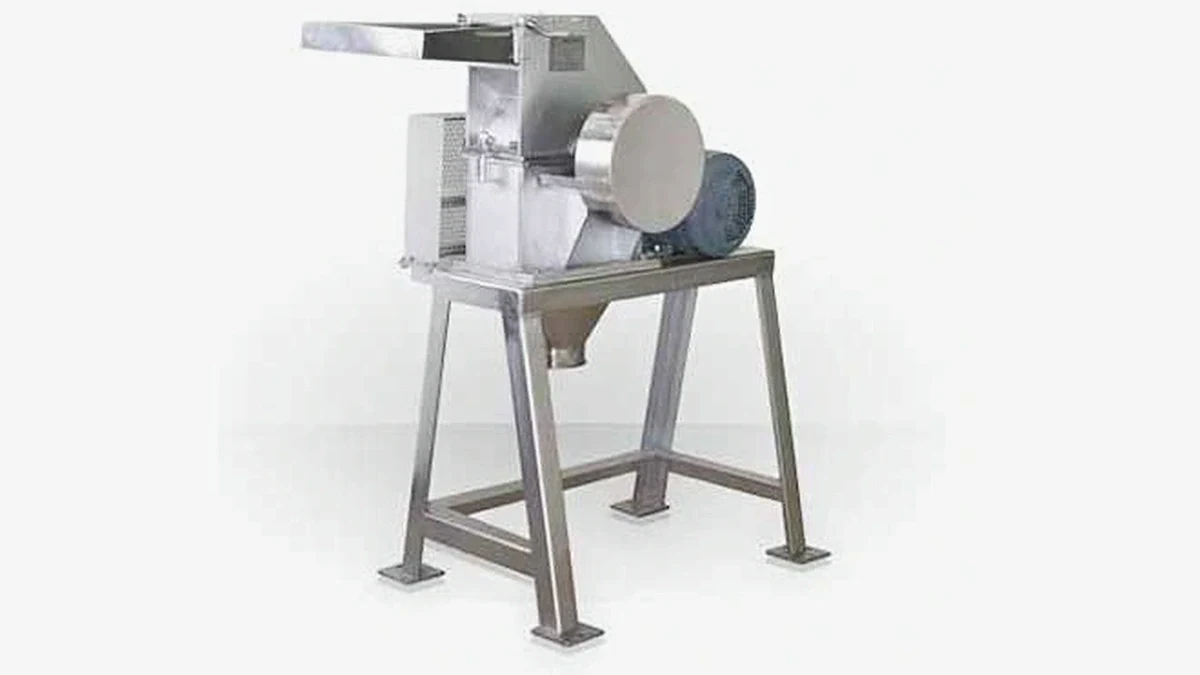
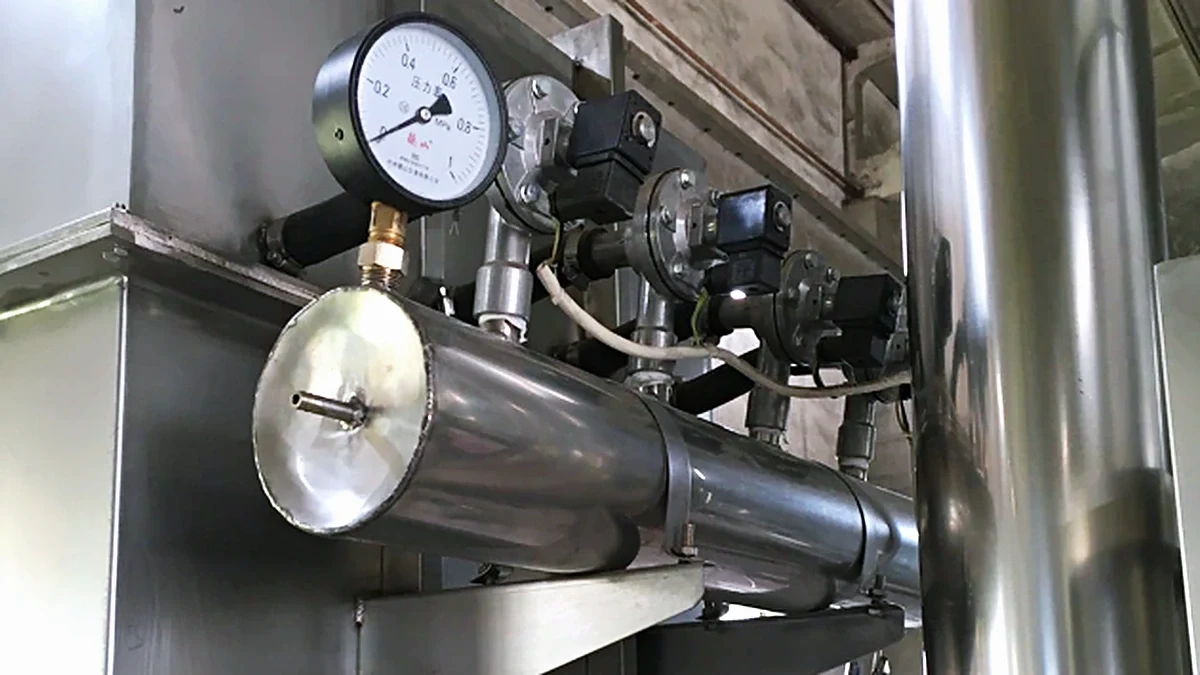
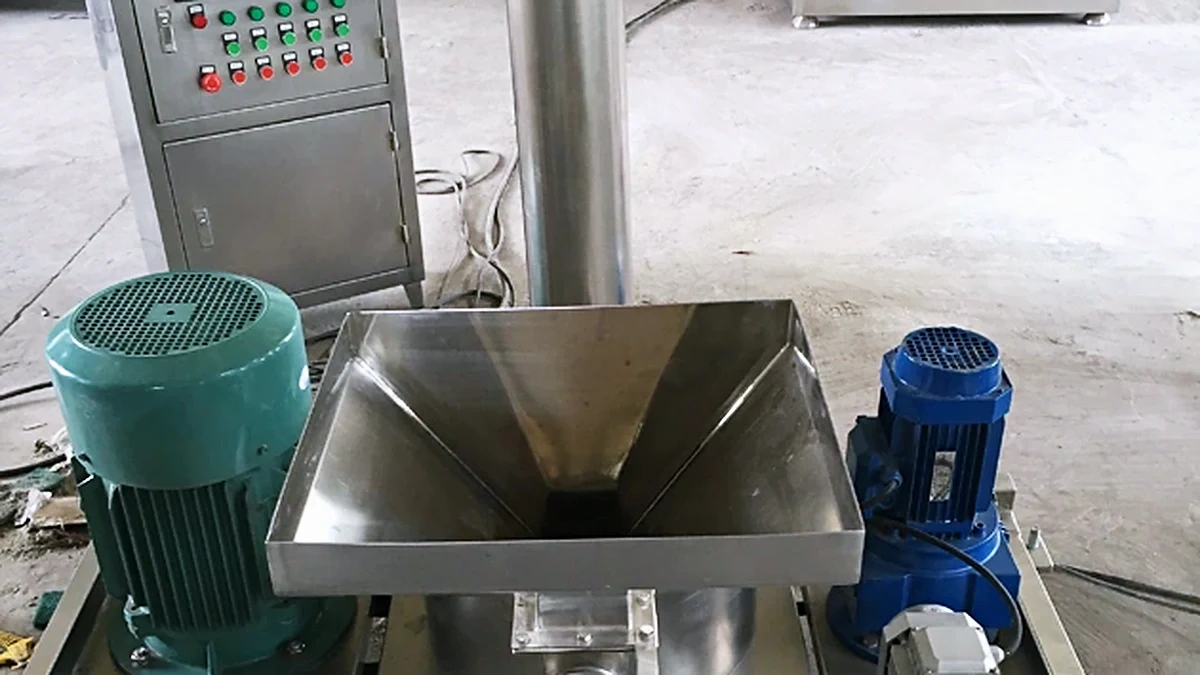
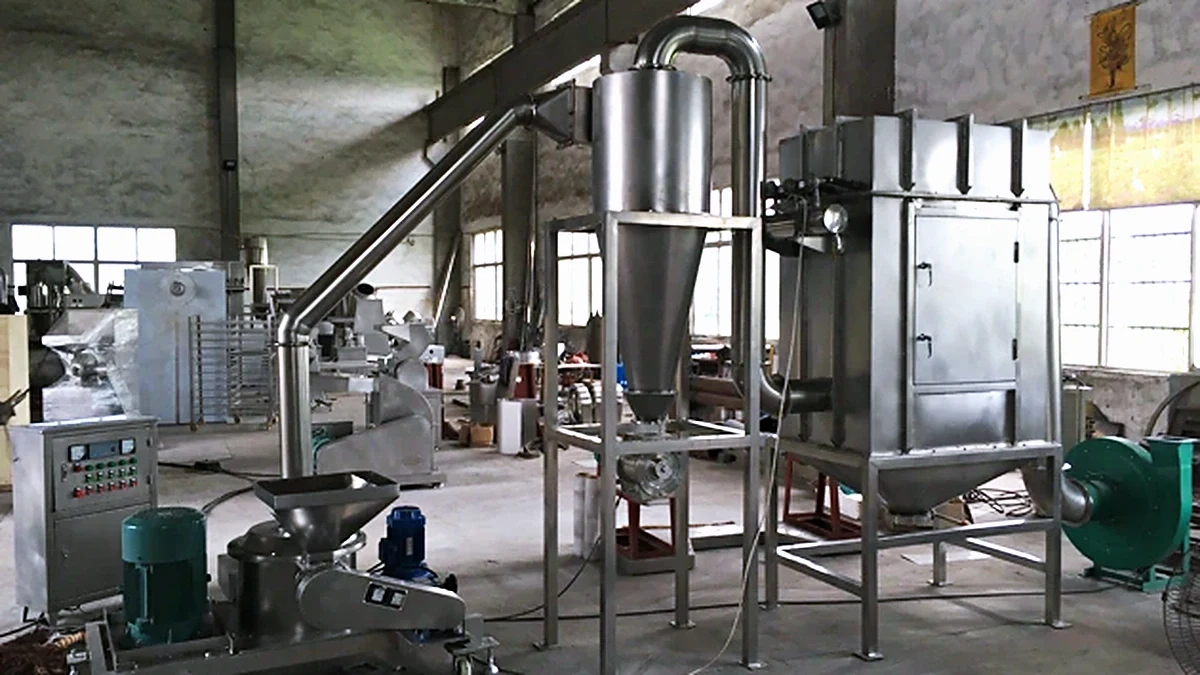
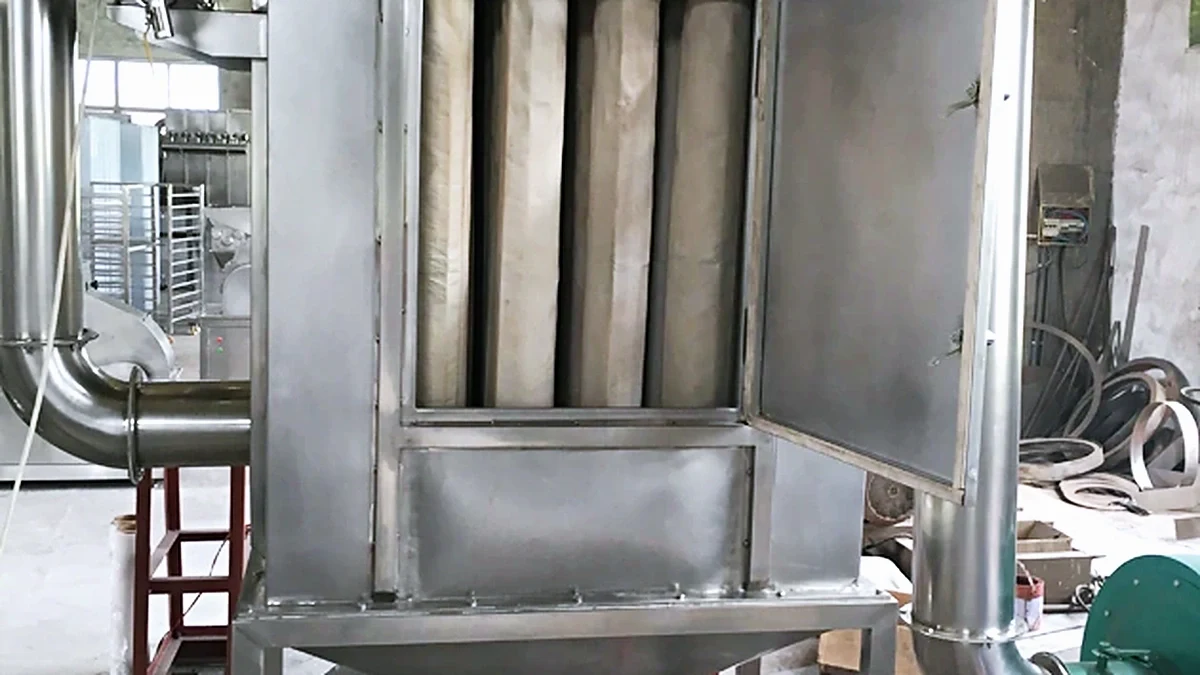
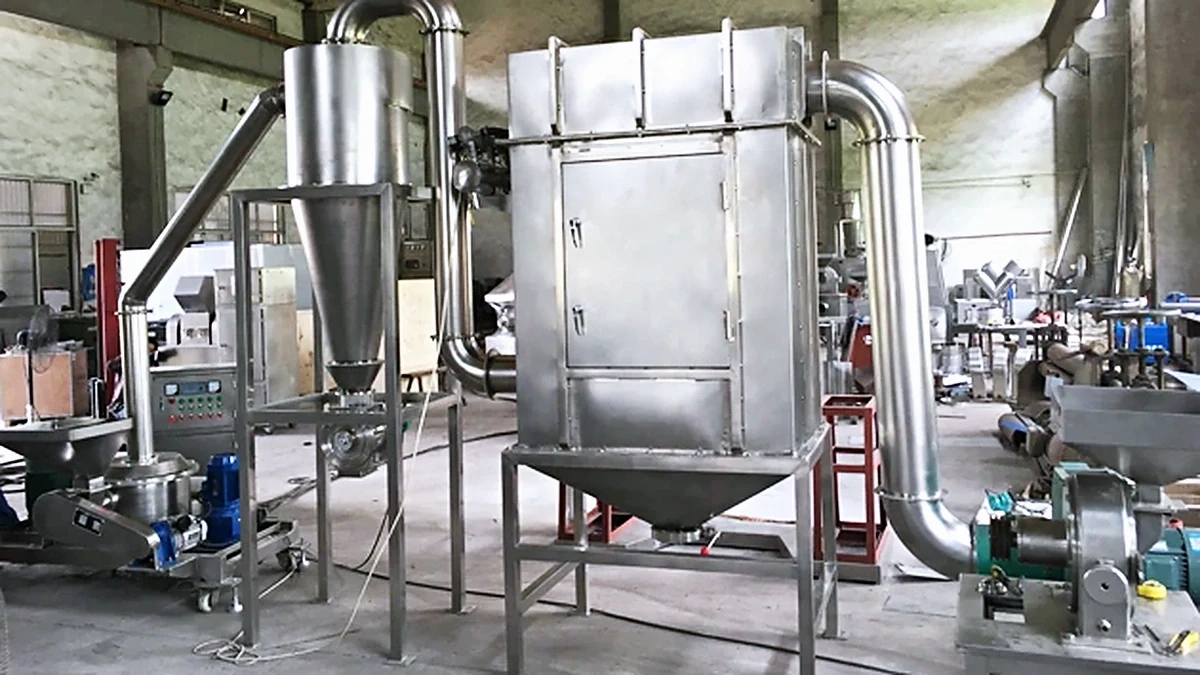
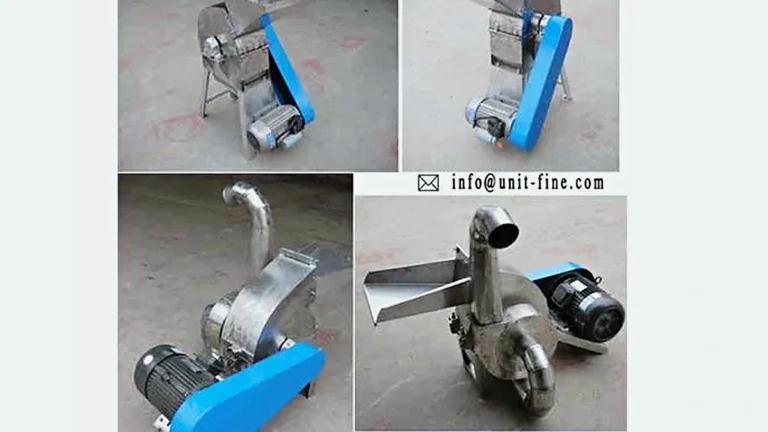


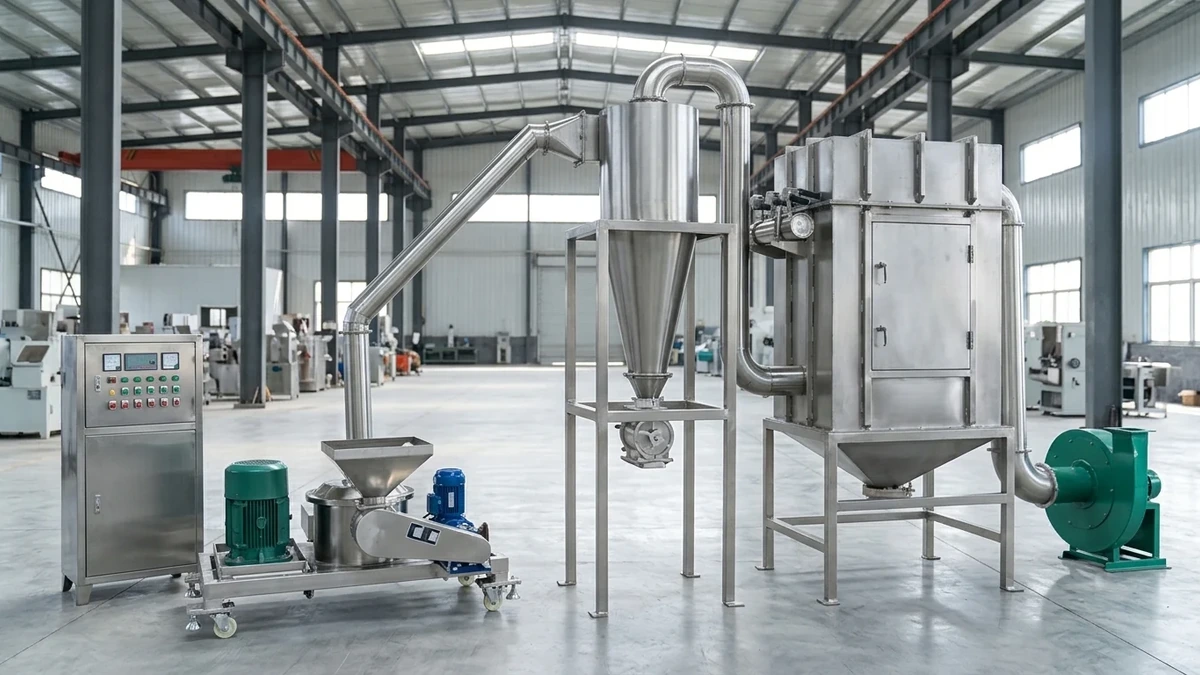
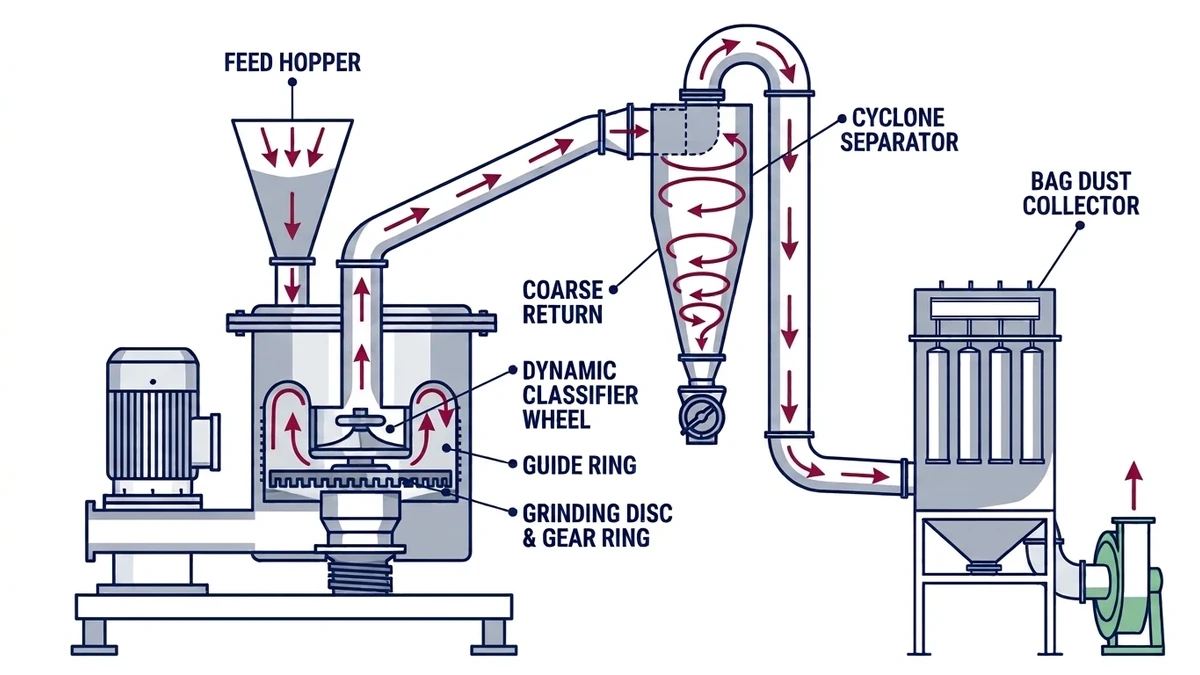
The UNITFINE UF Super Fine Micro Pulverizer (UWFJ-15 to UWFJ-110) is a screenless fine-grinding and air-classification system engineered for continuous production of fine and superfine dry powders. Combining a main grinding unit, internal dynamic classifier wheel, cyclone separator, bag-type dust collector, conveying piping, and electric control box, this micro pulverizer supports adjustable output fineness from 60 to 450 mesh across pharmaceutical-material, food-ingredient, animal-feed, chemical, and mineral powder applications—subject to material trial grinding.
Quick Technical Overview
- Published Models: 6 standard models — UWFJ-15, UWFJ-20, UWFJ-30, UWFJ-60, UWFJ-80, and UWFJ-110 (10–3000 kg/h reference capacity; 13.5–230 kW total power; <10 to ~20 mm feed size).
- Screenless Air Classification: Internal rotating classification wheel separates fine particles from oversize without mesh screens; classifier speed and airflow can be adjusted during operation without stopping the machine.
- Maintainability & Recovery: High-grade alloy steel grinding parts, pneumatic-spring top cover opening on two sides, detachable pipes/screws for cleaning, and bag dust collection for fine powder recovery.
- When to Evaluate an Alternative: For coarser dry crushing of grains, fibrous roots, or feeds where screen-based sizing is preferred, compare with the UNITFINE Industrial Hammer Mill; for hard abrasive minerals, evaluate a ball mill.
How the UF Super Fine Micro Pulverizer Works
Dry feed material enters through the feed funnel and spiral feeder into the grinding chamber, where high-speed rotating blades impact, shear, and pulverize the incoming granules. As particles break down into fine powder, the air stream carries them upward through a guide ring into the revolving internal classification wheel.
Inside the classifier zone, aerodynamic drag and centrifugal force separate particles by critical cut diameter. Coarse particles exceeding the cut size are rejected back into the grinding chamber for further pulverizing, while qualified fine powder passes through the classifier wheel under negative-pressure conveying into the cyclone separator and bag-type dust collector for clean discharge and fine-particle recovery.

UWFJ Series Technical Specifications (UWFJ-15 to UWFJ-110)
The table below lists the published baseline specifications for all six standard UNITFINE UF Super Fine Micro Pulverizer models. Achievable output fineness and hourly capacity vary significantly with material hardness, moisture, oil content, and thermal sensitivity, and must be confirmed by trial grinding.
| Parameter | UWFJ-15 | UWFJ-20 | UWFJ-30 | UWFJ-60 | UWFJ-80 | UWFJ-110 |
|---|---|---|---|---|---|---|
| Production Capacity (kg/h)* | 10–200 | 20–300 | 30–800 | 50–1200 | 100–1200 | 200–3000 |
| Input Granule Size (mm) | <10 | <12 | ~10 | ~10 | ~15 | ~20 |
| Output Fineness (mesh)* | 80–320 | 80–320 | 60–450 (adjustable) | 60–450 (adjustable) | 60–450 (adjustable) | 60–450 (adjustable) |
| Total Power (kW) | 13.5 | 17.5 | 46 | 84.15 | 145 | 230 |
| Main Running Speed (rpm) | ~6000 | ~4800 | 3800 | 2800 | 2200 | 1480 |
| Machine Weight (kg) | 850 | 1250 | 2800 | 4500 | 9500 | 16000 |
| Overall Size L × W × H (mm) | 4200 × 1200 × 2700 | 4700 × 1250 × 2900 | 6640 × 1300 × 3960 | 7500 × 2300 × 4530 | 9800 × 2600 × 6800 | 13000 × 3500 × 7200 |
*Reference ranges only. Actual particle fineness (mesh / D97) and hourly output depend on material hardness, toughness, moisture, oil content, and target cut point, and must be verified through material trial grinding.
Key Structural Features for Fine Powder Production
- On-the-Fly Fineness Adjustment Without Mesh Screens: Adjusting classifier wheel speed and airflow changes output particle size distribution without stopping the mill or swapping screens, eliminating screen tearing and blinding on fine dry powders.
- Simultaneous Grinding & Internal Classification: Integrating classification directly inside the main mill housing reduces over-grinding of qualified fines and helps improve energy efficiency compared with separate grinding and external screening stages.
- High-Grade Alloy Steel Grinding Parts: Core impact blades and wear parts are built from high-grade alloy steel to support extended service life under continuous industrial operation.
- Pneumatic-Spring Split Housing & Detachable Piping: Pneumatic springs assist opening the top cover on two sides, while conveying pipes and feed screws detach cleanly to simplify washdown, inspection, and product changeovers.
- Integrated Cyclone & Bag Dust Collection: Negative-pressure conveying routes finished powder through a cyclone separator and bag-type collector to capture and recover fine powder while keeping the work area clean.

Micro Pulverizer vs. Hammer Mill & Downstream Screening
Within UNITFINE’s mills, grinders, and pulverizers range, choosing between a screenless micro pulverizer and a screen-based hammer mill depends primarily on target fineness, material fiber/oil content, and particle size distribution requirements:
| Selection Factor | UF Super Fine Micro Pulverizer (UWFJ Series) | UNITFINE Hammer Mill (UHM Series) |
|---|---|---|
| Size Control Method | Screenless internal dynamic air classifier wheel (speed & airflow adjustable) | Replaceable physical perforated discharge screen net |
| Target Output Fineness | Fine to superfine powder (60–450 mesh / 80–320 mesh reference, confirm by trial) | Coarse to medium crushing and granulation |
| Ideal Feed Characteristics | Dry, brittle, crystalline, or low-oil powders (<10 to ~20 mm feed size) | Whole grains, fibrous herbs/roots, animal feeds, and larger dry chunks |
| Downstream Check-Screening | Often paired with an ultrasonic vibrating sieve or rotary vibrating sieve for final QA check-screening | Often paired with standard multi-deck vibrating screens for coarse/fine cuts |
Engineering Selection Boundaries & Trial Grinding Checks
Because superfine grinding puts concentrated mechanical energy into every kilogram of powder, confirm four boundary conditions before selecting a UWFJ model:
- Moisture, Oil & High-Fiber Limits: Elevated moisture, natural oils (such as oily spices or seeds), or stringy high-fiber feeds can coat the grinding chamber or choke the air-classifier wheel. Pre-drying or pre-crushing may be required.
- Heat Sensitivity & Softening Point: High rotor speeds (1480–6000 rpm across UWFJ-110 to UWFJ-15) generate frictional heat. For sugar-rich, waxy, or low-melting-point materials, confirm maximum safe product temperature and whether cooling options are needed.
- Feed Size Pre-Conditioning: Keep incoming granules within model feed limits (<10 mm to ~20 mm). Larger lumps should be pre-crushed upstream so the spiral feeder and grinding blades operate smoothly.
- Hardness, Wear & Dust Safety: Highly abrasive minerals accelerate blade and liner wear (consider a ball mill when abrasiveness is extreme). For combustible fine powders, review grounding, explosion-safety, and facility dust-containment requirements during quotation.
What to Include When Requesting a Micro Pulverizer Quote
To size the right UWFJ model (UWFJ-15 to UWFJ-110), confirm whether trial grinding is needed, and match dust collection and electrical controls, please share:
- Material Name & Characteristics: Hardness, moisture percentage, oil/fat or sugar content, fiber level, and maximum allowable temperature.
- Feed Size & Target Fineness: Incoming particle size (mm) and desired output fineness (mesh or D97/micron target).
- Capacity & Duty Cycle: Target hourly throughput (kg/h) and daily operating hours.
- Construction & Cleanability: Required contact-material grade (e.g., SUS304/SUS316L or alloy steel per project URS) and cleaning/changeover frequency.
- Plant Utilities & Footprint: Available floor space/ceiling height (up to 7200 mm on UWFJ-110), local voltage/frequency, and dust/safety requirements.
Need Trial Grinding Verification for UWFJ-15 to UWFJ-110?
Share your material sample details, target mesh, and required hourly output through our engineering inquiry page. Our specialists will recommend the right UWFJ model and advise on trial grinding to verify achievable fineness and capacity.
Frequently Asked Questions About UF Super Fine Micro Pulverizers
What capacities and fineness ranges do UNITFINE UWFJ Micro Pulverizers cover?
The six published models—UWFJ-15, UWFJ-20, UWFJ-30, UWFJ-60, UWFJ-80, and UWFJ-110—cover reference capacities from 10–200 kg/h up to 200–3000 kg/h, with total power from 13.5 kW to 230 kW and adjustable reference fineness from 80–320 mesh (UWFJ-15/20) and 60–450 mesh (UWFJ-30 to UWFJ-110). Exact achievable fineness and capacity must be confirmed by trial grinding on your material.
Does the UF Super Fine Micro Pulverizer use mesh screens?
No. Instead of physical perforated screens, it uses an internal rotating air-classification wheel. Adjusting the classifier speed and airflow controls the critical cut diameter on the fly without stopping the machine, while coarse particles are returned to the grinding chamber.
How is a micro pulverizer different from a hammer mill?
A hammer mill uses swinging hammers and a physical discharge screen for coarse-to-medium crushing of grains, herbs, and feeds. A micro pulverizer integrates high-speed grinding blades with dynamic air classification to produce much finer powders (60–450 mesh reference) with narrower top-size control and no screen blinding.
How is the UWFJ Micro Pulverizer cleaned between product batches?
The top cover opens on two sides with pneumatic springs for internal chamber access, and the conveying pipes and feed screws are designed to detach and reassemble easily, simplifying routine cleaning and blade inspection between runs.
What information is needed to get an accurate micro pulverizer quotation?
Please share your material name, moisture/oil content, hardness, heat sensitivity, incoming granule size (mm), target output fineness (mesh or micron target), required hourly capacity (kg/h), construction-material preferences, and local electrical specifications.