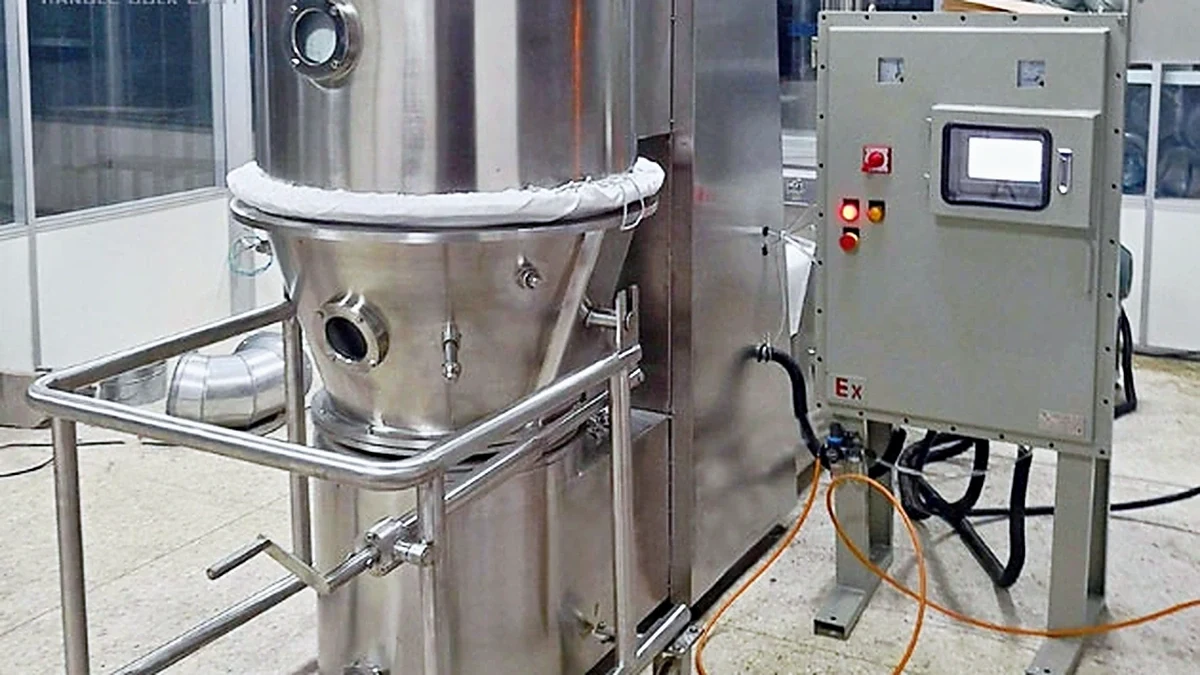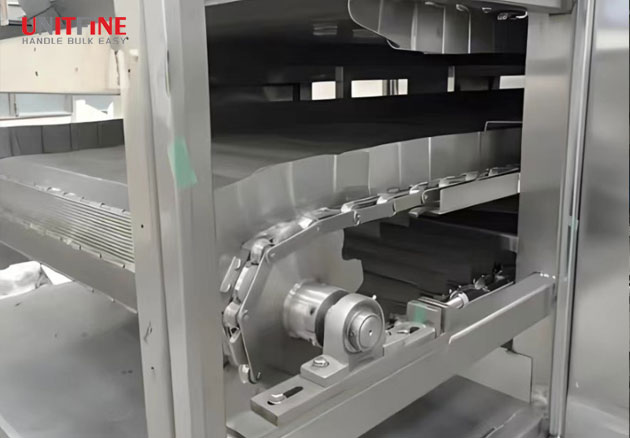
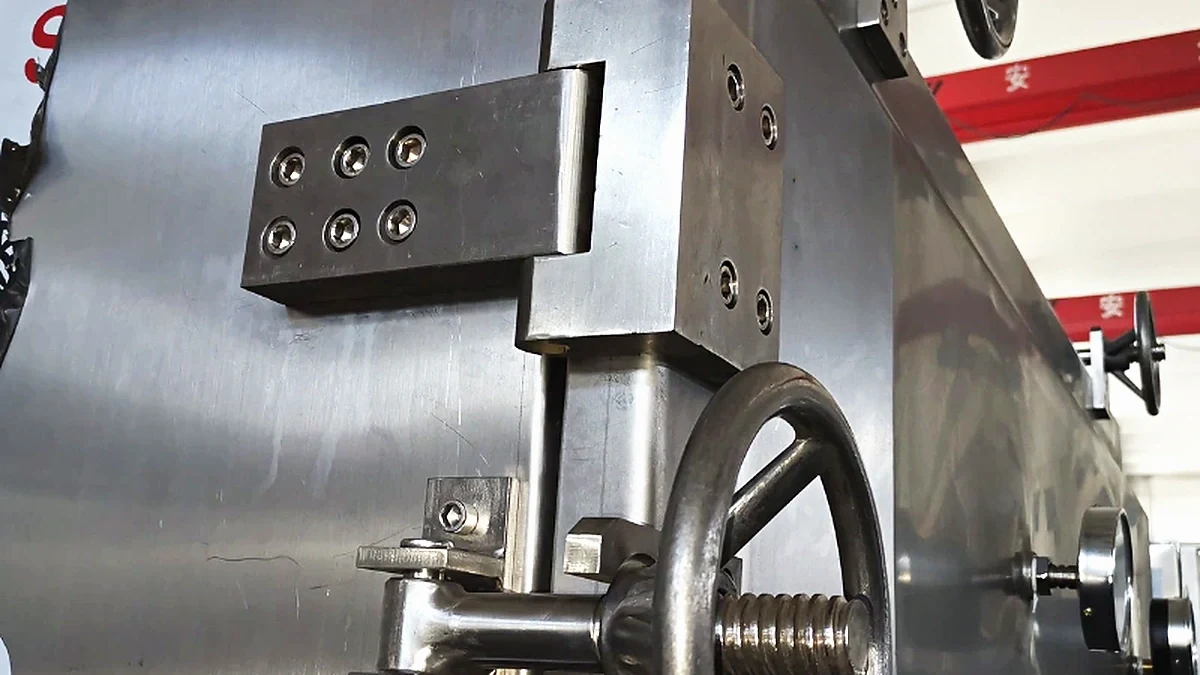
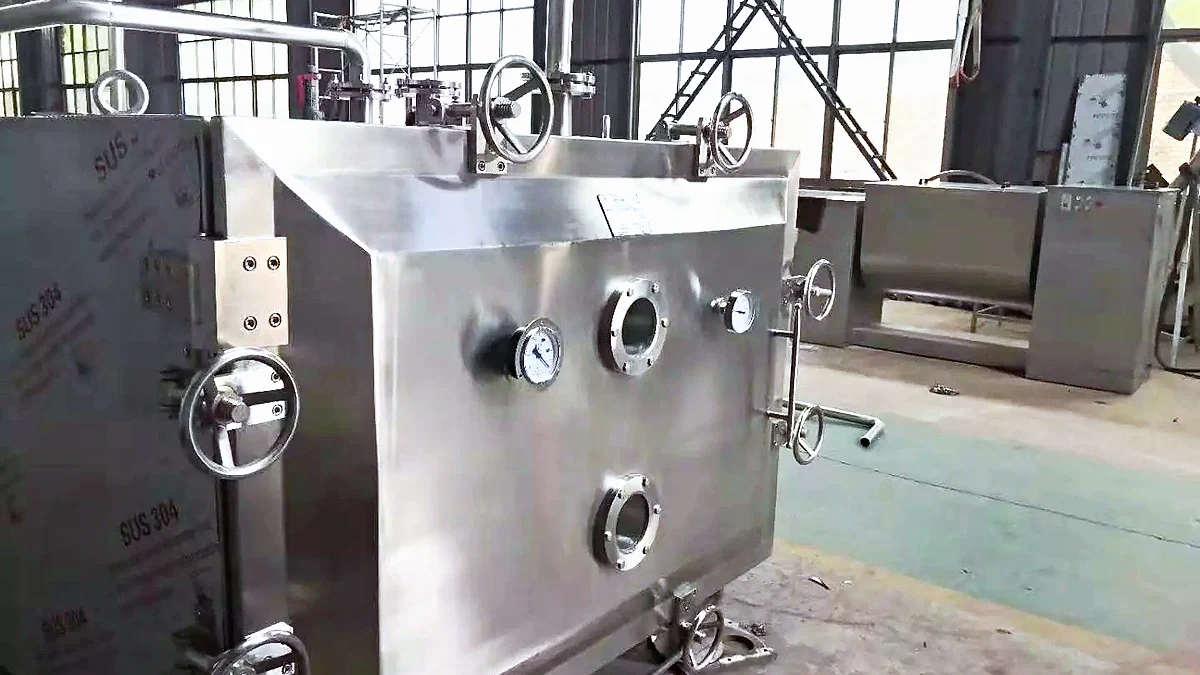
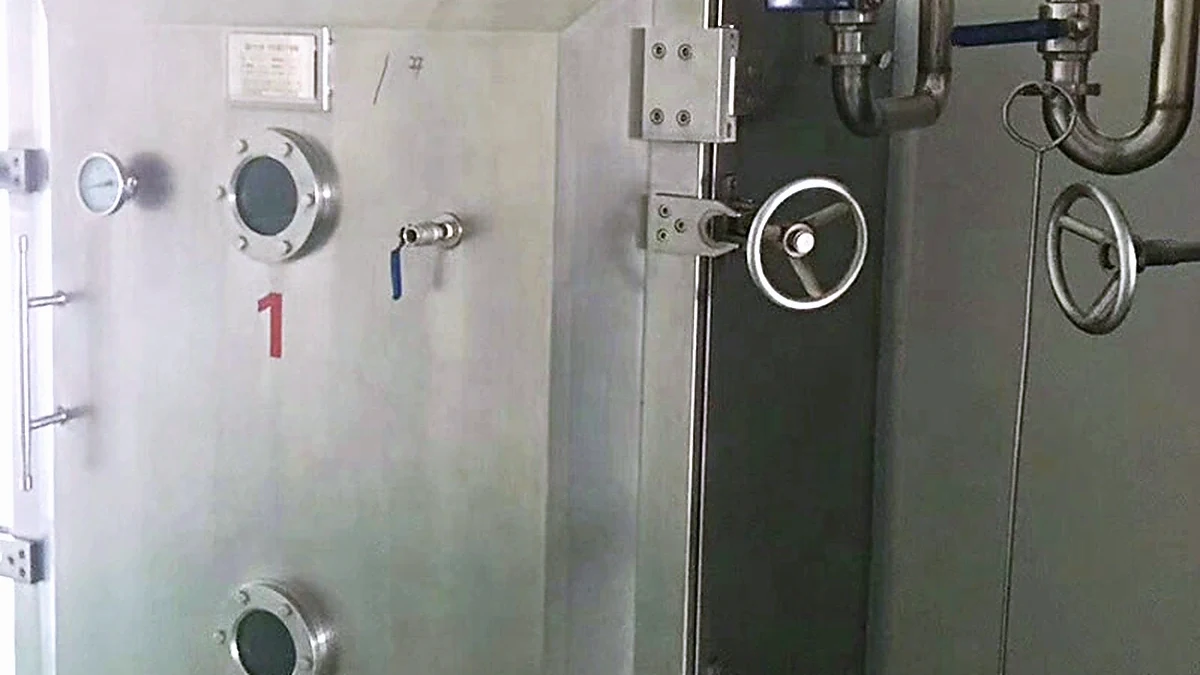
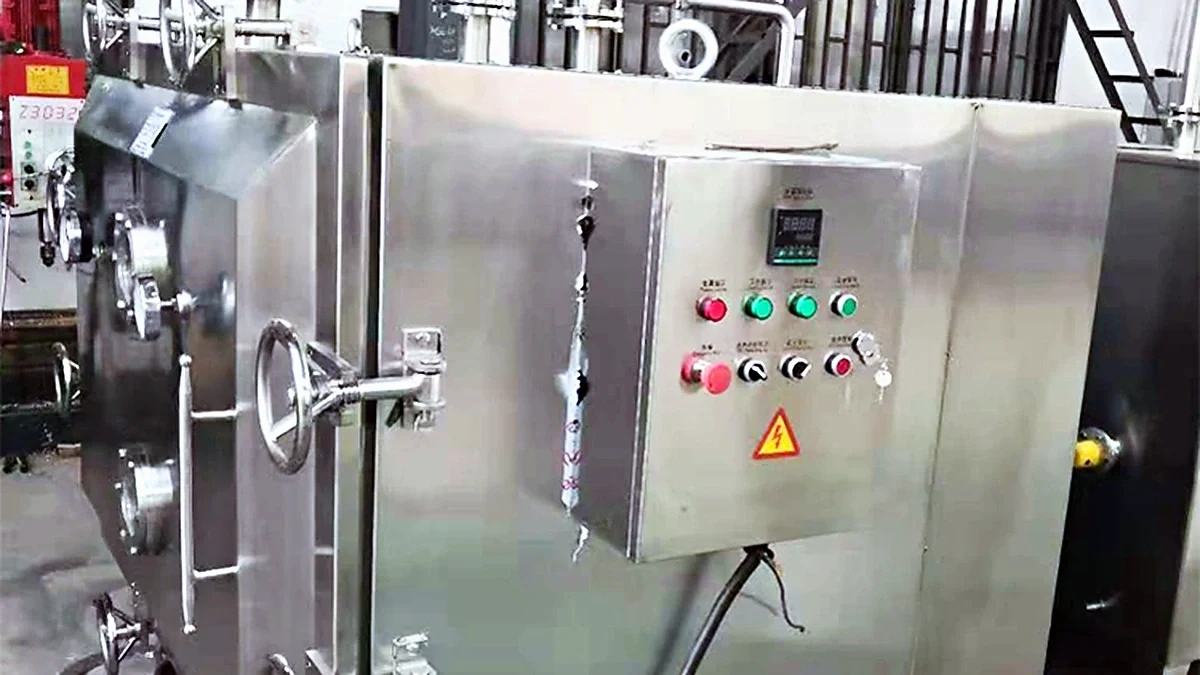
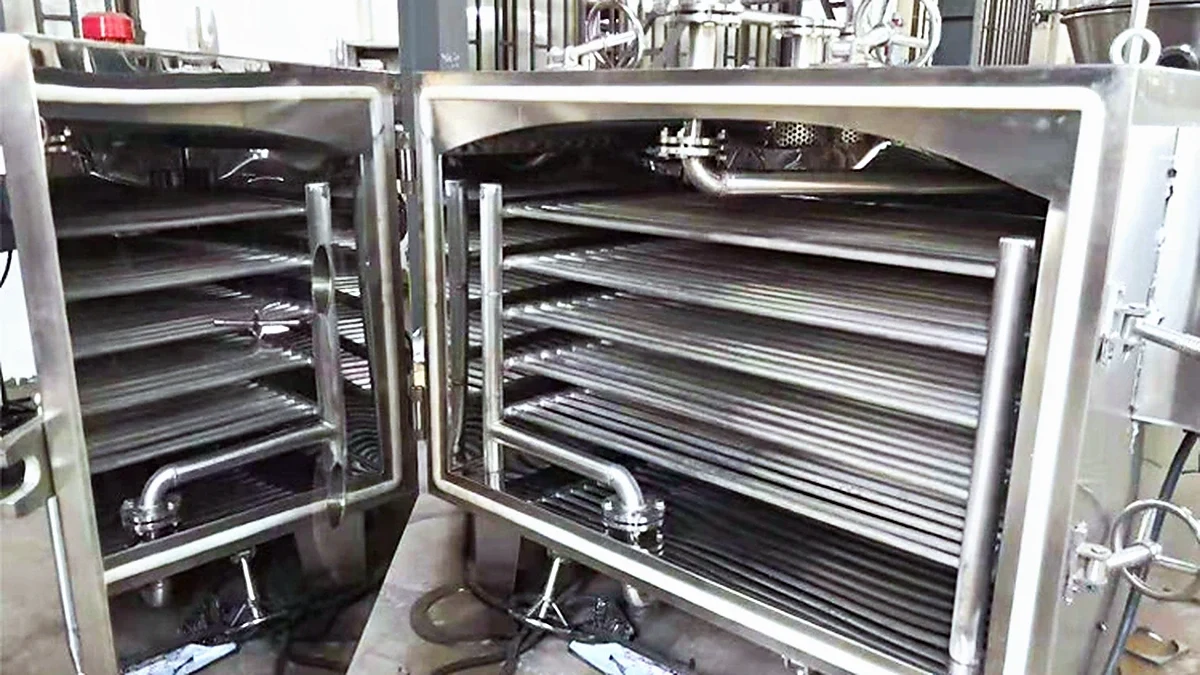
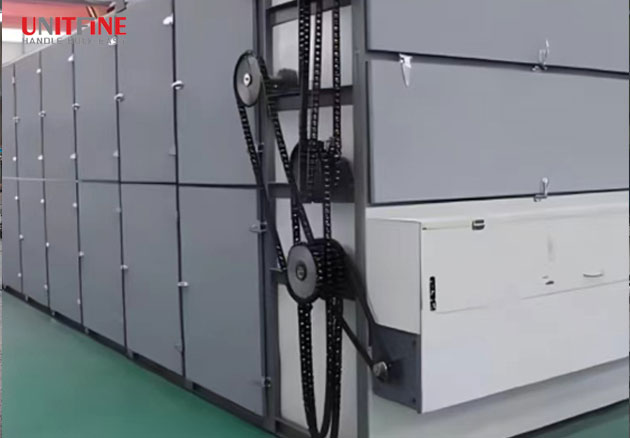

A vacuum tray dryer should be selected around the wet feed, the required dry product and the complete batch cycle—not chamber volume alone. The UNITFINE FZG system is a static batch dryer in which product is spread on trays, heated through the shelf arrangement and processed under reduced pressure. The offered chamber, trays, heating loop, vacuum source and vapor-handling system must be confirmed as one configuration.
What is an FZG vacuum tray dryer?
The FZG is a rectangular, static vacuum tray dryer. Wet material is placed in trays and loaded into a sealed chamber. Heat is supplied through the specified shelf or heating arrangement while the vacuum system lowers chamber pressure and removes vapor. A condenser and receiver may be included when condensate collection or solvent recovery is required.
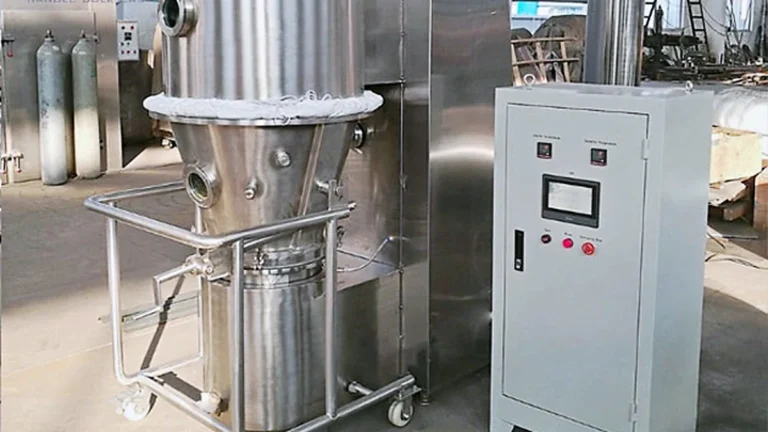
This is different from a conventional hot-air tray cabinet. The FZG duty described here does not depend on recirculating hot air through the chamber. It also differs from a fluid bed dryer, where process gas supports and moves suitable particles. The correct choice depends on the feed’s wet-state behavior, product temperature limit, vapor duty, quality target, batch handling and cleaning requirements.
How does a vacuum tray dryer work?
- Load: Spread the prepared wet material in trays at an agreed layer depth and load the trays onto the shelves.
- Close and evacuate: Seal the chamber and establish the specified vacuum using the selected vacuum system.
- Supply heat: Circulate the confirmed heating medium through the shelf or heating circuit. Heat passes to the trays and product without mechanically agitating the batch.
- Remove vapor: Water or solvent vapor leaves through the vacuum line. Where recovery is required, the vapor-handling system must be matched to the actual vapor load and cooling conditions.
- Reach the endpoint: Continue the controlled cycle until the agreed moisture, solvent or product-quality endpoint is met.
- Cool, vent and unload: Follow the specified cooldown and venting procedure before opening the chamber and removing the trays.

Reduced pressure can allow moisture or solvent to evaporate at a lower temperature than under atmospheric conditions, but pressure alone does not define the product temperature, drying rate or endpoint. Heat-transfer area, layer depth, material resistance, vapor removal, leakage, condenser duty and control strategy all affect the result.
When is static vacuum tray drying worth evaluating?
Typical evaluation starts with heat-sensitive, oxidation-sensitive, fragile or solvent-bearing materials that can be handled as a stationary layer. Chemical intermediates, pharmaceutical materials, food ingredients, colors, nutraceutical materials, powders, granules, crystals, pastes or similar feed forms may be candidates, subject to trial and configuration review.
Suitability is not established by the industry name alone. A representative sample should be assessed for wet consistency, stickiness, foaming or bumping tendency, particle or crystal damage, allowable temperature, initial and target moisture or solvent level, and unloading behavior. Materials that require continuous operation, strong agitation or rapid gas–solid contact may call for another drying method.

Size the dryer from usable tray loading—not chamber volume
Chamber dimensions describe physical space; they do not state how many kilograms can be dried per batch. The practical load depends on the usable tray area, allowable layer depth, wet bulk density or slurry loading, product behavior, heat-transfer duty, vapor load and the required endpoint.
| Selection input | Why it matters | What to confirm |
|---|---|---|
| Wet batch mass and composition | Defines the material and liquid load entering each cycle. | Mass basis, solids content and liquid identity. |
| Tray area and layer depth | Controls exposed area and the distance for internal moisture movement. | Usable area per tray and justified loading depth. |
| Initial and final moisture or solvent | Defines the evaporation duty and endpoint. | Wet/dry basis, test method and acceptance limit. |
| Product temperature limit | Constrains heating-medium and shelf conditions. | Maximum product temperature and exposure time. |
| Vapor and condenser duty | Affects vacuum stability and recovery performance. | Peak/average vapor load, cooling supply and recovery target. |
| Handling and cleaning | May dominate labor and turnaround time. | Tray count, loading method, residue, access and cleaning procedure. |
Ask suppliers to state the proposed wet load per tray and per batch together with the assumptions behind it. A tray-count label, internal chamber volume or nominal model name should not be converted into a processing-capacity claim without material-specific evidence.
Compare the complete batch cycle
A quoted “drying time” may cover only the main heating and evaporation period. Production planning should include every step that occupies the dryer or the operator:
- feed preparation and tray filling;
- loading, door closure and leak checks;
- pump-down and heating;
- controlled drying and endpoint confirmation;
- cooling or temperature conditioning;
- venting or nitrogen-related steps where specified;
- unloading, product transfer and yield reconciliation;
- tray, chamber and line cleaning;
- inspection and preparation for the next batch.
Use the same endpoint and the same cycle boundaries when comparing quotations. Trial data from a representative feed is more useful than a universal time claim.
Solvent-bearing feed requires a system-level review
Do not assume that a standard vacuum chamber is automatically suitable for flammable, toxic or valuable solvents. Provide the solvent identity, safety data, wet-batch loading, expected vapor rate, required recovery, product temperature limit and applicable site classification. The condenser, receiver, vacuum pump, seals, instruments, controls, materials and vent or discharge route must be reviewed together.
Any explosion-protection, electrical-area or regulatory requirement must be stated in the quotation and supported by configuration-specific documents. This page does not claim that every FZG arrangement is explosion-proof, cGMP-compliant or suitable for every solvent.

Utilities and scope to define before quotation
- Heating: available steam, hot water or other approved medium; supply/return conditions and control method.
- Vacuum: required operating range, vapor compatibility, pump arrangement and discharge conditions.
- Cooling: cooling-water or chiller conditions for the proposed condenser duty.
- Electrical: voltage, frequency, phase, installed-area requirements and control expectations.
- Gas: nitrogen supply and operating sequence only where the process and offered configuration require it.
- Materials: product-contact and non-contact construction, seals, surface finish and cleaning chemicals.
- Documentation: drawings, component list, inspection, trial, FAT, manuals and any project-specific records.
Published model reference
The following values are retained from the existing UNITFINE page as a legacy model reference. They are not a guarantee of current availability or material-specific capacity. Confirm the selected model, units, construction, utilities and supplied scope in the quotation and approved drawing.
| Model | YZG-600 | YZG-1000 | YZG-1400A | FZG-8 | FZG-15 | FZG-30 | FZG-38 |
|---|---|---|---|---|---|---|---|
| Inner size (mm) | 600 × 976 | 1000 × 1527 | 1400 × 2054 | 730 × 1200 × 1450 | 1500 × 1400 × 1220 | 2200 × 1500 × 1500 | 2200 × 1500 × 1600 |
| Overall size (mm) | 1135 × 810 × 1020 | 1693 × 1190 × 1500 | 2386 × 1675 × 1920 | 930 × 1380 × 1540 | 1513 × 1924 × 2060 | 2400 × 1680 × 2050 | 2400 × 1680 × 2250 |
| Drying-rack layers | 4 | 6 | 8 | 8 | 8 | 8 | 10 |
| Layer distance (mm) | 81 | 102 | 102 | 122 | 122 | 122 | 122 |
| Tray size (mm) | 310 × 600 × 45 | 250 × 410 × 45 | 400 × 600 × 45 | 460 × 640 × 45 | 460 × 640 × 45 | 460 × 640 × 45 | 460 × 640 × 45 |
| Tray number | 4 | 12 | 32 | 16 | 32 | 64 | 80 |
| Drying-rack tube pressure | ≤ 0.784 MPa | ||||||
| Drying-rack temperature | −35 to 150 °C | ||||||
| No-load vacuum degree in tank | −0.09 to −0.096 MPa | ||||||
| Dryer weight (kg) | 250 | 800 | 1400 | 1680 | 2100 | 2850 | 3200 |
The published table does not state wet kilograms per tray, usable layer depth, evaporation rate, drying time or finished product quality. These values require process data and, where appropriate, representative trials.
Vacuum tray dryer or fluid bed dryer?
| Decision factor | FZG vacuum tray dryer | GFG fluid bed dryer |
|---|---|---|
| Product movement | Static layer on trays. | Suitable particles move in process gas. |
| Main selection question | Can the feed dry as a controlled stationary layer under vacuum? | Can the wet feed fluidize in the proposed design? |
| Handling | Manual or specified tray loading/unloading. | Batch transfer through the selected bowl or chamber arrangement. |
| Evidence to compare | Layer depth, shelf duty, vacuum/vapor system and complete cycle. | Wet-state fluidization, airflow, filtration, fines and complete cycle. |
Review the UNITFINE GFG fluid bed dryer when fluidized gas–solid drying may suit the feed. See the UNITFINE drying equipment range for adjacent equipment families.
Information needed for an FZG quotation
- material name, safety data and wet-feed physical form;
- wet batch mass, solids content, bulk density where meaningful, and required batches per day;
- initial and target moisture or solvent level, including wet/dry basis and test method;
- liquid or solvent identity, concentration, hazard data and recovery requirement;
- maximum product temperature, exposure limit and critical quality attributes;
- proposed tray loading, layer depth and acceptable product loss;
- available heating, cooling, vacuum, electrical and gas utilities;
- contact-material, seal, finish, cleaning and documentation requirements;
- installation area, access, ventilation and applicable site classification;
- representative sample and an agreed trial acceptance method, when testing is required.
Frequently asked questions
Does vacuum drying always mean a low product temperature?
No. Reduced pressure can lower the evaporation temperature, but actual product temperature depends on the material, pressure, shelf conditions, heat transfer and control strategy. State the maximum allowable product temperature and verify it during a representative trial.
How many kilograms can each FZG model dry per batch?
The published model table does not establish a universal kilogram capacity. Calculate a proposal from usable tray area, justified layer depth, wet-feed properties, liquid load, heat and vapor duty, and the required endpoint. Confirm the basis in the quotation.
Can chamber volume be used as processing capacity?
No. Chamber volume is a physical dimension, not a verified wet-load or evaporation rating. Tray area, layer depth, material density and behavior, vapor removal and the full cycle determine the practical batch duty.
Can an FZG dryer recover organic solvent?
A configured system may use a condenser and receiver, but recovery performance is not automatic. Provide the solvent, loading, vapor conditions, cooling supply, recovery target and site requirements so the complete vapor-handling system can be reviewed.
Is every FZG vacuum tray dryer explosion-proof?
No. Do not infer explosion protection from the product name, a vacuum chamber or nitrogen provisions. Electrical classification, controls, equipment protection and documents must match the actual solvent hazard and installation requirements and be confirmed in the offered scope.
What is included in a complete drying cycle?
Include tray filling and loading, closure and checks, pump-down, heating and drying, endpoint testing, cooling, venting, unloading, cleaning and preparation for the next batch. Compare suppliers using the same cycle boundary.
What should be tested before final selection?
Use representative wet feed and an agreed protocol to check loading depth, product temperature, drying profile, endpoint, quality, recovery where relevant, unloading and cleaning. Record the test configuration so the result is not separated from the equipment and operating conditions used.
Discuss your vacuum tray drying duty
Send UNITFINE your FZG vacuum tray dryer enquiry with the wet feed, batch basis, moisture or solvent endpoint, temperature limit, utilities, site conditions and documentation requirements. UNITFINE can then review the chamber, trays, heating, vacuum and vapor-handling configuration for the proposed duty.