
Mesh blinding is one of the most common reasons a vibrating sieve loses screening efficiency. When particles block the mesh openings, the open screening area becomes smaller, capacity drops, oversize contamination increases, and operators often try to solve the problem by increasing vibration or stopping the line for manual cleaning.
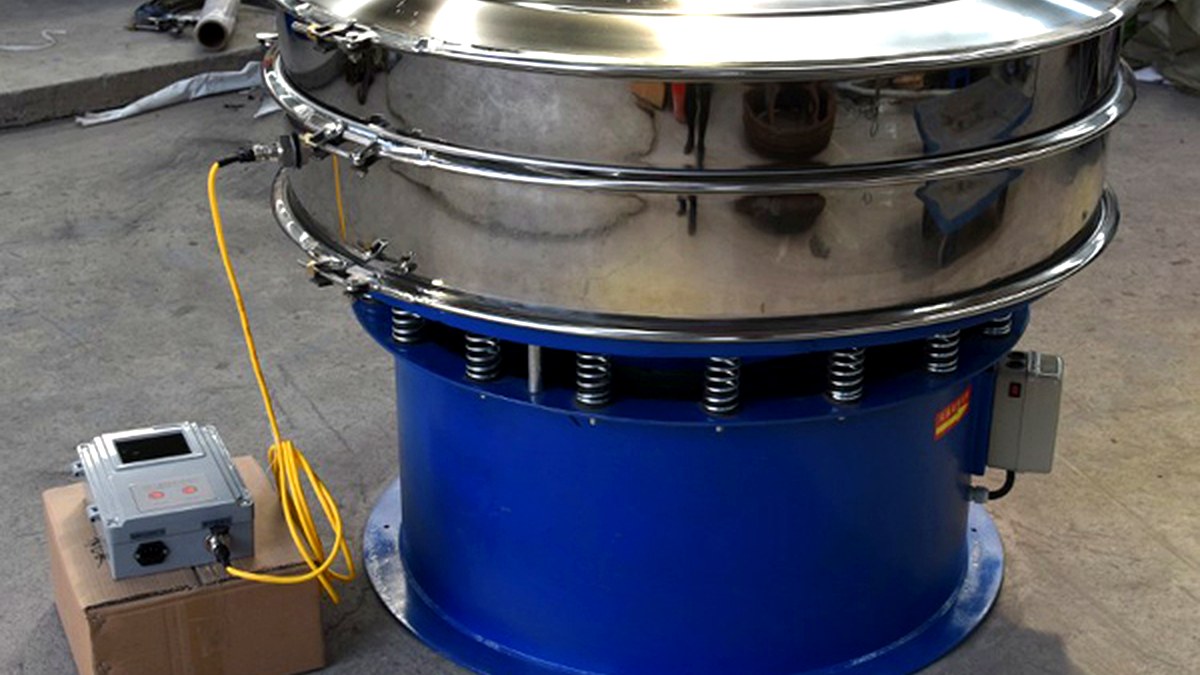
In most cases, mesh blinding is not caused by one single problem. It is usually a combination of material properties, moisture, particle shape, mesh size, feeding method, screen tension, and whether the sieve uses the right anti-blinding device. For fine powders, sticky materials, irregular particles, or materials with static charge, a standard screen deck may need additional cleaning support.
This guide explains how to identify the cause of mesh blinding, how to reduce screen blockage, and when to consider an ultrasonic vibrating sieve or other deblinding solution for difficult powder screening applications.
Quick Answer: How Do You Prevent Mesh Blinding?
To prevent mesh blinding in vibrating sieves, first identify whether the blockage is caused by near-size particles, sticky or damp powder, static electricity, agglomeration, poor feeding, incorrect mesh tension, or insufficient screen cleaning. Then match the solution to the cause: improve feed control, dry or condition the material, use ball cleaning or brush cleaning, adjust vibration settings, replace damaged mesh, or use ultrasonic deblinding for fine powders and stubborn blockage.
Common Types of Mesh Blinding in Vibrating Sieves
| Blinding Type | Typical Cause | What Operators Notice | Possible Solution |
|---|---|---|---|
| Near-size particle blinding | Particles close to the mesh opening become trapped | Capacity slowly drops while material still looks dry | Review mesh size, use screen cleaning balls, adjust vibration, consider ultrasonic assistance |
| Moisture-related blinding | Damp powder sticks to the wire mesh | Material cakes on the screen surface | Control moisture, improve storage, dry material, reduce feed surges |
| Static blinding | Fine powder clings to mesh because of static charge | Light powder sticks even when dry | Grounding, humidity control, material conditioning, ultrasonic deblinding |
| Agglomeration blinding | Powder forms soft lumps before or during screening | Oversize outlet contains soft clumps | Improve upstream handling, break lumps, control feed uniformity |
| Mechanical blinding | Mesh is loose, damaged, overloaded, or poorly installed | Unstable separation and frequent manual cleaning | Retension or replace mesh, inspect screen frame and cleaning device |
Why Mesh Blinding Happens
1. Particles Are Too Close to the Mesh Opening
Near-size particles are one of the most common causes of screen blinding. These particles are almost the same size as the mesh opening, so they can lodge inside the aperture instead of passing through or moving across the screen surface. Over time, more openings become blocked and the effective screening area decreases.
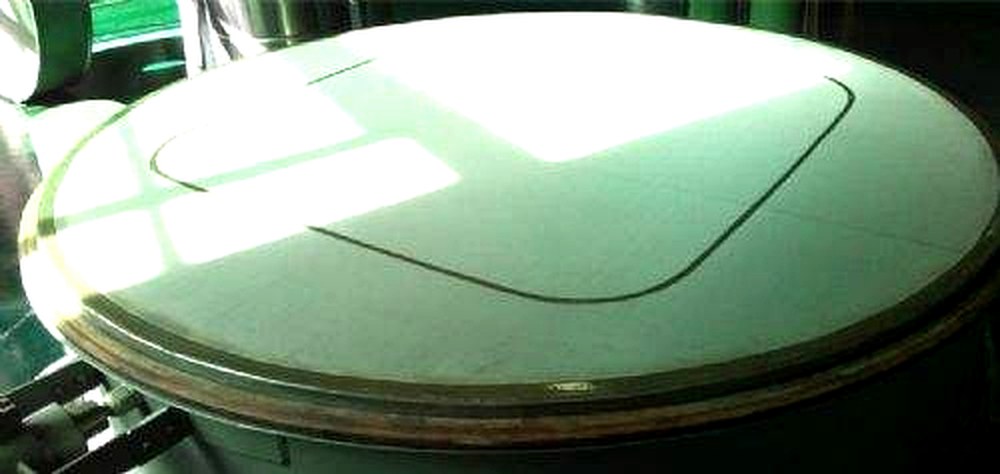
If this is the main cause, simply increasing vibration may not solve the problem. The equipment may need better screen cleaning, a different mesh type, or an anti-blinding system that keeps the openings clear during operation.
2. The Material Contains Moisture or Oil
Moisture can make powder particles stick together and adhere to the mesh. This is common in food powders, chemical powders, fertilizer, minerals, and materials stored in humid environments. Oil or fat content can create a similar problem because the material forms a film on the screen surface.
When moisture is the cause, the best solution often starts before the sieve. Check raw material storage, upstream drying, room humidity, and whether the feed is entering the screen in large uneven clumps.
3. Static Electricity Makes Fine Powder Cling to the Mesh
Very fine, light, or dry powders may carry static charge during conveying, feeding, or screening. Instead of separating cleanly, the particles cling to the wire mesh and each other. Static blinding can look like moisture blinding, but the material may feel dry.
Proper grounding, controlled humidity, material conditioning, and ultrasonic deblinding can help reduce static-related blockage in fine powder screening.
4. Feed Rate Is Too High or Uneven
A vibrating sieve needs material to spread across the screen surface. If the feed rate is too high, or if the material enters in pulses, the screen surface can become overloaded. When the material bed is too thick, particles do not have enough opportunity to contact open mesh and pass through.
Good screening performance often depends on upstream feeding. A controlled feeder, stable material flow, and correct inlet design can reduce mesh loading and improve separation.
5. The Screen Mesh Is Loose, Damaged, or Incorrectly Installed
Screen tension affects how the mesh responds to vibration. A loose mesh may not transfer vibration effectively, which reduces self-cleaning performance. A damaged mesh can also trap particles around broken wires or create uneven screening zones.
If blinding appears after a screen change, inspect installation, tension, sealing, frame condition, and whether the correct mesh specification was used.
How to Reduce Mesh Blinding Step by Step
Step 1: Identify the Material Problem First
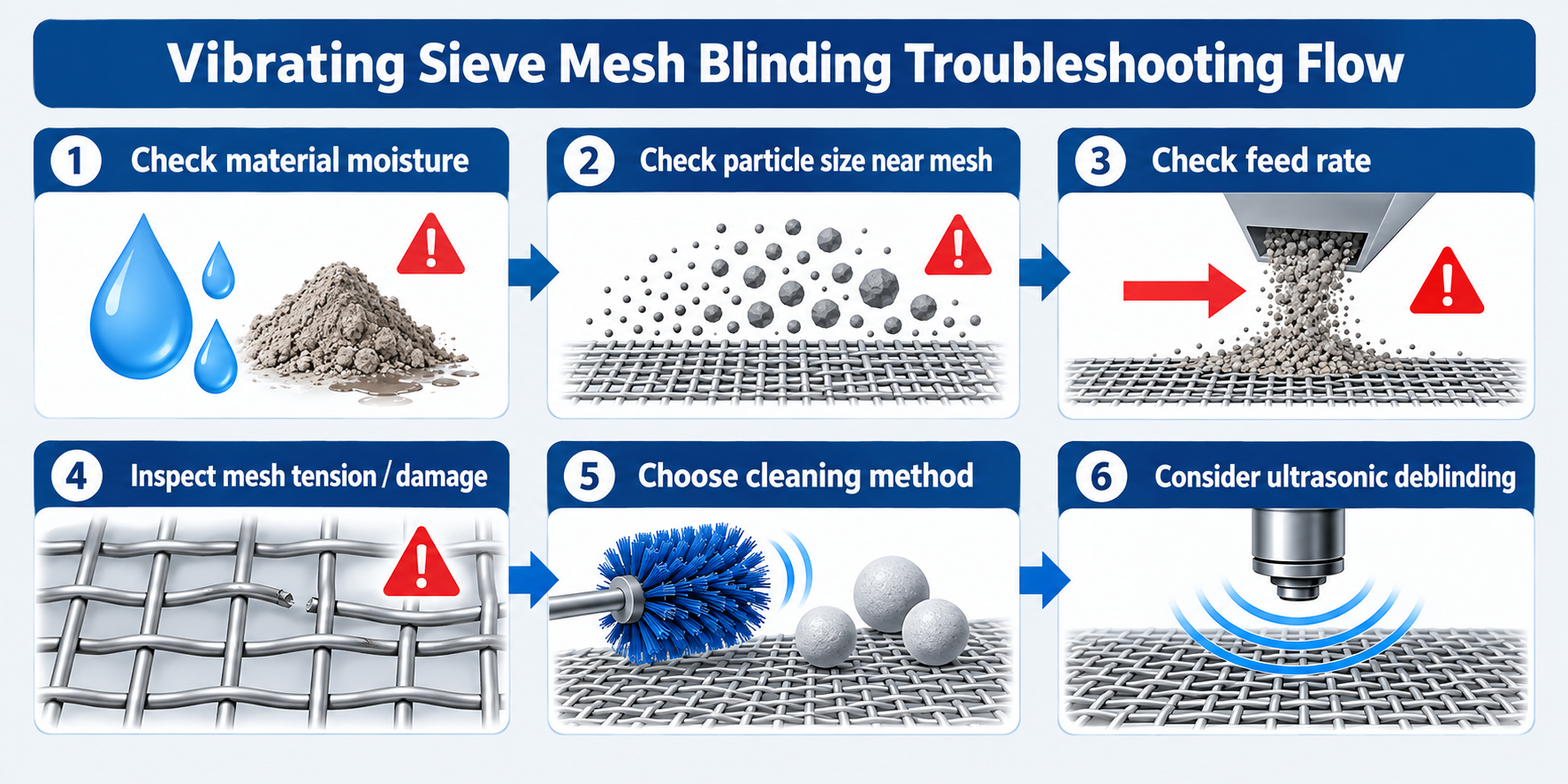
Before changing the machine, check the material. Record the material name, moisture content, particle-size distribution, bulk density, temperature, static behavior, and whether the powder forms lumps. A simple observation can prevent unnecessary equipment changes.
Step 2: Check Whether the Required Mesh Is Realistic
Very fine mesh openings are more likely to blind, especially when the powder contains near-size particles. If the process requires a fine mesh, consider whether the machine needs ultrasonic assistance, special screen cleaning, or a multi-stage screening process.
Step 3: Improve Feed Distribution
Feed should enter the sieve evenly. A sudden pile of material can cover the mesh and increase blockage. If the upstream equipment discharges unevenly, consider a buffer hopper, controlled feeder, or modified inlet arrangement.
Step 4: Use a Suitable Screen Cleaning Method
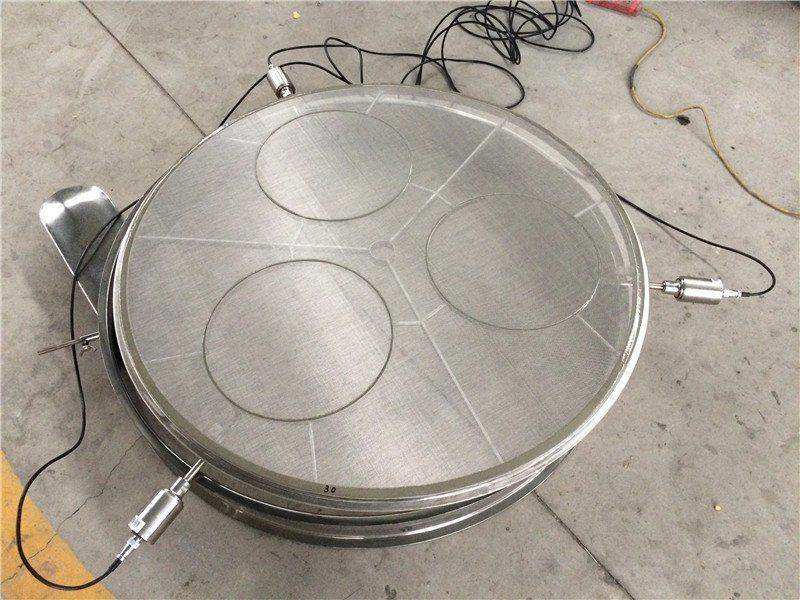
Common cleaning methods include bouncing balls, sliders, brushes, and ultrasonic deblinding. The right choice depends on material behavior, mesh size, hygiene requirements, and whether the powder is fragile or abrasive.
Step 5: Inspect Mesh Tension and Screen Condition
A clean screen can still perform poorly if the mesh is damaged or incorrectly tensioned. Regular inspection should include screen surface condition, frame sealing, gasket condition, cleaning device wear, and whether the screen is correctly fixed.
Step 6: Consider Ultrasonic Deblinding for Fine Powders
For fine powders and difficult materials, ultrasonic deblinding can help keep mesh openings clear by applying high-frequency vibration to the screen. This is especially useful when normal mechanical cleaning cannot prevent near-size particles, static powder, or fine material from blocking the mesh.
When Should You Use Ultrasonic Deblinding?
Ultrasonic deblinding is not required for every vibrating sieve. It is most useful when the material is fine, light, sticky, static, or difficult to pass through a standard mesh. It is also useful when manual cleaning is too frequent and production downtime becomes expensive.
| Application Situation | Is Ultrasonic Deblinding Worth Considering? | Reason |
|---|---|---|
| Fine powder screening | Yes | Fine mesh is more likely to blind and benefits from high-frequency cleaning |
| Static powder | Yes | Ultrasonic vibration helps reduce particles clinging to mesh openings |
| Large free-flowing granules | Usually not necessary | Mechanical cleaning or standard vibration may be enough |
| Sticky or wet material | Sometimes | Material conditioning may be needed first; ultrasonic cannot solve excessive moisture alone |
| Frequent manual screen cleaning | Yes | Reducing cleaning stops can improve production efficiency |
Troubleshooting Checklist for Mesh Blinding
- Is the material dry, damp, oily, sticky, or static?
- Are many particles close to the mesh opening size?
- Is the feed rate stable or does it surge?
- Is the material bed too thick on the screen surface?
- Is the mesh correctly tensioned and undamaged?
- Is the cleaning device installed correctly and still effective?
- Does the process require fine mesh that may need ultrasonic support?
- Are operators stopping the line frequently for manual cleaning?
Information to Send Before Requesting a Deblinding Recommendation
To choose the right vibrating sieve or deblinding method, prepare the following information before contacting a supplier:
- Material name and application industry
- Target mesh size or particle-size requirement
- Current screening capacity and desired capacity
- Moisture content and whether the material is sticky or oily
- Whether static electricity is observed
- Current cleaning frequency and downtime
- Existing machine type, screen diameter, and mesh specification
- Food, pharmaceutical, chemical, or hygiene requirements
Frequently Asked Questions
What is mesh blinding in a vibrating sieve?
Mesh blinding happens when particles block the openings of the screen mesh. This reduces the open screening area, lowers capacity, and can allow poor separation or oversize contamination.
What is the most common cause of mesh blinding?
The most common causes are near-size particles, moisture, sticky powder, static electricity, poor feeding, and loose or damaged mesh. The exact cause should be checked before selecting a deblinding device.
Can ultrasonic deblinding solve all screen blockage problems?
No. Ultrasonic deblinding is very useful for fine powders, static powders, and near-size particle blinding, but it cannot fully solve problems caused by excessive moisture, poor feed control, or damaged mesh.
How do I know if I need an ultrasonic vibrating sieve?
Consider an ultrasonic vibrating sieve if the material is fine, light, static, or frequently blocks a fine mesh even when the screen is properly installed and fed. If manual cleaning is frequent, ultrasonic deblinding may reduce downtime.
Should I change the mesh or add a deblinding system first?
First check whether the mesh size, tension, and condition are correct. If the mesh is correct but blinding continues, then evaluate cleaning balls, brush systems, sliders, or ultrasonic deblinding depending on the material.
Need Help Solving Mesh Blinding?
Unitfine can help review your powder characteristics, mesh size, capacity requirement, and current screening problem to recommend a suitable vibrating sieve or ultrasonic deblinding solution.
Contact Unitfine with your material information and screening requirement for a practical recommendation.