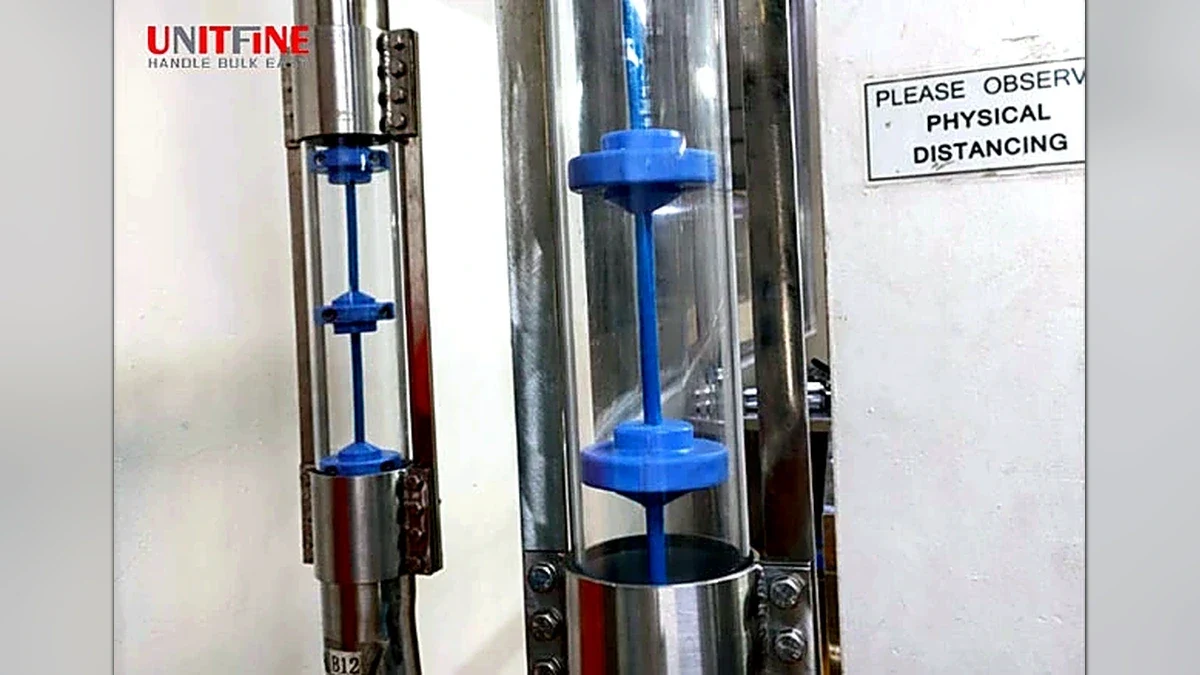
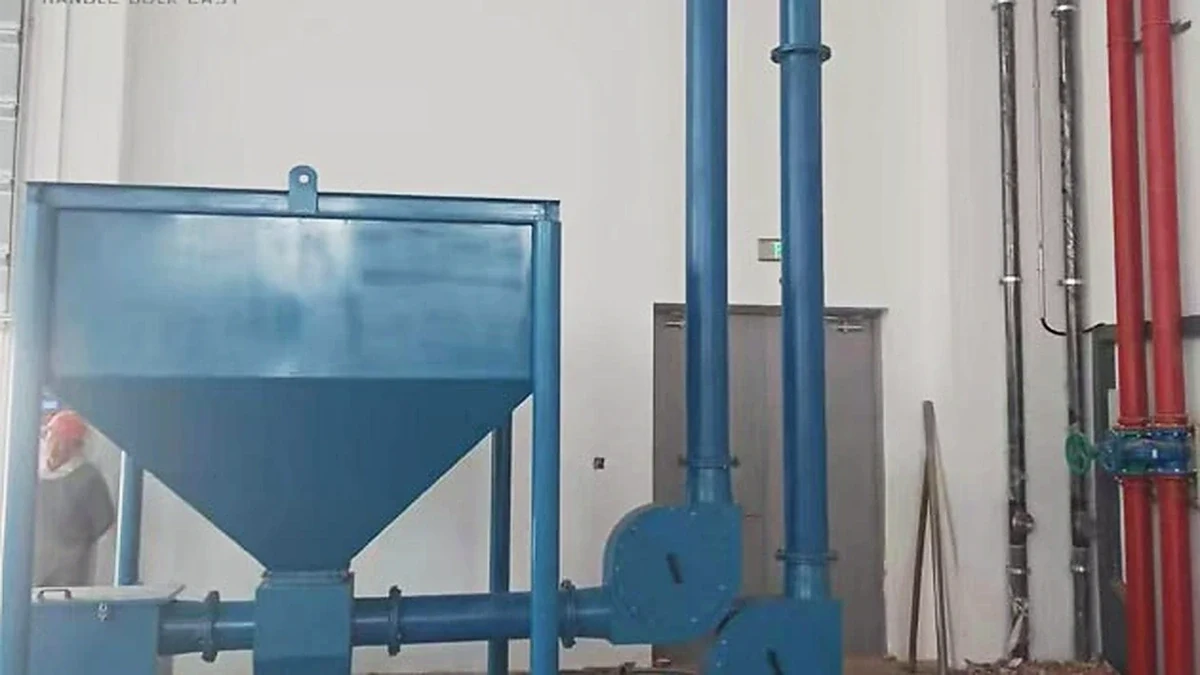
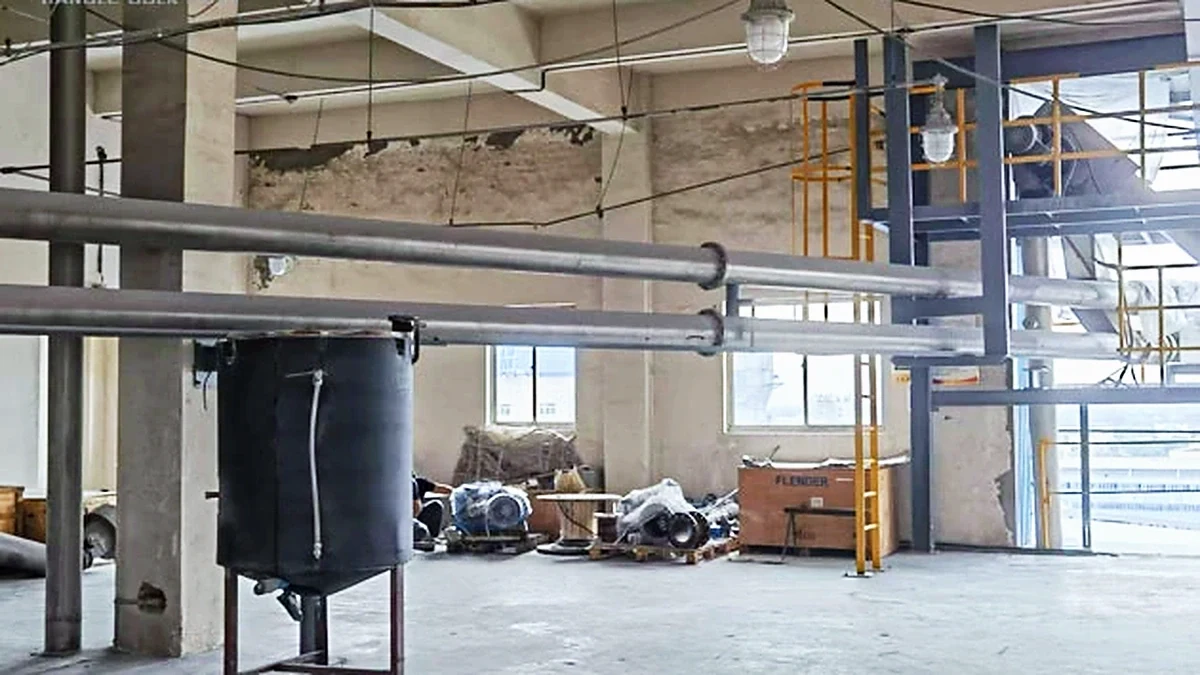
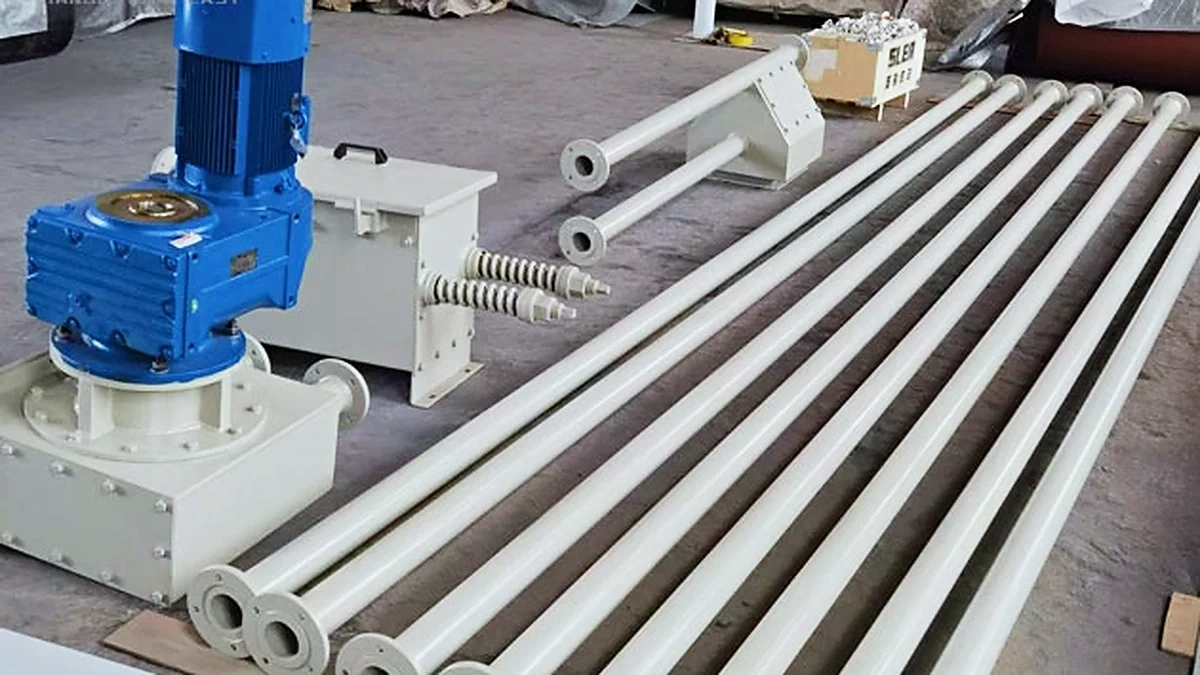
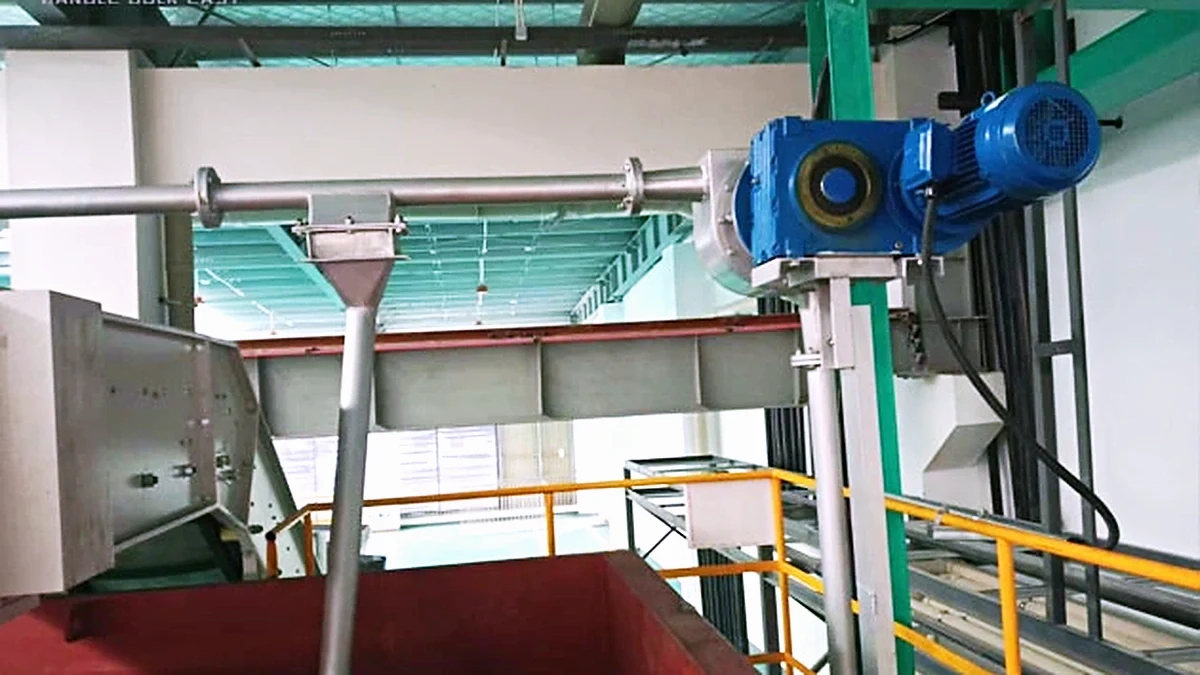
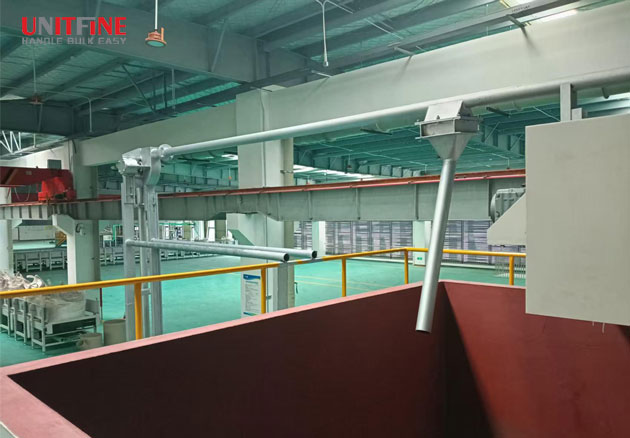
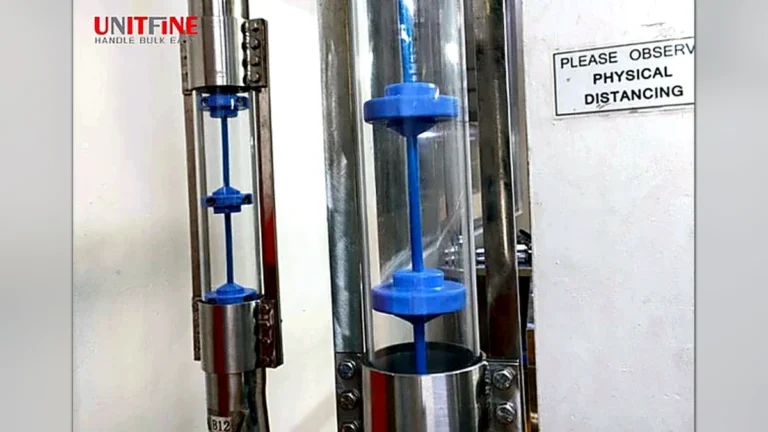
The UNITFINE Drag Tube Chain Conveyor (TDC-90 to TDC-140) is an enclosed mechanical tubular drag chain conveyor designed for continuous transport of dry powders, granules, and small lump materials across horizontal, inclined, and vertical pathways. Driven by a continuous high-strength chain fitted with spaced conveying plates (discs) inside a sealed steel pipe, it helps contain dust and protect product integrity along complex 3D plant layouts.
Quick Technical Overview
- Published Models: 5 standard models — TDC-90, TDC-114, TDC-120, TDC-133, and TDC-140 (90–140 mm tube diameter; 90–110 mm plate pitch; 0.4 m/s reference chain speed; 4.5–13 m³/h reference volumetric capacity).
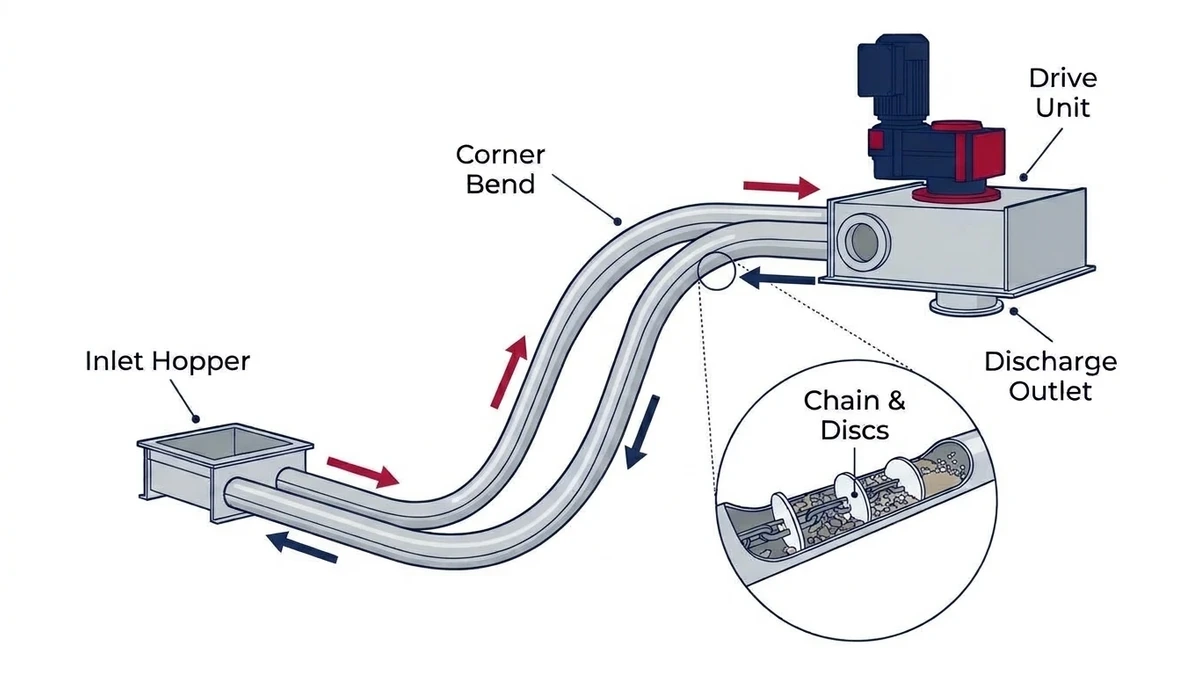
- Conveying Mechanism: High-strength metal drive chain with conveying plates pulls bulk material gently inside a sealed tubular casing along horizontal, inclined, or vertical circuits with single or multiple inlets and outlets.
- Best Fit: Enclosed, low-speed transport of powders, granules, and small lumps in food, chemical, pharmaceutical-material, agricultural, mineral, and plastics processing where multi-directional routing and dust containment matter.
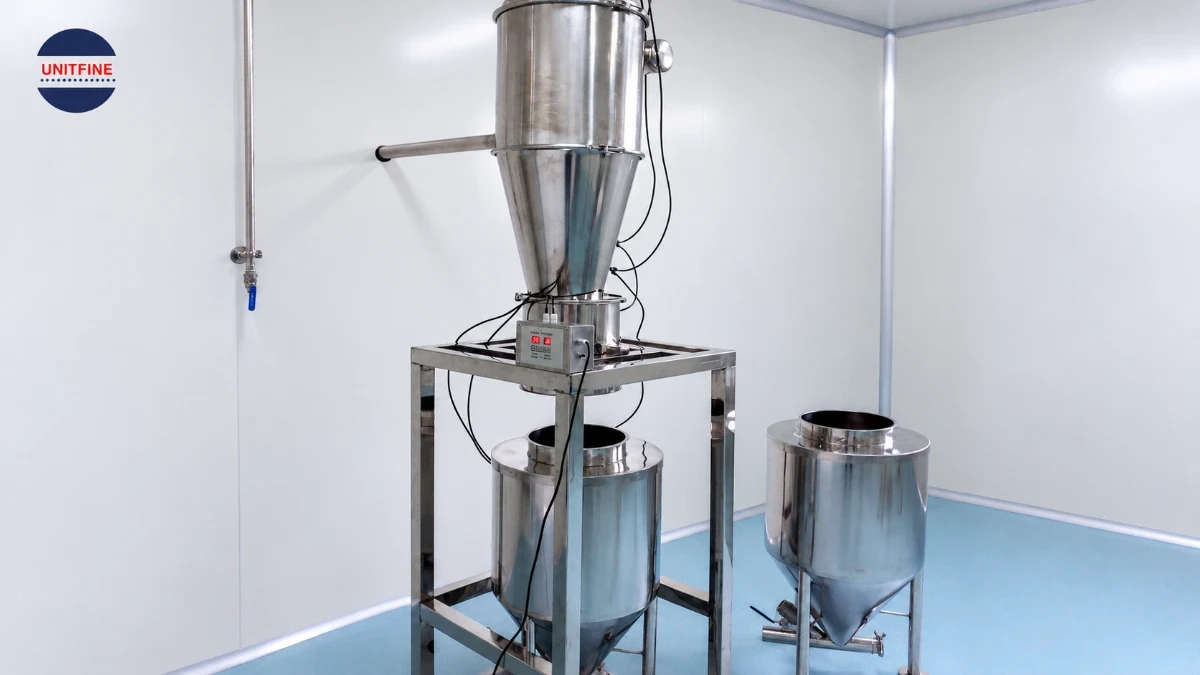
- Chain vs. Cable & Vacuum Alternatives: For ultra-fragile food items or fewer chain-link crevices, compare with the UNITFINE Tubular Cable Drag Conveyor; for batch negative-pressure powder loading from drums or bag stations, compare with the UFLOW Vacuum Conveyor.
How a Tubular Drag Chain Conveyor Works
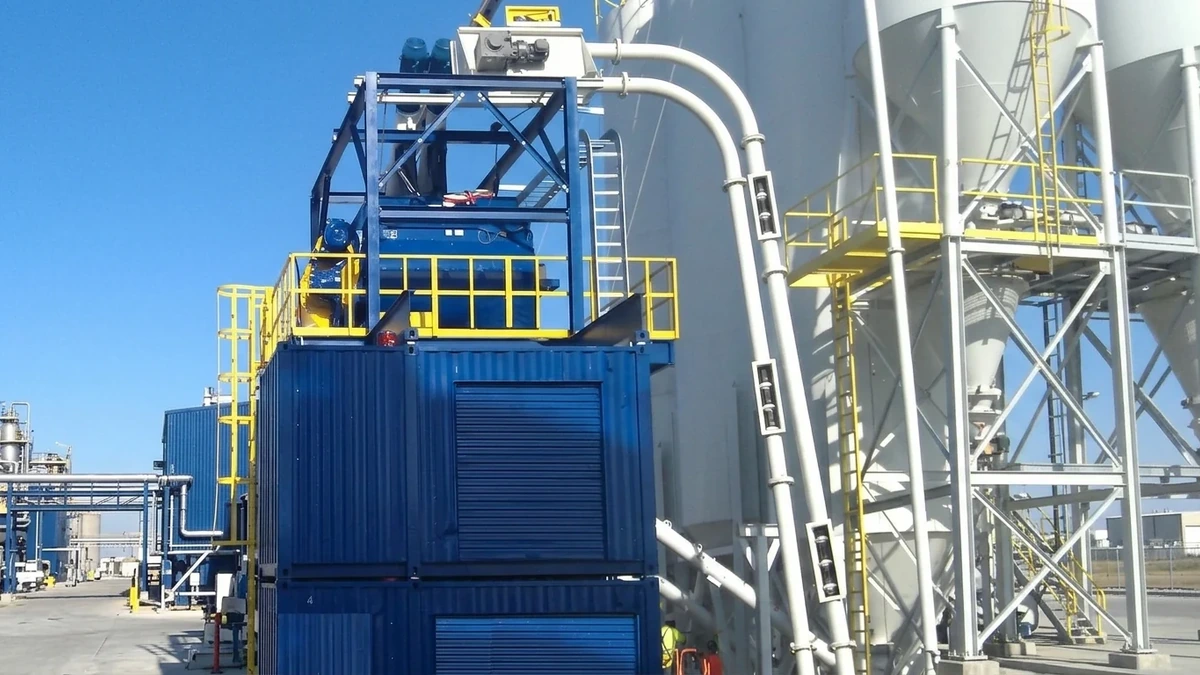
A tubular drag chain conveyor moves bulk solids inside a closed pipe loop using a continuously circulating chain fitted with circular flights (chain plates) at fixed spacing (90–110 mm across TDC-90 to TDC-140). Because material travels in enclosed pockets at a controlled low chain speed (0.4 m/s reference), particles move cohesively rather than colliding at high pneumatic velocities.
Horizontal Conveying Mechanism
Along horizontal runs, the drive unit pulls the chain and plates forward inside the sealed pipe, applying steady thrust to the material bed. When internal friction between material layers exceeds external friction against the pipe wall, the bulk solid advances smoothly with the plates as a stable, continuous flow stream.
Vertical & Inclined Conveying Mechanism
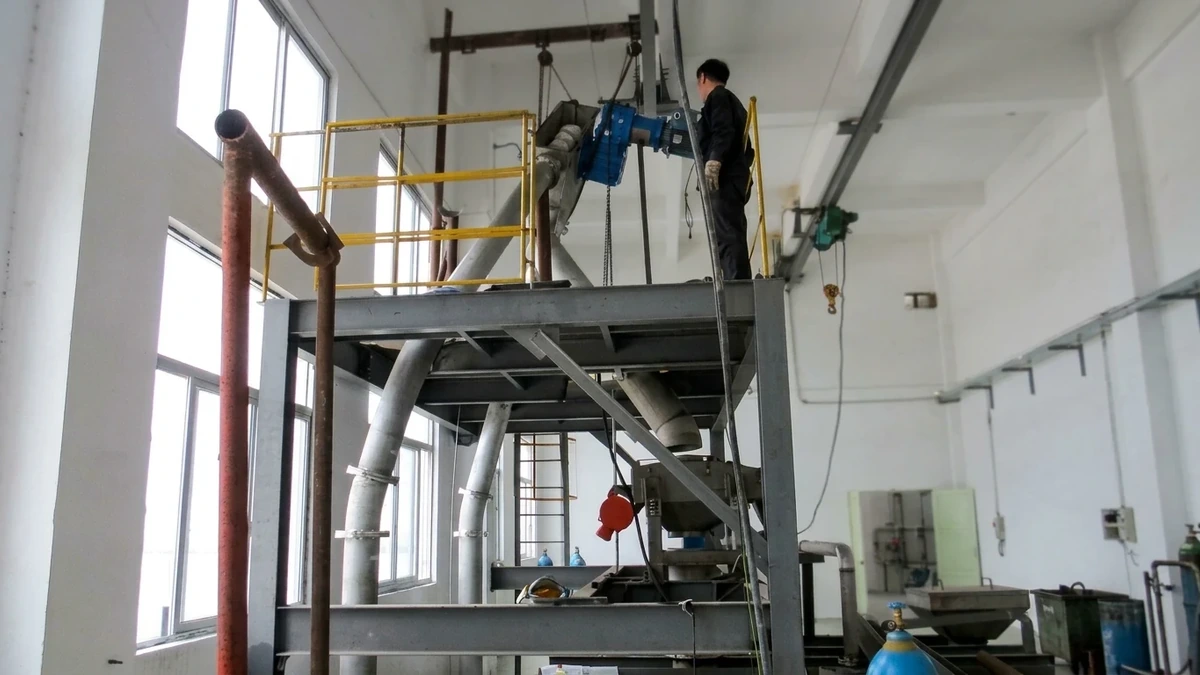
During vertical elevation, the chain plates provide upward thrust while lower feeding prevents downward slip, generating lateral pressure that increases internal material friction. Once that internal friction surpasses pipe-wall friction and material weight, the column lifts steadily upward inside the sealed tube—allowing one continuous machine to combine horizontal, inclined, and vertical runs.
TDC Series Technical Specifications (TDC-90 to TDC-140)
The table below summarizes the published baseline specifications for UNITFINE’s five standard Drag Tube Chain Conveyor models. Actual mass throughput (kg/h or t/h) and motor power depend on bulk density, filling ratio, total route length, vertical lift height, and the number of bends.
| Model | Tube Diameter (mm) | Plate Distance (mm) | Reference Chain Speed (m/s) | Reference Volumetric Capacity (m³/h)* |
|---|---|---|---|---|
| TDC-90 | 90 | 90 | 0.4 | 4.5 |
| TDC-114 | 114 | 100 | 0.4 | 6 |
| TDC-120 | 120 | 110 | 0.4 | 8 |
| TDC-133 | 133 | 110 | 0.4 | 11 |
| TDC-140 | 140 | 110 | 0.4 | 13 |
*Reference volumetric capacities are based on 0.4 m/s chain speed. Actual hourly mass throughput, chain tension, and motor rating must be calculated from bulk density, conveying distance, elevation, bend count, and material flow characteristics.
Key Components & Structural Features
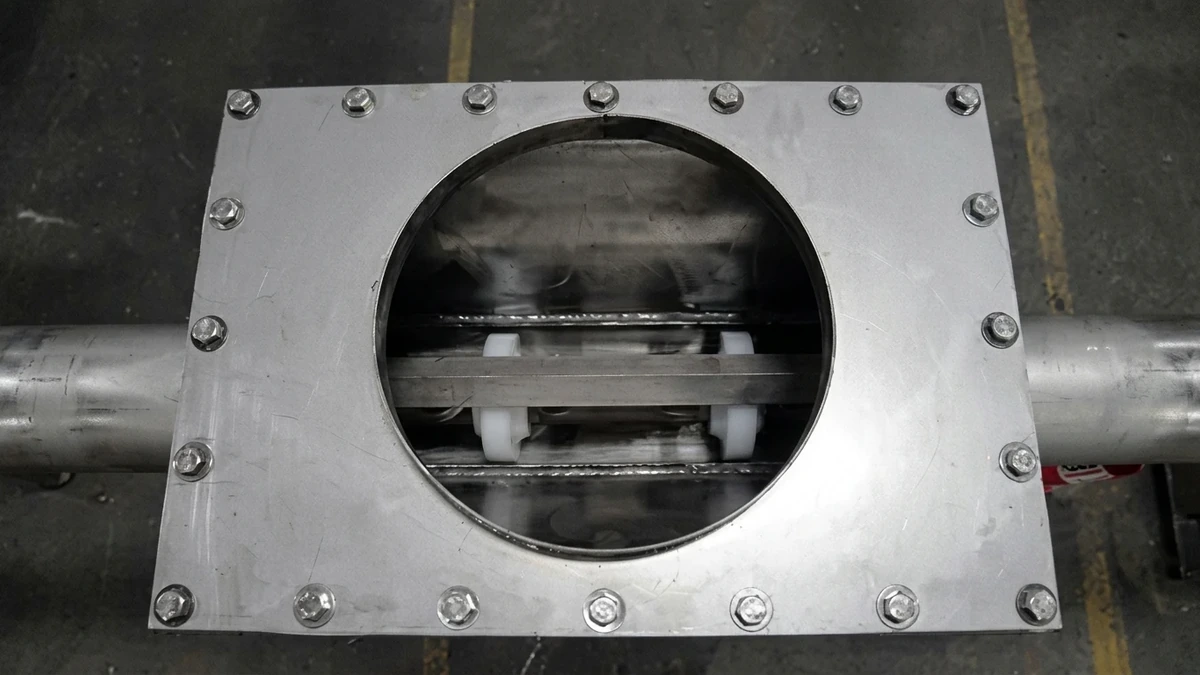
- Sealed Tubular Housing: Enclosed pipe sections help contain airborne dust and shield conveyed solids from external plant exposure—supporting cleaner layouts alongside proper dust-leakage control practices.
- High-Strength Drive Chain: Built to carry sustained tensile loads across long runs, multiple bends, and heavier or denser industrial bulk solids.
- Spaced Conveying Plates (Discs): Matched to internal tube diameter (90–140 mm) and selected according to material abrasiveness, temperature, and cleanliness requirements.
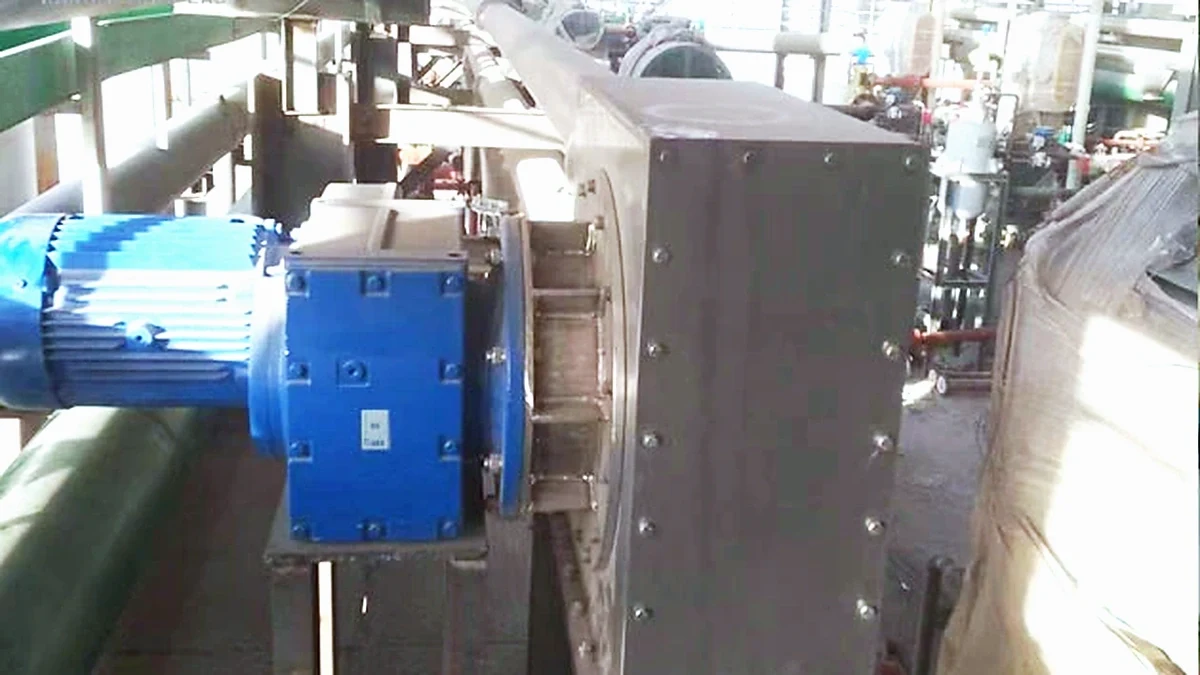
- Drive Unit & Tensioning Section: Provides smooth, controlled low-speed propulsion (0.4 m/s reference) with tension adjustment to manage normal chain elongation over time.
- Precision Corner & Bend Units: Guide the chain through horizontal and vertical directional changes in a compact footprint without open transfer chutes.
- Configurable Multi-Inlet & Multi-Outlet Ports: Supports multiple feeding and discharge stations along a single circuit when layout and valve sequencing are engineered together.
Drag Tube Chain Conveyor vs. Tubular Cable, Vacuum & Screw Conveyors
Buyers evaluating UNITFINE’s conveying systems often compare chain-driven tubular conveyors against cable-driven tubular conveyors and pneumatic vacuum transfer. For deeper comparisons, see our Tubular Chain Conveyor vs. Pneumatic Conveyor selection guide and Tubular Drag Chain vs. Vacuum Conveyor analysis.
| Selection Factor | Drag Tube Chain Conveyor (TDC Series) | Tubular Cable Drag Conveyor | UFLOW Vacuum Conveyor |
|---|---|---|---|
| Pulling Element | Rigid high-strength metal chain + discs | Flexible stainless wire cable + molded discs | Negative-pressure airflow (no internal chain/cable) |
| Material & Load Strength | Well suited for denser, heavier, or moderately abrasive industrial powders, granules, and small lumps | Best for lightweight, highly fragile foods, roasted beans, nuts, and seeds | Ideal for batch lifting of dry powders from drums/bag stations into mixers or hoppers |
| Product Integrity & Energy | Low-speed mechanical transport reduces breakage and blend segregation with lower drive power than air conveying | Very gentle around sweeps; low mechanical power draw | Higher airflow energy; fragile granules or multi-density blends may attrit or segregate |
| Cleaning & Maintenance Focus | Chain tension, link/disc wear inspection, and dry/wet cleaning per product changeover plan | Fewer link crevices; cable tension and disc wear inspection | Filter element cleaning/replacement and vacuum pump maintenance |
For short, straight horizontal transfer where an open-top trough is preferred for quick washdown access, also evaluate the UNITFINE U Type Screw Conveyor.
Typical Applications & Engineering Selection Boundaries
Across food processing, chemical manufacturing, pharmaceutical-material handling, agriculture, mining/minerals, and plastics compounding, a drag tube chain conveyor delivers reliable enclosed transfer when the route and material properties match mechanical chain-disc limits. Review four engineering boundaries before sizing:
- Stickiness & Moisture Bridging: Cohesive, pasty, or high-moisture materials can build up inside pipe bends or stick to chain plates. Confirm free-flowing behavior or evaluate chain knockers/discharge aids during engineering review.
- Particle Size vs. Tube & Plate Clearance: Incoming lump size must stay well below tube diameter (90–140 mm) and plate spacing (90–110 mm) to avoid jamming at inlets or corner sprockets.
- Abrasiveness & Material Temperature: Highly abrasive minerals or elevated product temperatures require matching pipe wall thickness, chain alloy, and flight-disc material rather than standard configurations.
- Route Length, Bends & Maintenance Access: Every horizontal-to-vertical bend adds chain drag. Keep routing as direct as plant geometry permits and plan inspection access following tubular chain conveyor maintenance best practices.
What to Include When Requesting a Tubular Drag Chain Conveyor Quote
Because every tubular drag chain circuit is tailored to plant geometry and bulk material behavior, sharing these engineering inputs allows our team to size the correct TDC model (TDC-90 to TDC-140) and drive power accurately:
- Material Profile: Product name, bulk density (kg/m³), particle size range or max lump size, moisture/stickiness, abrasiveness, and product temperature.
- Required Capacity: Target throughput in m³/h or kg/h (and whether operation is continuous or intermittent).
- 3D Route Drawing or Dimensions: Horizontal run lengths, vertical lift height, inclination angles, and the number and positions of inlets and discharge outlets.
- Construction & Cleaning Needs: Required contact-material grade (carbon steel, SUS304, or SUS316L per project URS), dry vs. wet cleaning expectations, and dust/safety requirements.
- Site Utilities: Local voltage, phase, frequency, and any upstream/downstream flange interfaces.
Planning a TDC-90 to TDC-140 Enclosed Conveying Route?
Send your material data, target capacity, and layout sketch through our engineering inquiry page. Our engineers will verify whether a Drag Tube Chain Conveyor, Tubular Cable Drag Conveyor, or Vacuum Conveyor best fits your route and material.
Frequently Asked Questions About UNITFINE Drag Tube Chain Conveyors
What capacities and tube diameters are available in the UNITFINE TDC Series?
The published UNITFINE TDC lineup includes five models—TDC-90, TDC-114, TDC-120, TDC-133, and TDC-140—with tube diameters from 90 mm to 140 mm, plate spacing from 90 mm to 110 mm, and reference volumetric capacities from 4.5 m³/h to 13 m³/h at a 0.4 m/s chain speed.
What is the difference between a Drag Tube Chain Conveyor and a Tubular Cable Drag Conveyor?
A Drag Tube Chain Conveyor uses a rigid high-strength metal chain with attached discs, making it well suited for heavier, denser, or moderately abrasive industrial powders and granules. A Tubular Cable Drag Conveyor uses a flexible stainless-steel wire cable with molded discs, which is typically preferred for highly fragile food items and applications requiring fewer chain-link crevices during cleaning.
Can one tubular drag chain conveyor handle horizontal, inclined, and vertical transport?
Yes. Using precision corner and bend housings, a single sealed tubular drag chain circuit can route horizontally, vertically, and at inclines with multiple inlets and discharge outlets—reducing intermediate transfer points compared with separate conveyors and bucket elevators. Total length, lift height, and bend count are verified during engineering sizing.
When should I choose a pneumatic vacuum conveyor instead of a tubular drag chain conveyor?
Choose a vacuum conveyor such as the UNITFINE UFLOW series for compact batch loading of free-flowing powders from drums or bag dump stations where you want no moving mechanical parts inside the conveying line. Choose a tubular drag chain conveyor when you need continuous, low-speed transport that minimizes particle breakage, prevents blend segregation, and operates at lower drive power than air conveying.
What data do you need to quote a Drag Tube Chain Conveyor?
Please share your material name, bulk density, particle/lump size, moisture and temperature, target throughput (m³/h or kg/h), a route sketch showing horizontal length, vertical lift, and inlet/outlet positions, required construction steel grade, and local electrical supply.