
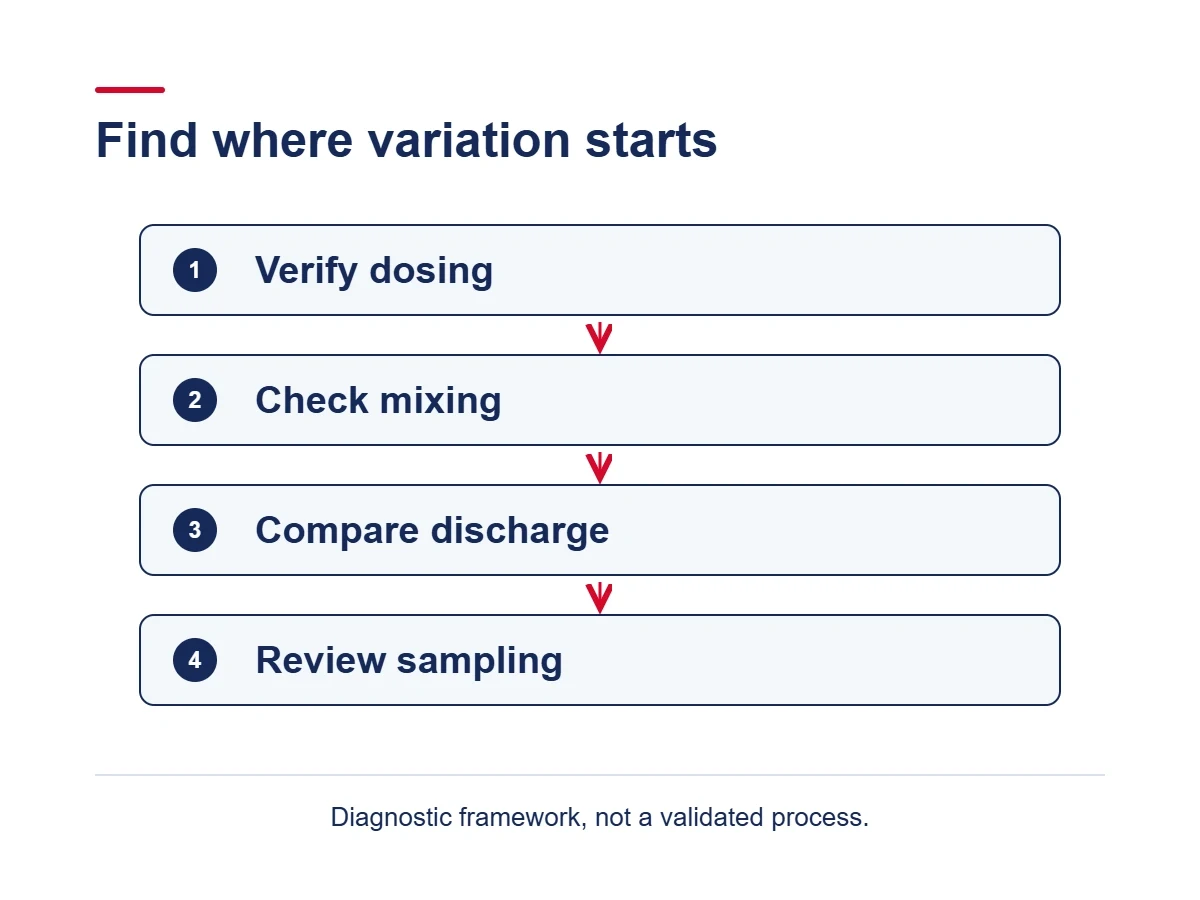
The causes of uneven powder mixing can start before the mixer runs and continue after the batch leaves it. A weak ingredient result, visible streaks or inconsistent packed product may reflect dosing, powder behavior, mixer operation, discharge or sampling. Diagnose where variation first appears before changing the mixing time or ordering another blender.
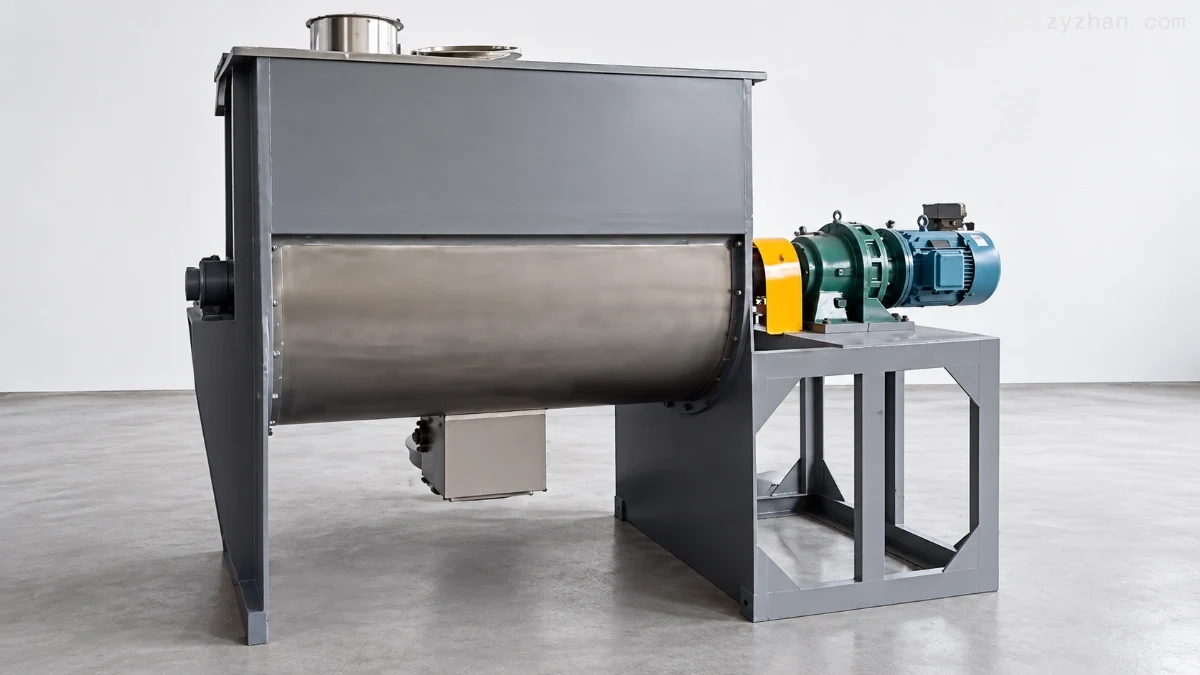
Quick answer: Common causes include inaccurate dosing or loading, an unsuitable working fill, differences between powder components, agglomerates, an unverified mixing time or speed, residue or worn parts, segregation during discharge, and misleading sampling. Check the recipe and measurement method first, then compare the batch inside the mixer, during discharge and after transfer. Change operating settings only within the supplied machine’s approved limits.
First locate the stage where the blend becomes inconsistent
Separate a wrong recipe from a non-uniform distribution. A batch can be evenly mixed but contain the wrong total amount of an ingredient. It can also meet a mixing-stage test and become segregated later. These problems need different investigations; a longer timer setting cannot correct an ingredient that was never charged.
| First observed pattern | Investigate first | Useful evidence |
|---|---|---|
| Most samples miss the target in the same direction | Ingredient identity, weighing, losses and analytical recovery | Recipe, scale checks, charged quantities and test-method records |
| Results vary between mixer locations | Loading, working fill, material behavior and circulation | Documented location samples and the actual batch settings |
| Mixer results are acceptable but discharge or packs vary | Emptying, transfer, receiving and filling | Separately identified discharge and downstream samples |
Use safe, approved sampling arrangements. Do not reach into a running mixer or defeat a guard. Access for chamber inspection or manual sampling requires the site’s approved stopping and isolation procedure; use the supplied machine instructions and qualified personnel.
Eight common causes of uneven powder mixing
1. Inaccurate dosing or an inconsistent loading sequence
Check ingredient identity, actual charged mass and the order of addition. A minor component can remain in its bag, feeder or charging chute, while an unrecorded loading change can concentrate it in one region. Compare the batch record with what physically entered the mixer, including any retained material upstream.
For a low-dose ingredient, discuss a suitable premixing or staged-addition method during trials. The carrier, dilution sequence and quantities must suit the formulation; there is no universal premix ratio. Keep the weighing and loading method reproducible so that the trial tests mixing rather than an uncontrolled change in recipe.
2. A working fill that does not suit the mixer and formulation
The same batch mass can occupy different volumes when bulk density changes. Too little or too much product for the approved working range can alter how the agitator moves the bed. Record the minimum, normal and maximum batch, measured bulk density and occupied volume instead of relying only on a nominal kilogram label.
Ask the supplier to confirm the operating window for the actual formulation. Do not adopt another manufacturer’s fill percentage as a UNITFINE setting. If the investigation reveals a sizing mismatch, review the UNITFINE ribbon mixer against working volume and material behavior rather than simply selecting a larger vessel.
3. Component differences that promote separation
Particle-size distribution, density, shape and flow behavior influence whether ingredients move together. A formulation with easily flowing coarse particles and fine cohesive material may behave differently from a blend of similar powders. Compare incoming lots with the material used in the successful reference batch, not just their ingredient names.
Inspect the process beyond the mixing chamber as well. A mixture susceptible to separation can redistribute during emptying or handling. Establish whether the observed variation is an inability to form a suitable blend or a loss of uniformity after it has formed.
4. Moisture, agglomerates or poorly distributed liquid addition
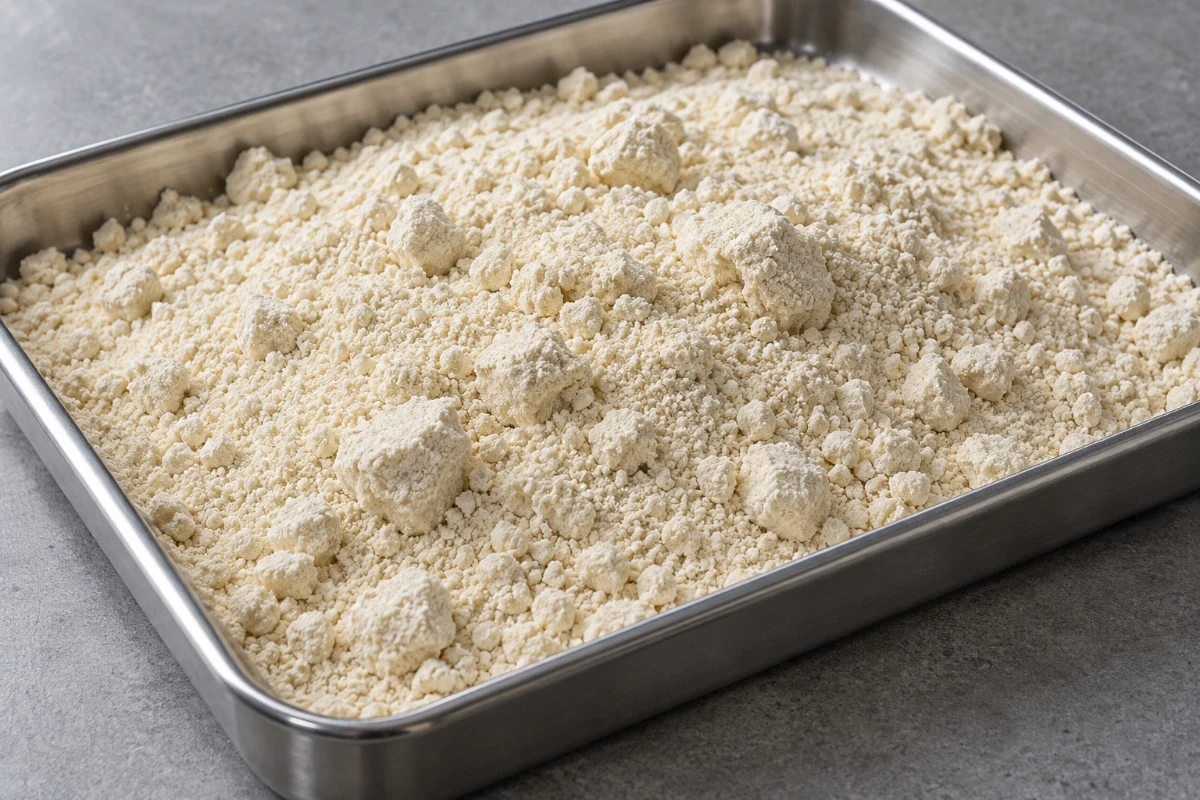
A lump can carry a concentrated portion of an ingredient even when the surrounding powder looks consistent. Check moisture changes, storage conditions, visible agglomerates and wall build-up. Where liquid is part of the recipe, record its properties, addition point and addition rate instead of treating all wetting arrangements as equivalent.
Depending on the formulation and confirmed equipment compatibility, a configured spray system or a different agitation arrangement may be worth evaluating through material trials. Neither a standard ribbon nor an added accessory guarantees that a difficult agglomerate will break apart. Confirm any need for pretreatment, liquid distribution or additional shear through material trials and compatibility review.
5. Mixing time or speed that has not been established by testing
Insufficient mixing can leave ingredients poorly distributed, but more time or a higher speed is not automatically a remedy. Depending on the powder and machine, additional mechanical input can change particle condition or encourage separation. Check actual speed and running time against the approved settings rather than assuming the control-panel entry proves the intended process occurred.
Compare several permitted trial conditions with a consistent recipe and sampling method. Look for an acceptable operating window, including particle integrity and temperature where relevant. Do not transfer a fixed mixing time, speed or scale-up factor from another formulation.
6. Residue, restricted circulation or changes in equipment condition
Material held near an outlet, on a wall or around other low-circulation areas may not behave like the main bed. Residue can also carry into a later batch. Review the cleaned, safely isolated mixer against its drawing and maintenance record, including the agitator, discharge arrangement and visible build-up.
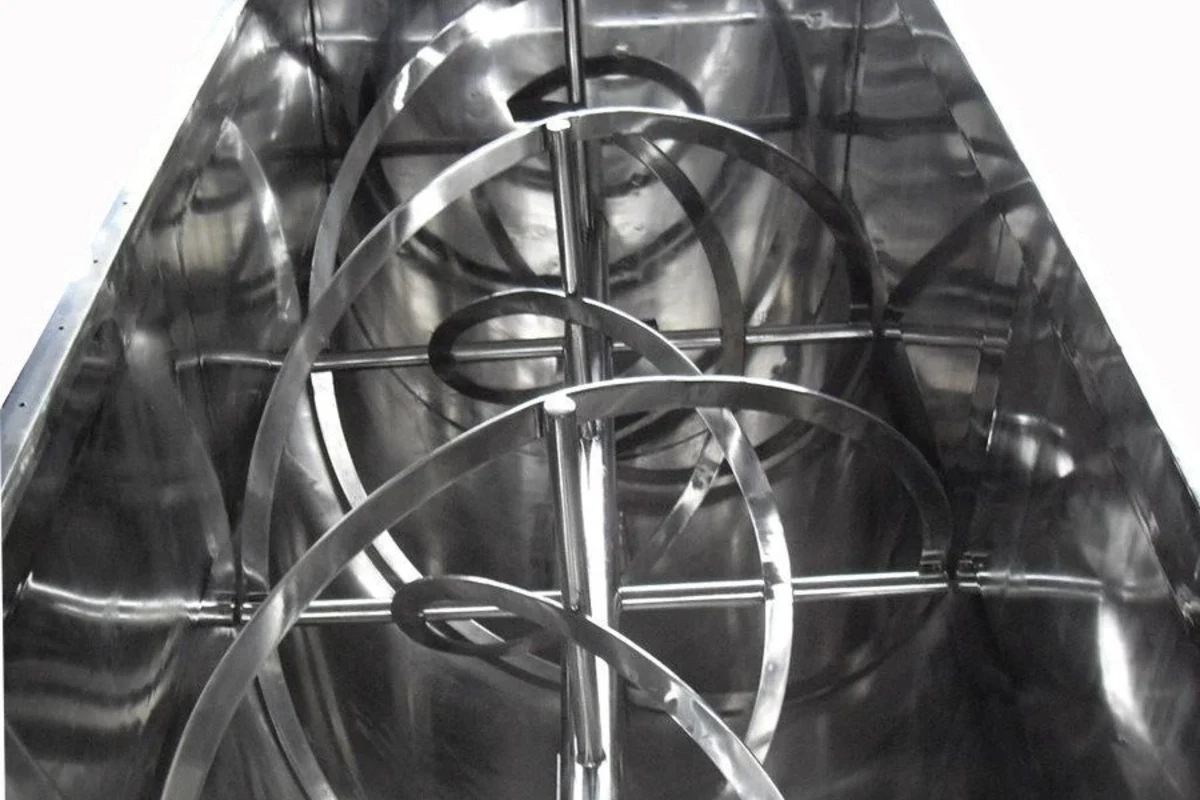
Have qualified personnel assess suspected wear, damage, alignment or clearance changes. Do not tighten clearances, modify blades or remove safeguards using a generic troubleshooting article. Photographs can support a service enquiry, but they do not establish the correct tolerance or prove that a particular mixer has a defective dead zone.
7. Segregation during discharge, conveying or filling
If mixer-stage samples are acceptable but later results vary, compare the discharge sequence and transfer path. Material can separate as it empties, falls, forms a heap or undergoes further handling. Identify where composition changes rather than attributing every downstream failure to the mixer timer.
Check the complete receiving and filling arrangement. The UFLOW vacuum conveyor can be considered for suitable transfer duties, but it is not a universal remedy for segregation. Material trials must include the proposed route and receiving process when these affect the final blend.
8. Sampling or analysis that does not represent the batch
A convenient surface sample cannot establish uniformity throughout a batch. Sample mass, collection method, location, timing, transport and preparation can all affect the result. Samples that are too large can conceal local variation; samples that capture too few marker particles can show misleading scatter. Define these choices for the material and component being measured.
Use an appropriate analytical method and keep samples individually identified. Investigate the sampling and measurement contribution alongside the process. Color, appearance or a single tracer may be useful for a defined purpose, but cannot automatically demonstrate the distribution of every critical ingredient.
Use a controlled investigation instead of changing several settings
Start with the last acceptable batch and record what changed: supplier lot, recipe, batch size, moisture, loading sequence, equipment condition, settings or downstream handling. Use that comparison to select the first test. Keep other factors stable where practical, and document unavoidable differences.
- Define the failure: identify the critical ingredient, target concentration, observed variation and process stage.
- Verify the input: reconcile weighing and charging records with the recipe and any material left upstream.
- Record the operating condition: working batch, bulk density, loading order, actual mixing time and permitted speed.
- Plan representative sampling: agree safe collection points, sample mass, timing, handling and the analytical method.
- Compare stages: evaluate identified mixer, discharge and downstream samples where approved access allows.
- Test one justified adjustment: stay within supplier-approved limits and record both the result and any adverse effect.
- Confirm repeatability: repeat the justified condition under the agreed protocol before changing the production instruction.
Judge uniformity against a defined acceptance criterion
A coefficient of variation or relative standard deviation summarizes scatter in the measured component. It does not by itself show that the average concentration is correct. Review individual results and the mean against the intended target, and make sure the sampling and test method can detect the variation that matters for the product.
Define the criterion, sample plan and investigation response before the trial. This article does not prescribe a universal acceptable percentage, sample count or mixing duration. Product-specific quality requirements determine the assessment; regulated applications need their own qualified validation and release arrangements.
What to send for a mixer or process review
Send UNITFINE the formulation and ingredient proportions, relevant material properties, actual batch mass and volume, loading sequence, operating records, identified test results and the point where variation first appears. Include drawings or static photographs of the feeding, mixer outlet and downstream route, together with cleaning requirements and the acceptance objective.
These inputs help distinguish an operating issue from a formulation, equipment or transfer limitation. A new mixer should be considered against the demonstrated duty. For the related procurement question, discuss the working-volume, drive and configuration requirements on the ribbon mixer product page; this troubleshooting guide does not replace an application-specific proposal.
Frequently asked questions
Will mixing powder for longer always improve uniformity?
No. Longer mixing may help an under-mixed batch, but it cannot replace a missing ingredient or correct a biased test. Some materials can also change or separate with additional mechanical input. Establish a suitable mixing window through representative trials within approved machine limits.
Can a ribbon mixer be underfilled as well as overfilled?
Yes. A batch outside the approved working range can change the intended circulation. The acceptable minimum and maximum depend on the mixer and formulation. Confirm working volume, bulk density and batch mass with the supplier rather than applying a universal fill percentage.
Why do finished packs vary if the mixer test was acceptable?
The blend may segregate during emptying, conveying, receiving or filling, or the mixer sample may not have represented the batch. Compare separately identified samples across the process to locate the change before altering the mixing time.
Does a low relative standard deviation prove that the recipe is correct?
No. Low scatter can occur around an incorrect average concentration. Assess the mean, individual results, target recipe and measurement method together. A result for one tracer does not automatically prove the distribution of every important ingredient.
Should minor ingredients always be premixed?
A suitable premix or staged-addition method may help distribute a low-dose ingredient, but it is formulation-dependent. Confirm the carrier, sequence, amount and transfer losses by trial. Do not use a generic dilution ratio as a validated instruction.
What information is needed to investigate uneven powder mixing?
Provide ingredient proportions, particle and flow properties, moisture, bulk density, batch mass and volume, loading order, actual settings, equipment condition, the discharge route and identified sample results. State the acceptance criterion and where the inconsistency first appears.
Discuss your powder mixing problem with UNITFINE
Share the recipe, working batch, process layout and test evidence. UNITFINE can review the proposed ribbon mixer configuration and process interfaces with you, identifying the information and material trials needed before a solution is agreed.
Send your mixing enquiry or email info@unit-fine.com.