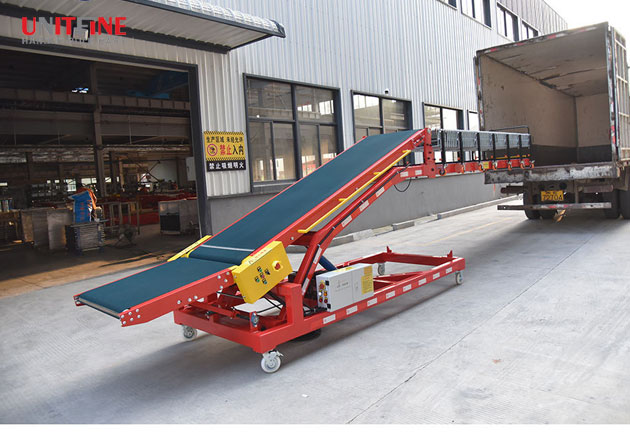
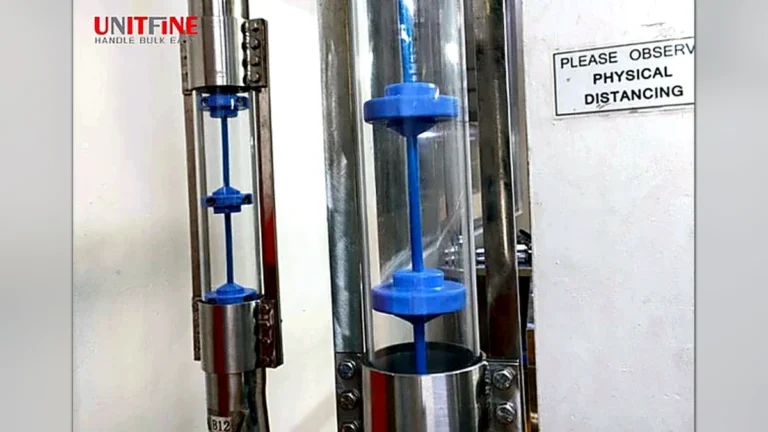
A Z type bucket elevator can connect a low-level feed point with an elevated receiving process while incorporating horizontal sections. For a useful quotation, define the product, route and delivery requirement together. This page explains the questions to settle before selecting a UNITFINE assembly, particularly for fragile products and food-handling projects.
Quick answer: when should you consider a Z type bucket elevator?
Consider this arrangement when your process needs both a lift and an offset between inlet and outlet. Start with the receiving point, allowable product damage and available installation space. Ask UNITFINE to review the proposed route and feeding conditions; the equipment name alone does not confirm capacity, cleanliness or suitability for a particular ingredient.
How does bucket conveying work?
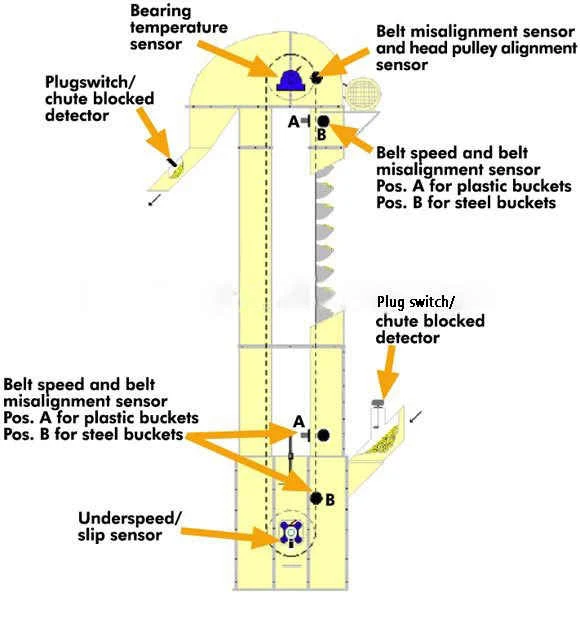
Buckets carry material through the conveying route, release it at the discharge and return for loading. Specify where each of these functions occurs in the offered assembly. Different bucket-elevator designs use different suspension, traction and discharge arrangements; do not select operating conditions from a diagram of another design.
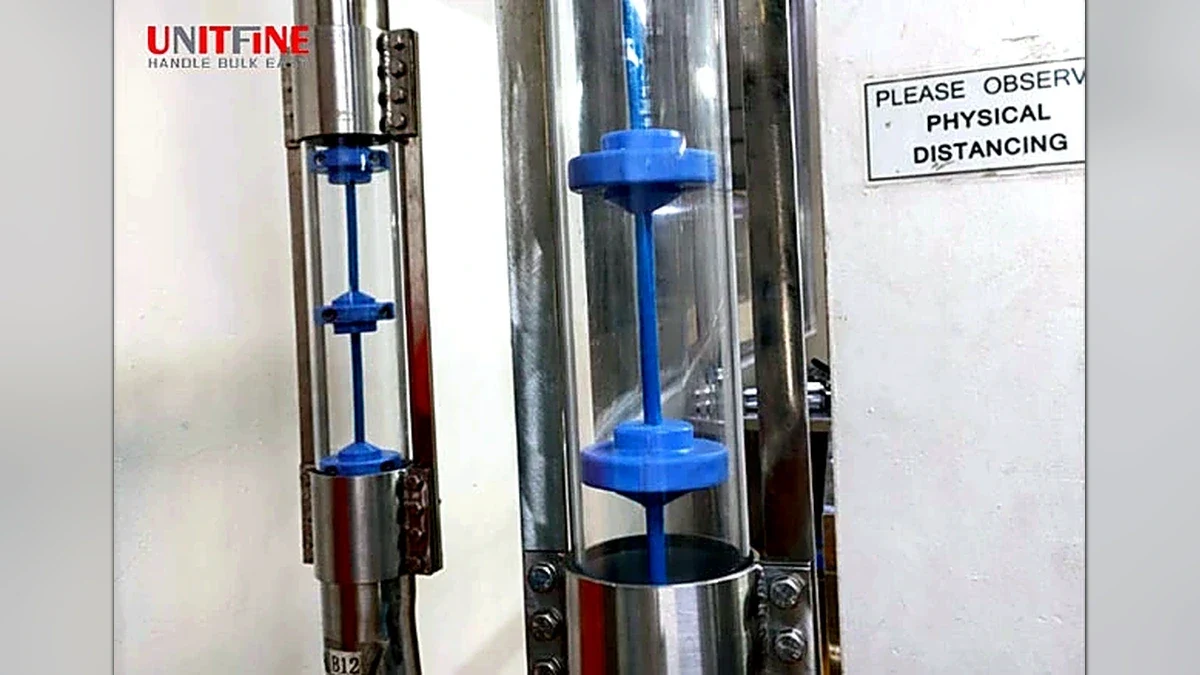
The vertical-elevator monitoring illustration is a general reference. Its belt and sensor labels are not a list of components supplied with this Z type elevator. Request the actual arrangement drawing and control scope. Gough Engineering describes configuration and access choices for its pendulum bucket systems. Confirm the corresponding features separately for the UNITFINE assembly being offered.
Define feeding and receiving conditions
Describe whether material arrives steadily, in batches or in surges. Identify the upstream feeder and the equipment receiving the discharge. Ask how feed will be coordinated with the elevator and what happens when the receiver stops accepting product. A conveying requirement and an accurate dosing requirement should be specified separately.
Fragile products: agree what a successful trial means
For fragile material, assess product quality at the inlet and after discharge under comparable sampling conditions. Define the maximum acceptable change in fines, broken pieces or appearance before the trial. Include startup, normal operation and the interruptions relevant to your production schedule rather than judging handling from an unloaded demonstration.
Supply representative samples and explain their condition at the actual feed point. Moisture, stickiness, particle shape and existing fines belong in the trial brief. A successful run with a different product or a different inlet drop is not enough to establish the result for your line. Record the setup and the limits of the comparison.
Review the buckets and product-contact requirements
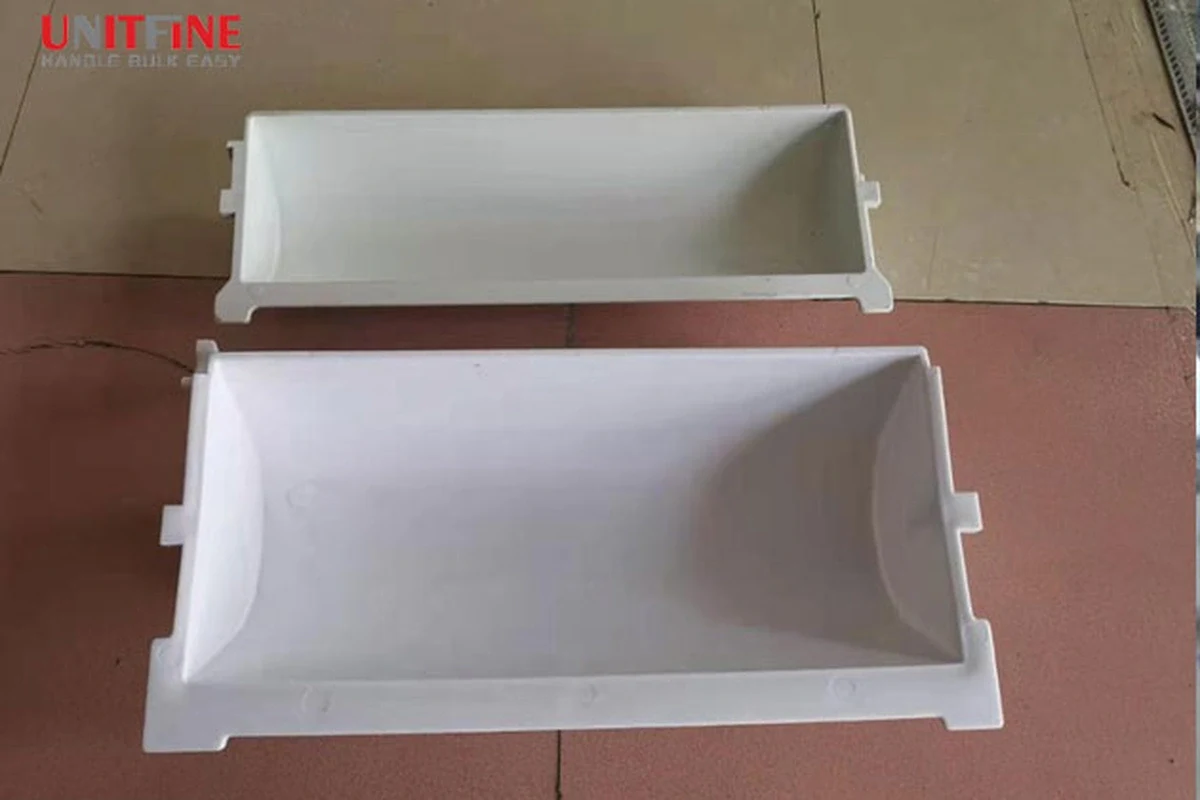
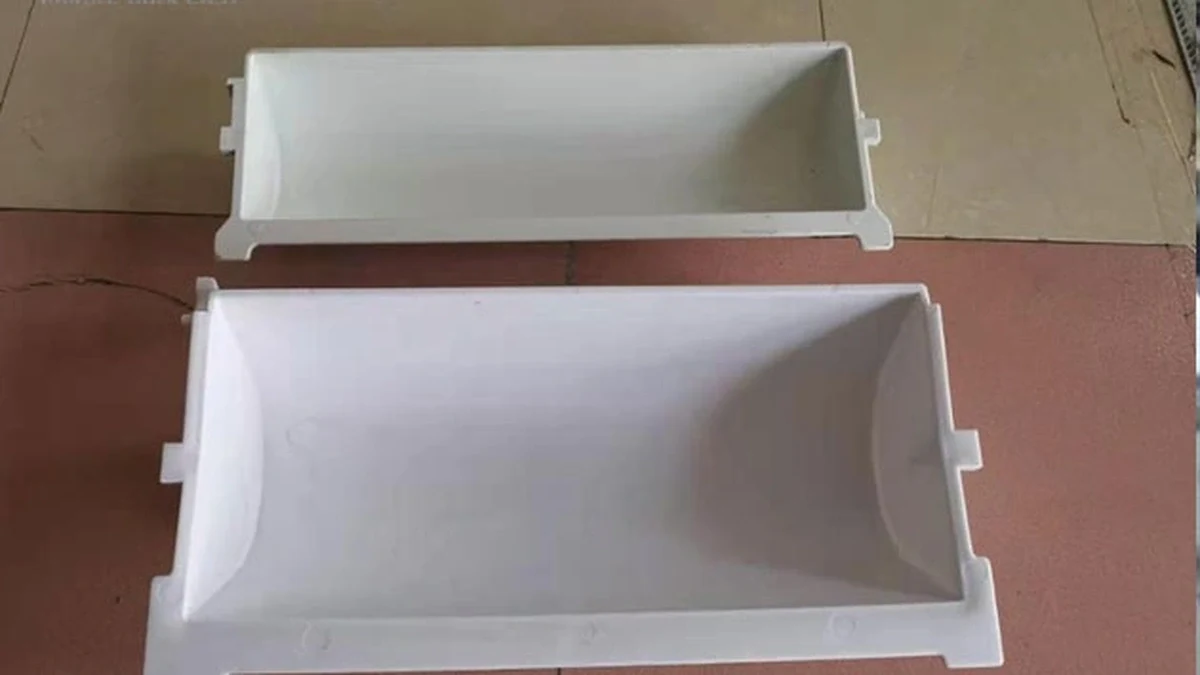
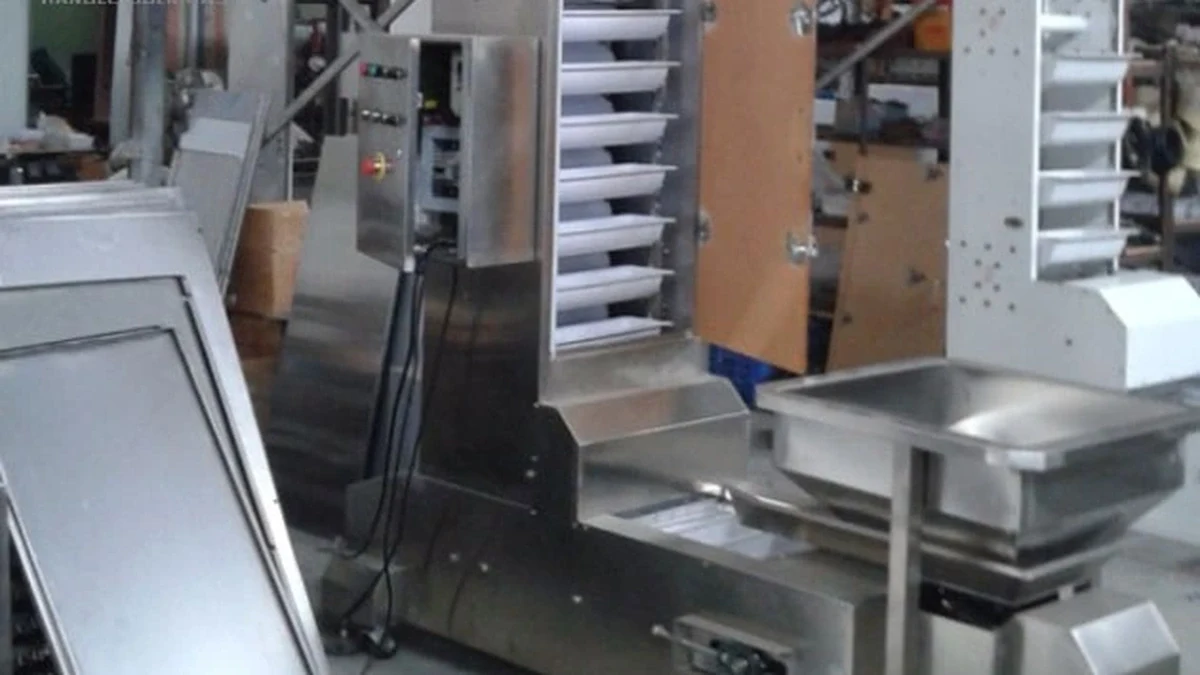
The photograph shows bucket shapes from the existing product gallery. It does not identify their polymer, material grade, temperature rating or food-contact status. Request the offered bucket specification, its supporting documentation and the contact-component list. Include any restrictions on abrasion, static behavior, cleaning chemicals and product temperature that your project requires.
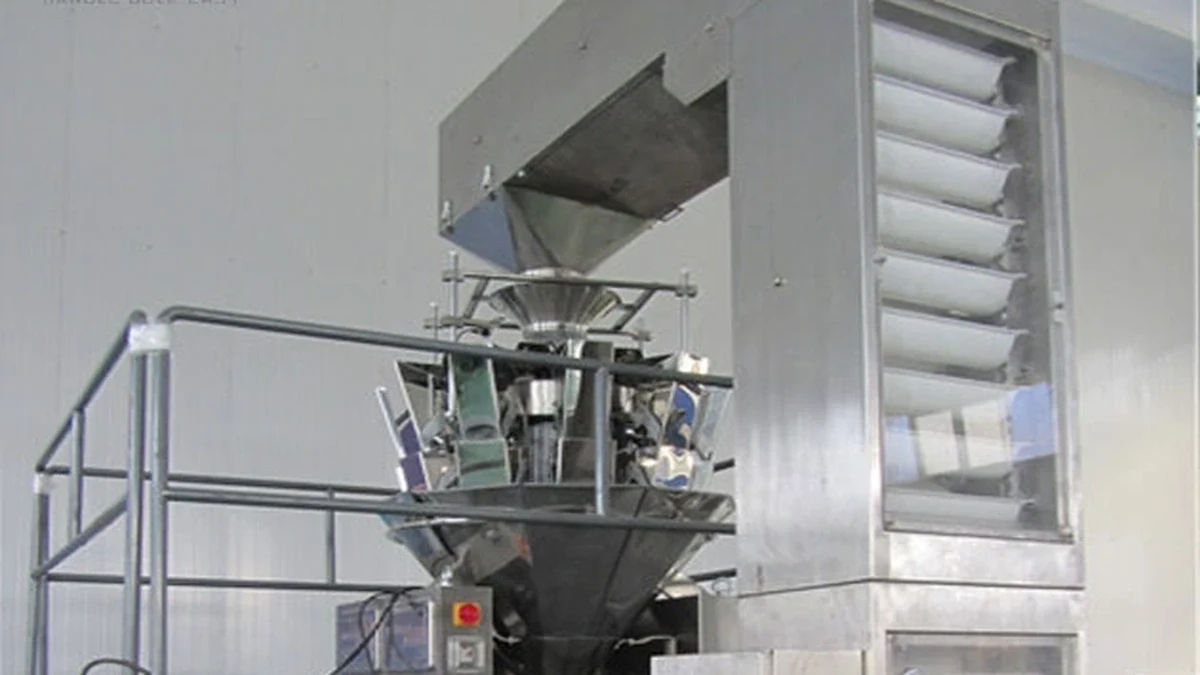
For a food-handling enquiry, describe the ingredient, allergen-changeover needs and required contact documentation. Review buckets, interfaces and accessible product-contact areas together. A stainless frame or a white bucket is not evidence that the complete assembly meets your hygiene requirements. Acceptance should follow the agreed configuration and documentation.
Layout and specification: confirm the complete installation
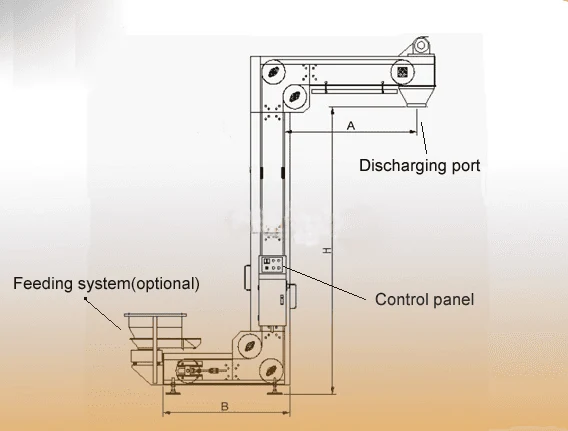
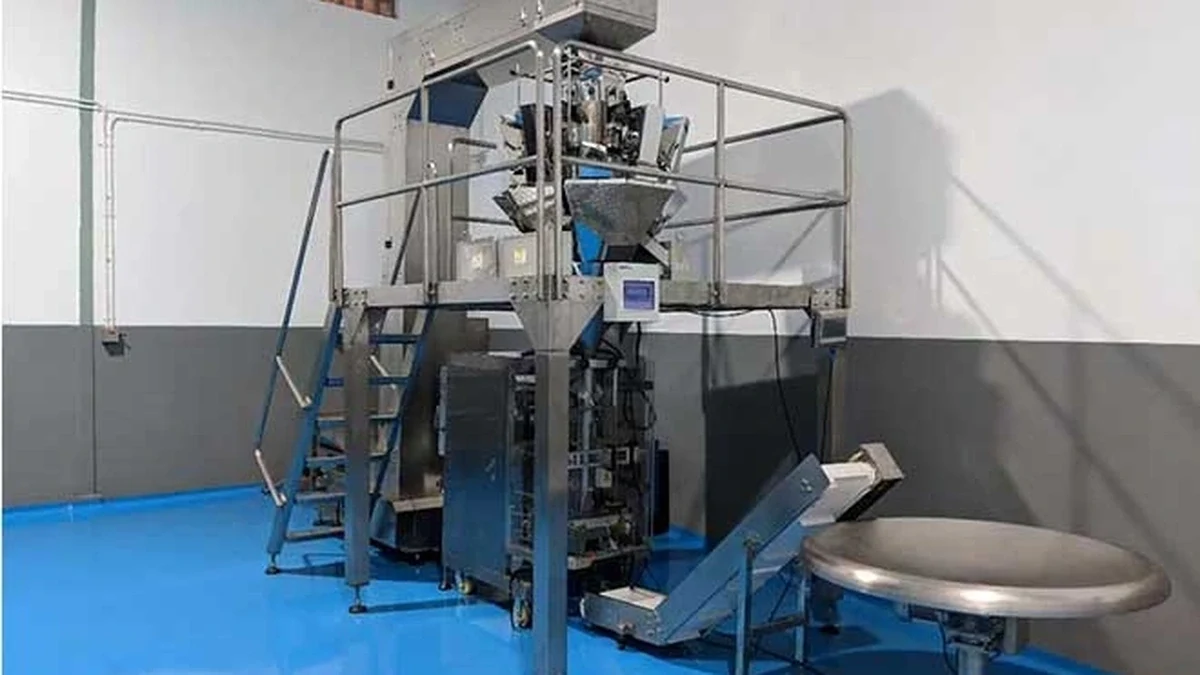
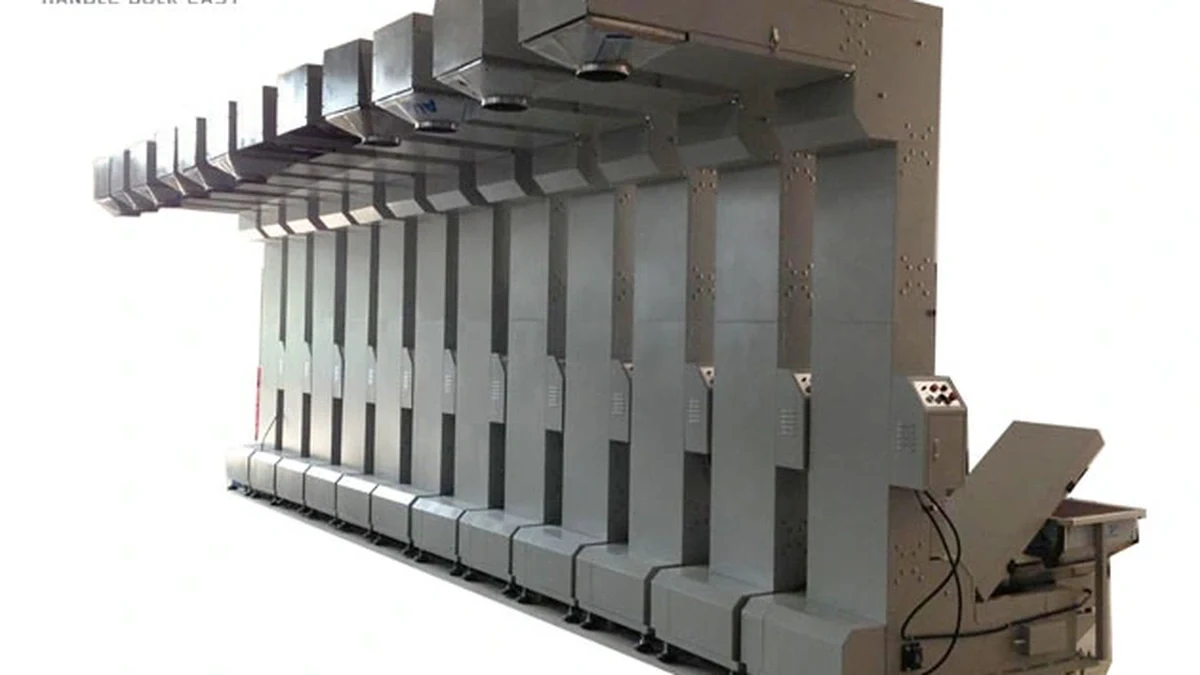
The retained layout illustration shows the relationship between feeding, lifting and discharge. Lettered lengths are drawing references, not verified installation dimensions. Mark the inlet and outlet locations on a site sketch, then ask for a project drawing before committing floor space or cutting connection openings.
| Selection input | Provide with the enquiry | Confirm in the offered design |
|---|---|---|
| Route and lift | Inlet and outlet coordinates, required lift, horizontal offsets and obstacles. | Overall dimensions, supports and connection positions on a drawing. |
| Required delivery | Normal and peak mass rate, operating schedule and representative bulk density. | Material basis, loading assumptions and the guaranteed duty only if agreed in the quotation. |
| Speed and feeding | Upstream feed pattern, interruptions and downstream demand. | Specified speed range, coordination of feed and the agreed restart basis. |
| Buckets and contact parts | Product properties, temperature and contact-documentation needs. | Bucket specification and the contact-component list for the supplied assembly. |
| Cleaning and maintenance | Changeover requirements, access restrictions and site cleaning method. | Access/removal space, cleaning instructions and responsibility for verification. |
Allow space for service as well as conveying
Measure the building envelope around the complete machine, including the upper section and discharge connection. Reserve the access required for inspection and component removal under the supplier’s instructions. A Z route can be worth evaluating for a constrained layout, but it does not automatically fit a low ceiling or eliminate every intermediate transfer.
Treat speed and capacity as a matched specification
Request a capacity basis for the material and configuration being offered. Ask whether a stated figure is a volume rate or a mass rate and which bulk density and operating conditions it assumes. Nominal bucket volume alone does not determine delivered output; bucket loading, conveying speed and material behavior also affect delivery. Retain the required receiving-process rate even when alternative models use different capacity units.
For an adjustable-speed proposal, ask which operating range is approved for the assembly and how loading and discharge will be checked within that range. Increasing speed is not a substitute for reviewing a restricted inlet, an overloaded receiving process or an unsuitable product. Final settings belong in the supplied control and commissioning documentation.
Cleaning, access and maintenance
Agree the cleaning objective before ordering: routine residue removal, a product changeover and a documented hygiene verification are different tasks. Ask which areas can be inspected, which components can be removed and how they will be reassembled. Define any areas that cannot be reached by the proposed method and resolve them during the configuration review.
If wet cleaning is required, state it explicitly. Confirm compatibility of the complete assembly with the method and chemicals, along with drainage and drying needs; do not infer washdown suitability from the appearance of the casing. Agree the carryover acceptance criterion and verification method for your product rather than assuming visually clean means acceptable.
Request the equipment-specific instructions for isolation, guarding, inspection, lubrication where applicable and replacement parts. Never use this page or a photograph of open equipment as permission to access a running machine. Include access constraints in the layout review so maintenance is not left to an improvised installation arrangement.
Compare alternatives against the same duty
Use the same material, inlet condition, receiving demand and quality criterion when comparing equipment. A bucket arrangement, a screw conveyor and a contained transfer system answer different layout and handling questions. None is a universal choice for every powder, granule or fragile product.
| Option to review | Procurement question |
|---|---|
| Z type bucket elevator | Can the proposed inlet, lift and upper run connect the process while meeting product-quality and access requirements? |
| Tubular cable drag conveyor | Would a contained route suit the product, connections and required cleaning method? Confirm its supply scope and request a handling trial where product response is uncertain. |
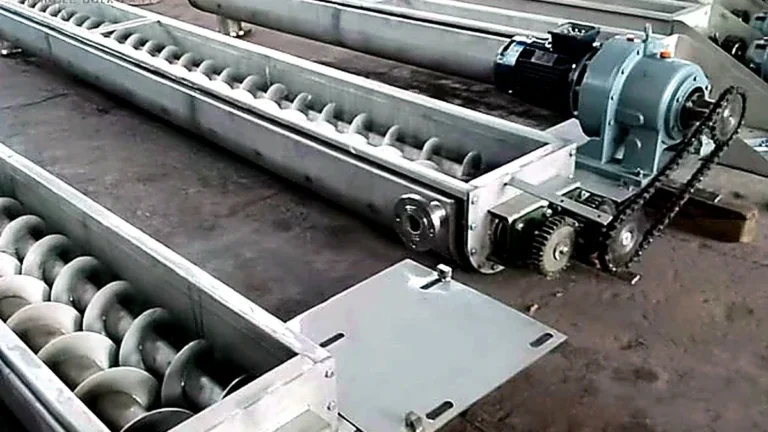
| U type screw conveyor | Would the proposed mechanical transfer and feed arrangement fit the route and product response? Confirm its own incline and delivery basis. |
| Vacuum conveying system | Would the pickup, receiving cycle and utilities suit the process demand? Compare the complete system rather than one receiver. |
Prepare the trial and quotation inputs
Send the following information so UNITFINE can review the proposed conveying duty. This is an initial enquiry checklist; agree any additional engineering data, documentation and acceptance criteria for the project before purchase.
- Material: description, representative samples, bulk density, particle condition, moisture, temperature and hazard information.
- Required delivery: normal and peak rate, hours of operation and permitted interruptions.
- Route and interfaces: site sketch, inlet and outlet positions, lift, horizontal runs and receiving equipment.
- Product limits: acceptable fines, breakage, segregation or carryover and how each will be assessed.
- Utilities: available power, control interfaces and site installation constraints.
- Cleaning and contact: cleaning method, changeover objective, contact documentation and service access.
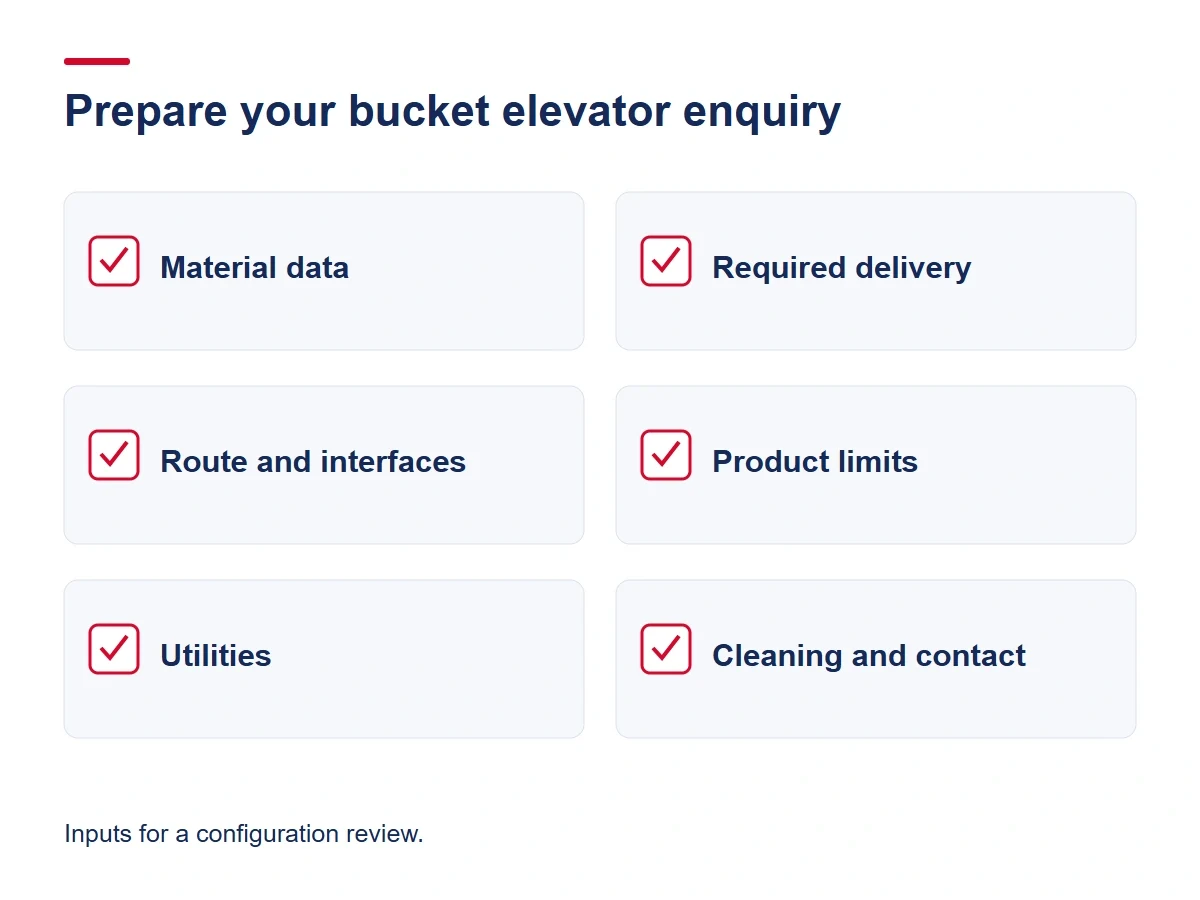
For a trial, record the sample condition, feed arrangement, proposed loading and discharge conditions. Agree how delivery and product quality will be measured, and identify which parts of the production route the test does not reproduce. Keep the approved drawing, specification and acceptance basis together with the final quotation.
Frequently asked questions
What is a Z type bucket elevator?
It is a bucket conveying arrangement that combines horizontal travel with a vertical lift. Select the inlet, upper run and discharge position against the receiving process. The Z-shaped route does not establish capacity, headroom or material suitability by itself.
Is it suitable for fragile food products?
It may be a candidate, subject to a representative handling trial with the intended product condition, feeding arrangement and delivery rate. Agree acceptable breakage, fines and appearance changes, then assess loading, travel and discharge together. A gentle-handling description is not a zero-damage guarantee for your product.
What speed should the elevator run at?
Ask UNITFINE to confirm the speed range for the offered assembly and material in the quotation and supplied operating documentation. Review feed rate, bucket loading, discharge behavior and restart conditions together. A variable-speed drive does not make every speed or delivery rate acceptable.
How much ceiling height is required?
Ask for a project drawing showing the full upper section, discharge chute, supports and service clearances. Compare that drawing with the building and receiving equipment. Required lift alone is not the total installation height.
Which bucket material should I request?
Specify the product, temperature, cleaning method and contact-documentation requirements. Ask UNITFINE to identify the bucket material and other contact components in the quotation. A bucket photograph or the term stainless steel does not establish a material grade or food-contact suitability.
Can one elevator feed several outlets?
Ask for a configuration-specific review of the proposed outlets and control sequence. Confirm how each receiving process will be supplied and how retained material will be managed. Multiple outlets are not assumed to be included in every Z type bucket elevator.
How should it be cleaned?
Use the supplied isolation, cleaning and reassembly instructions for the actual equipment. Agree access, removable components, drying needs and carryover acceptance before purchase. An open inspection photograph does not prove washdown suitability or validated cleaning.
Discuss your Z type bucket elevator project
Send your material data, required delivery and route sketch to UNITFINE for a configuration review. Include product-damage and cleaning requirements so the proposal can address your acceptance criteria. Browse the conveying equipment range if you are comparing routes or transfer methods.