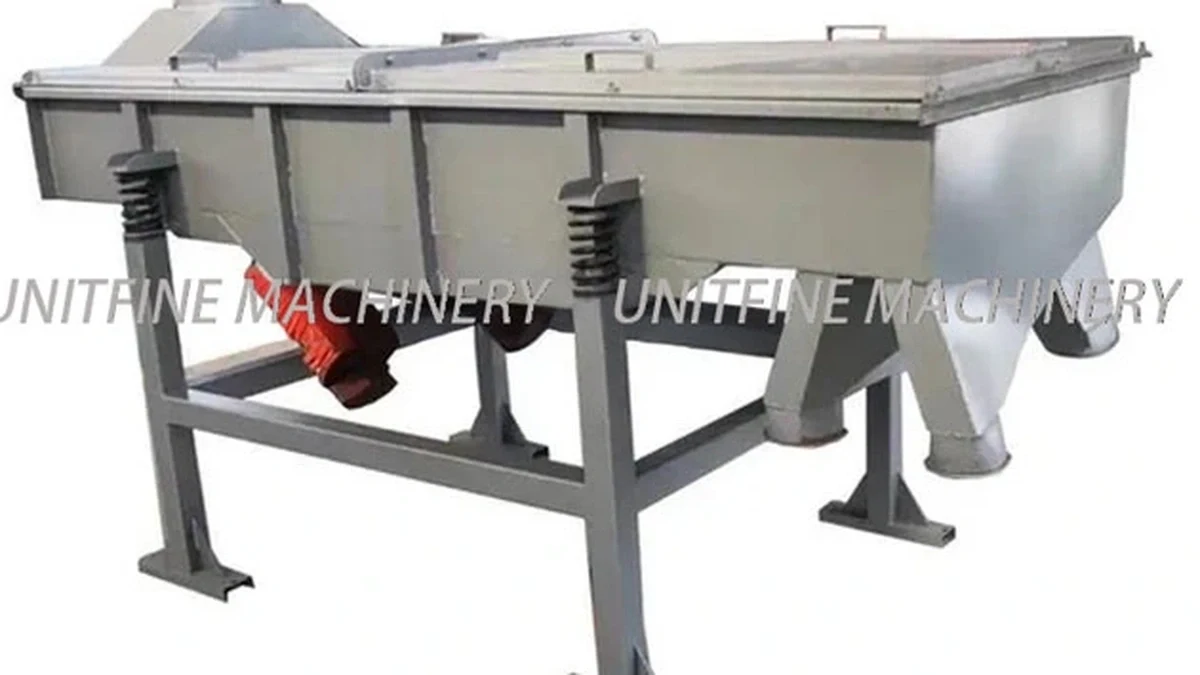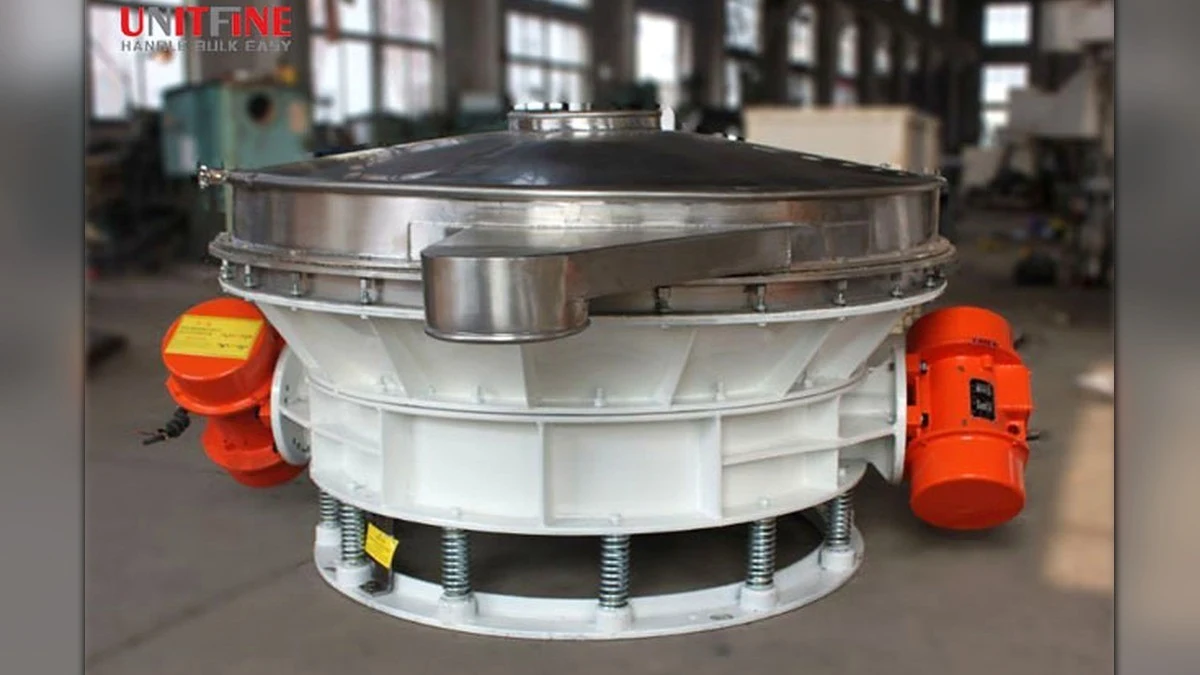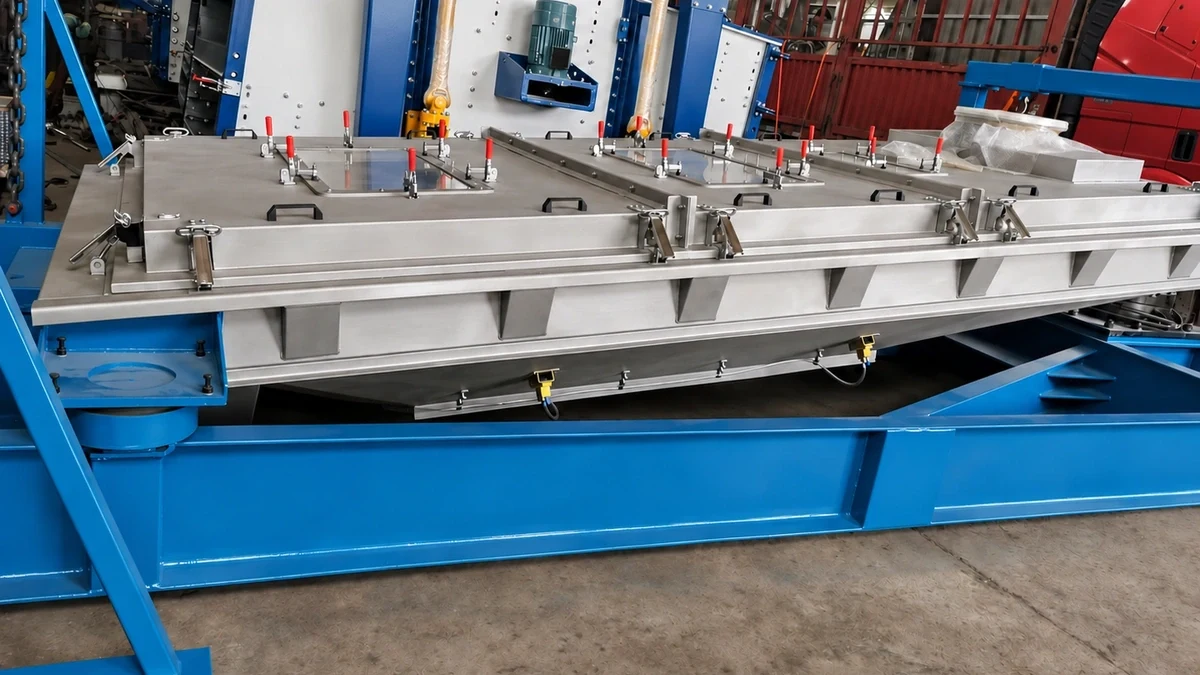
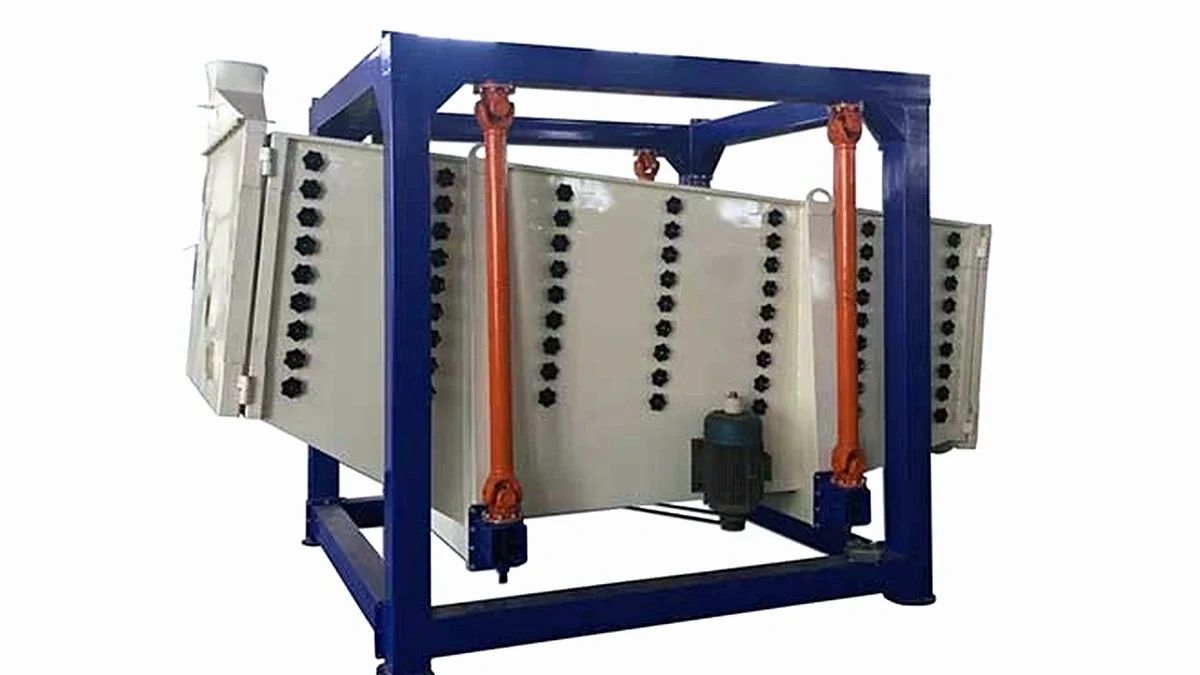
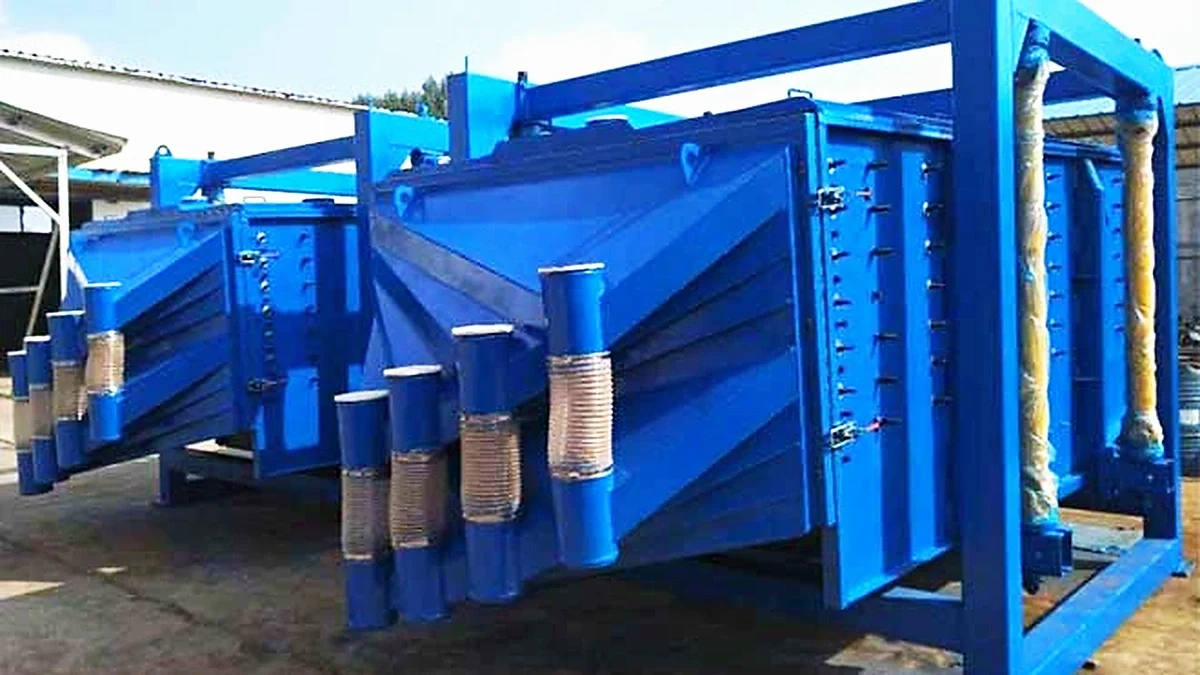
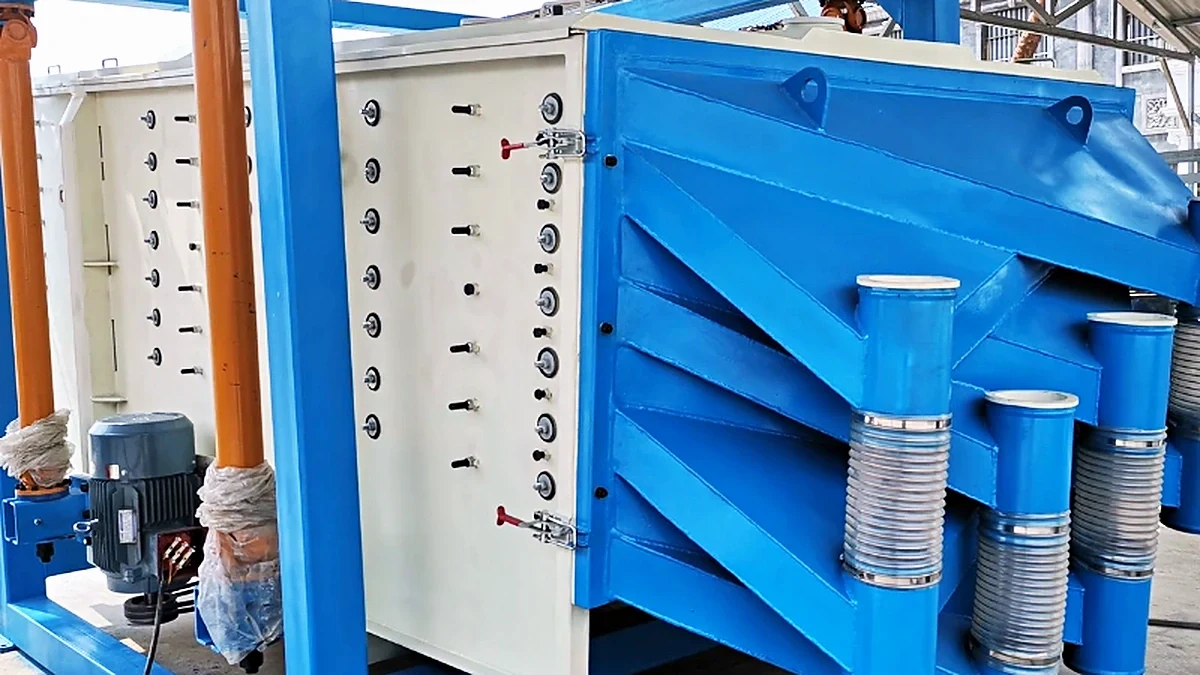
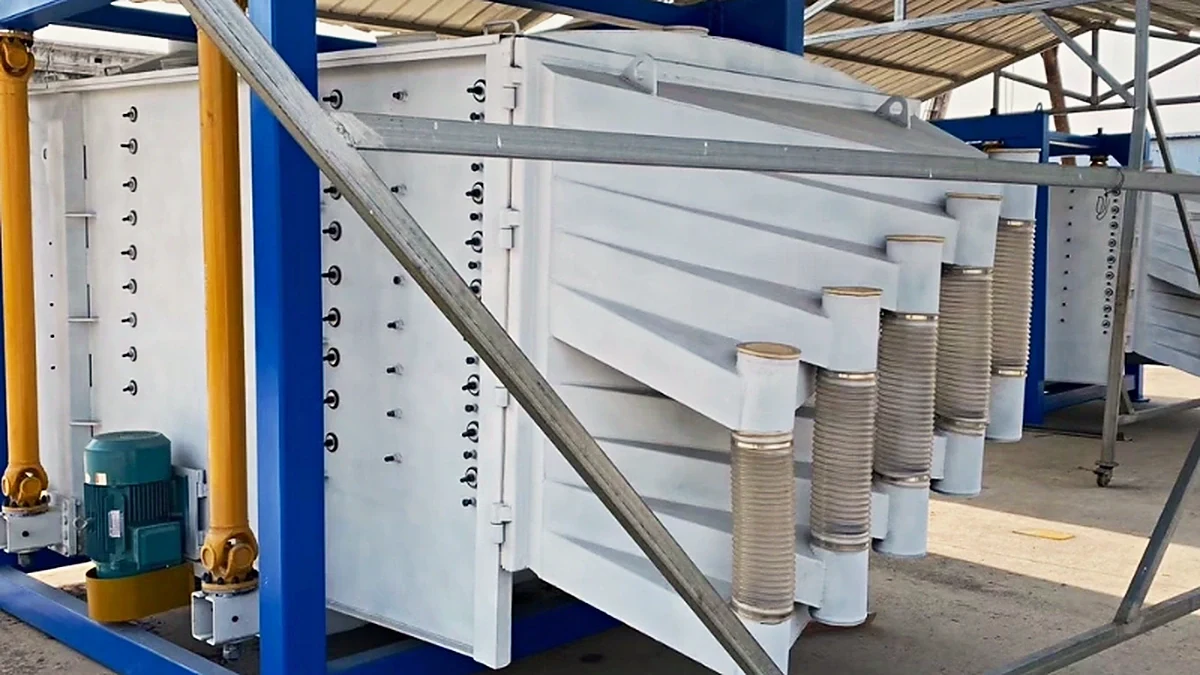
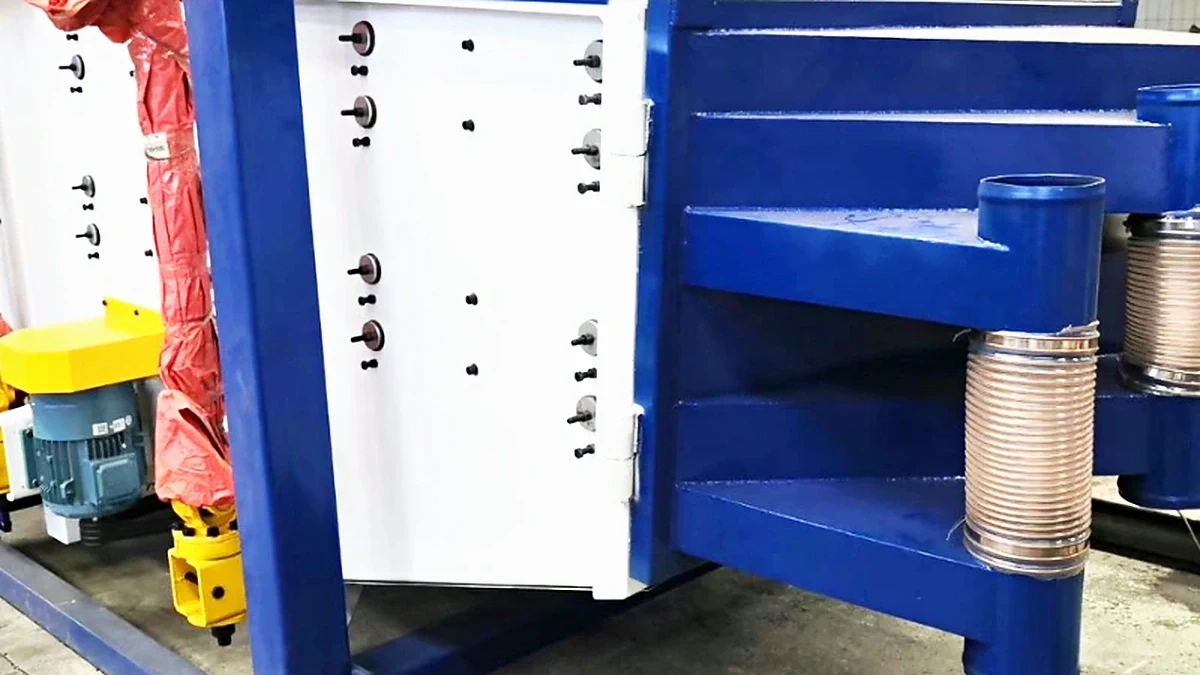
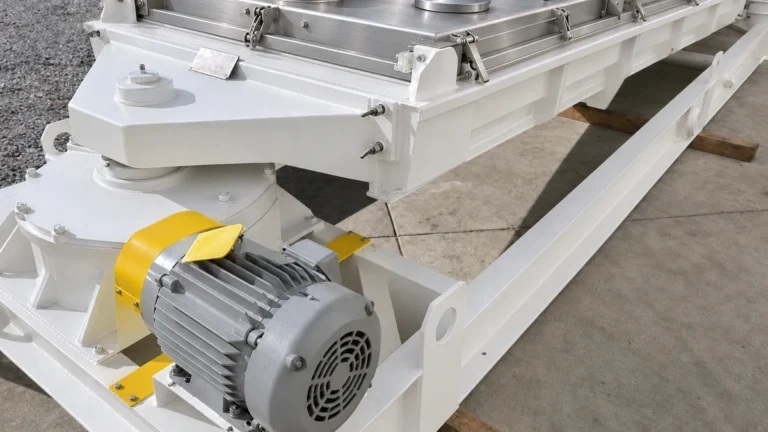
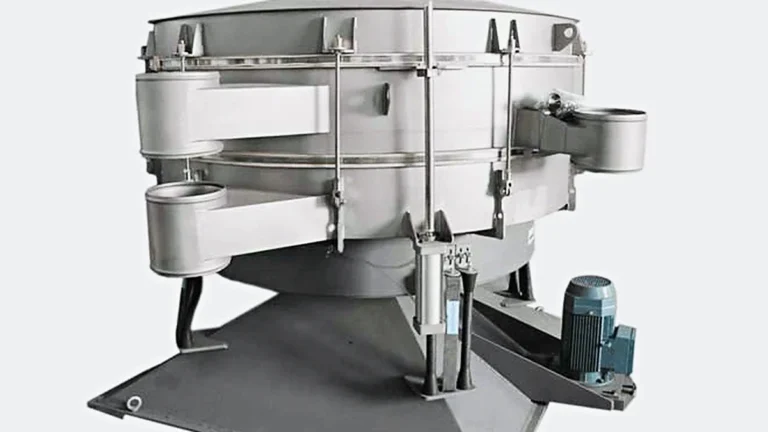
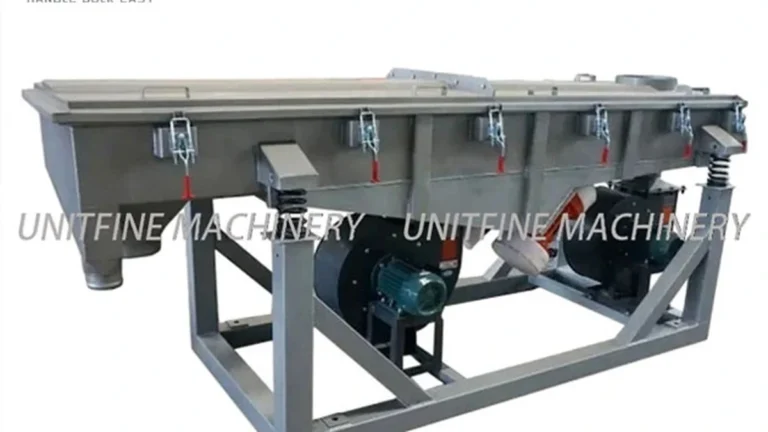
The UNITFINE UTEX is a rectangular tumbler screening machine for separating sand and other dry bulk solids into size fractions. Start selection with the material you want to collect at each outlet. The target cuts, feed characteristics and collection layout determine which deck arrangement to evaluate.
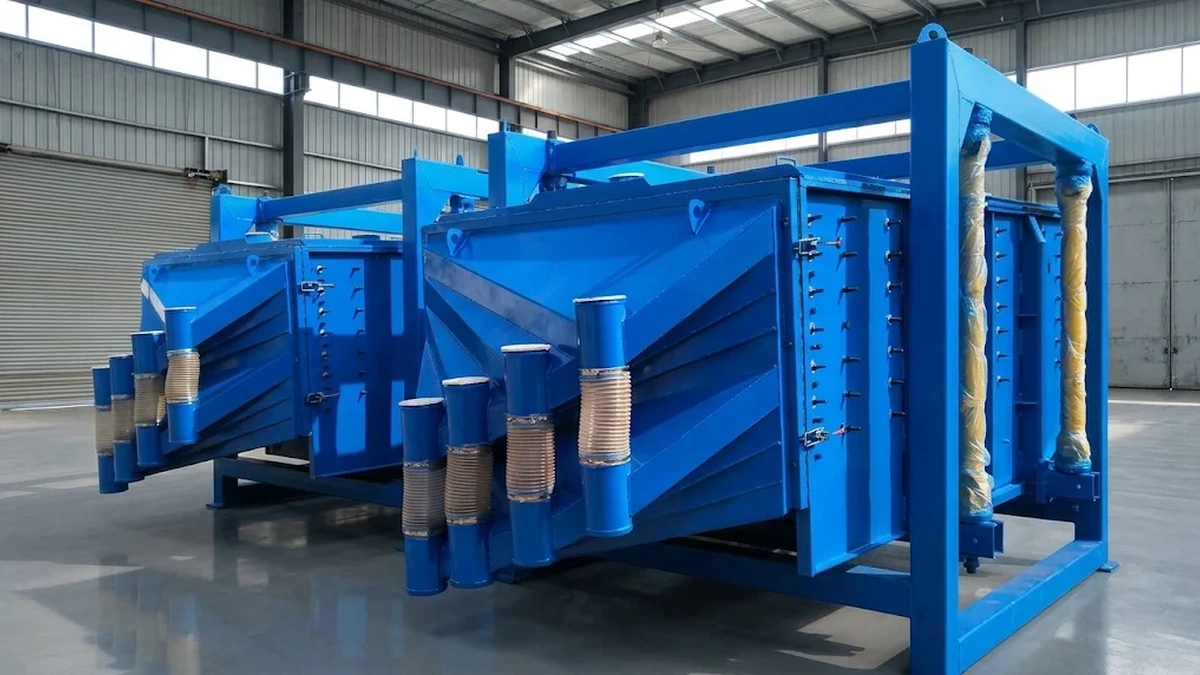
Specify the cuts and the outlet for each grade
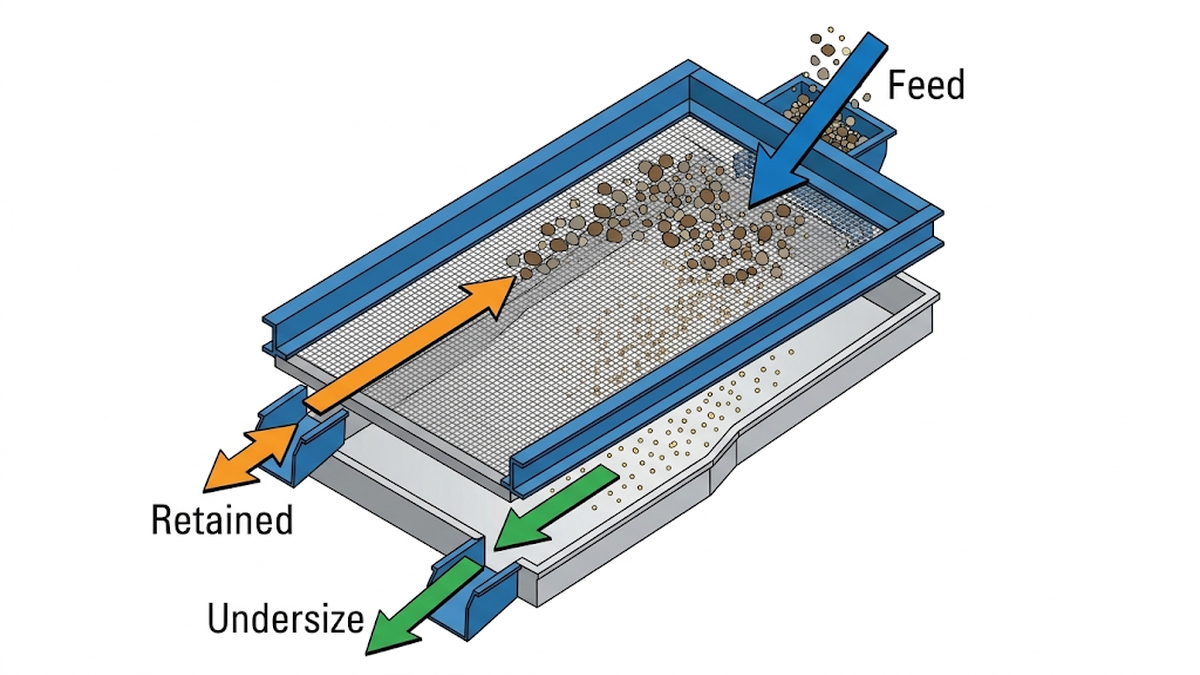
On a screen deck, particles small enough to pass through the mesh fall to the next deck or the fines outlet. Retained particles travel to a separate discharge. For a saleable middle grade, give both size limits and identify the destination of the coarse and fine rejects. A deck count alone leaves those outlet requirements open.
Check how the UTEX will fit your line
Screen access and installation
The UTEX has a suspended rectangular screen box with replaceable mesh frames. A deck dimension helps you compare models. For installation, request the overall machine drawing, support loads and space needed to withdraw a frame. Check those dimensions against the walls, chutes and platforms around your proposed location. If the line handles more than one grade, ask for the cleanout access points and the clearance needed to reach them with the feed and discharge chutes installed.
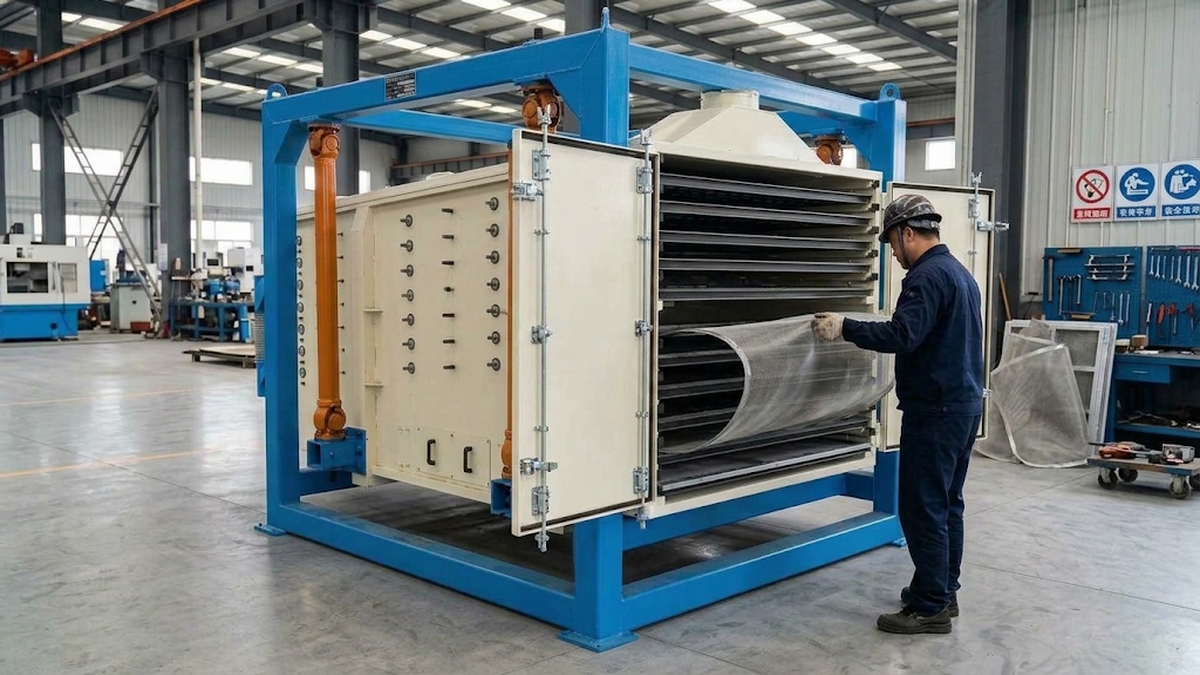
For each shortlisted UTEX configuration, ask UNITFINE to list the usable screen dimensions, nominal mesh openings, stroke and installed motor power on the quotation. Request a dimensioned drawing showing the inlet, each discharge and the clearance required for screen changes. If your process calls for round decks for fine powder, compare the UFT Tumbler Fine Sieve using the same feed sample and target cuts.
Inputs for a UTEX selection request
| Selection item | What to send | How it is used |
|---|---|---|
| Product to collect | Cut sizes in mm or µm, acceptable fines and oversize | Defines the mesh openings and which outlets need separate collection. |
| Incoming material | Feed size distribution, moisture range and bulk density | Shows how much material reaches each deck and whether a sample trial is needed. |
| Feed to the screener | Typical and peak feed rates with units | Gives the trial team two operating conditions to check. |
| Space around the screen | Inlet height, outlet destinations and access for frame removal | Checks whether each stream can reach its receiver and the mesh can be changed. |
What to specify for a screening trial
For a sand grading trial, take a sample that represents the feed as it reaches the screener. Include the normal moisture range and the fraction close to each target opening. If the feed varies between batches, identify which sample represents each condition.
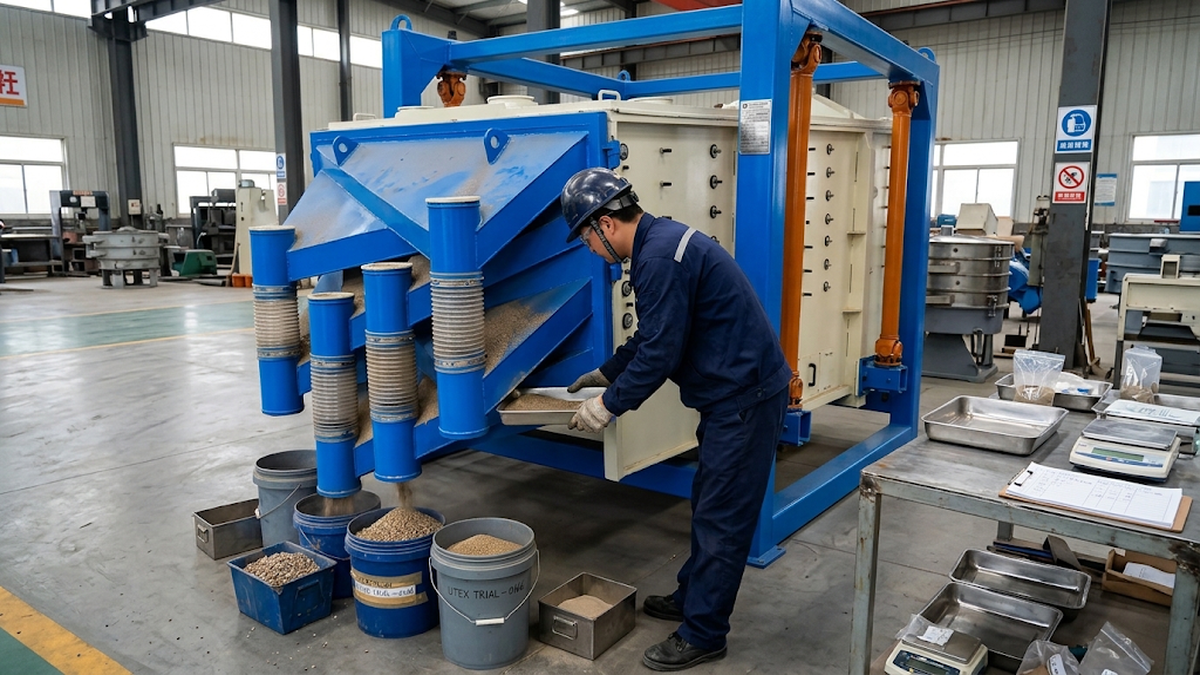
Collect the outlet streams separately over the same interval and record the feed rate. Weigh each stream, sieve a sample from each and compare its size distribution with the limits for that grade. This gives the buyer a basis for comparing deck arrangements at the required rate.
Before the trial, agree how each outlet will be judged. For a saleable fraction, record the maximum fines and oversize allowed by the buyer and the minimum share of feed that must report to that outlet. Label each collected sample with its outlet, collection interval and feed condition. Compare the total collected mass with the feed mass during that interval and investigate any material left in the system or lost during collection before drawing conclusions.
Repeat the comparison at normal and peak feed rates when both are part of the planned duty. Record any significant moisture changes or visible buildup on the mesh. If a fraction meets its specification at the normal rate only, record the acceptable trial conditions and discuss a different screen configuration or controlled feed before selecting a model.
Frequently asked questions
How many product grades should I specify?
List the size range of every stream you need to collect, including any reject stream. For example, two successive cuts can produce oversize, an intermediate grade and fines when the deck outlets are routed separately.
How should I report a mesh size?
Send the opening in millimetres or micrometres. If your specification uses a mesh number, include the sieve standard so the intended opening can be identified.
Can screen dimensions establish throughput for my sand?
Deck dimensions alone cannot establish a material-specific rate. Supply the size distribution, moisture range, normal feed rate and peak feed rate. Use a representative sample to check the rate at which each fraction meets its specification.
Request a UTEX screening review
Request a quote for the UTEX screener with your feed data, target grades and installation sketch. Identify the streams you intend to sell, recycle or discard so the quotation can show how each outlet connects to your line.