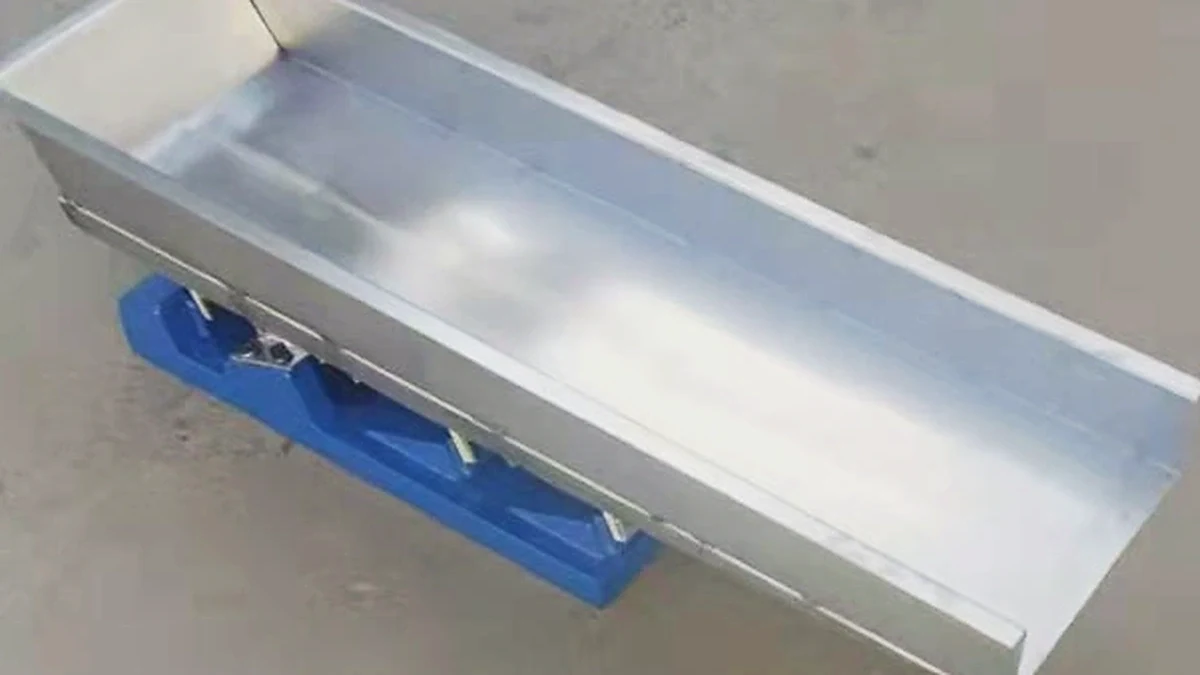
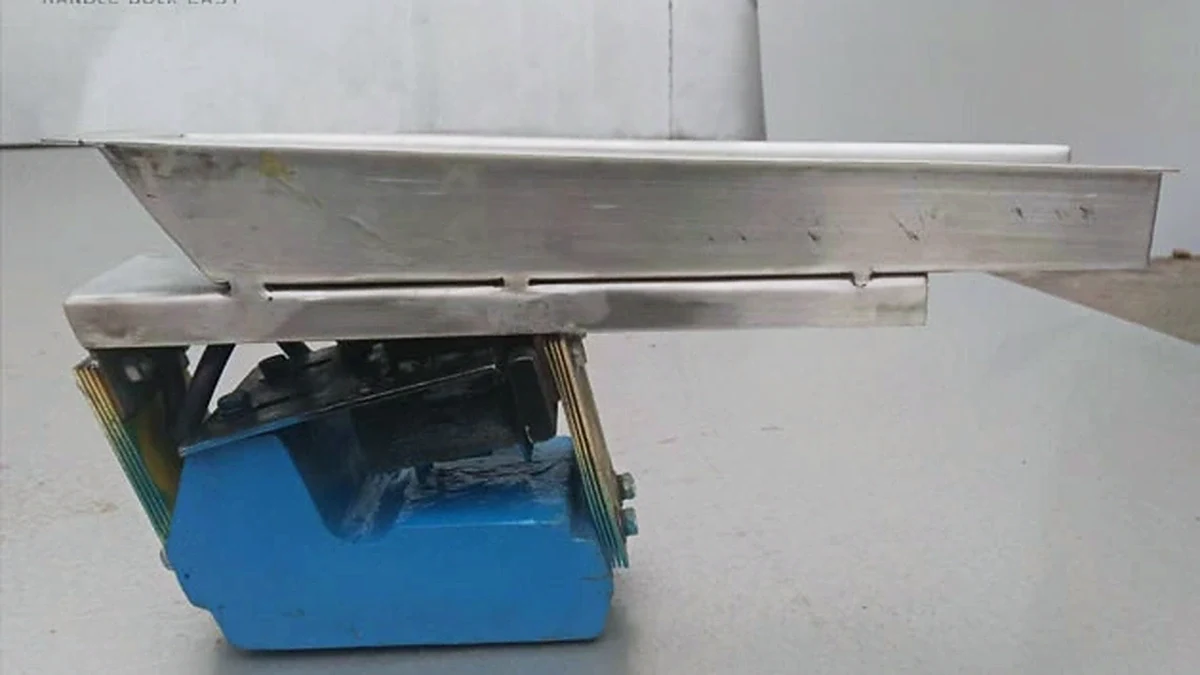
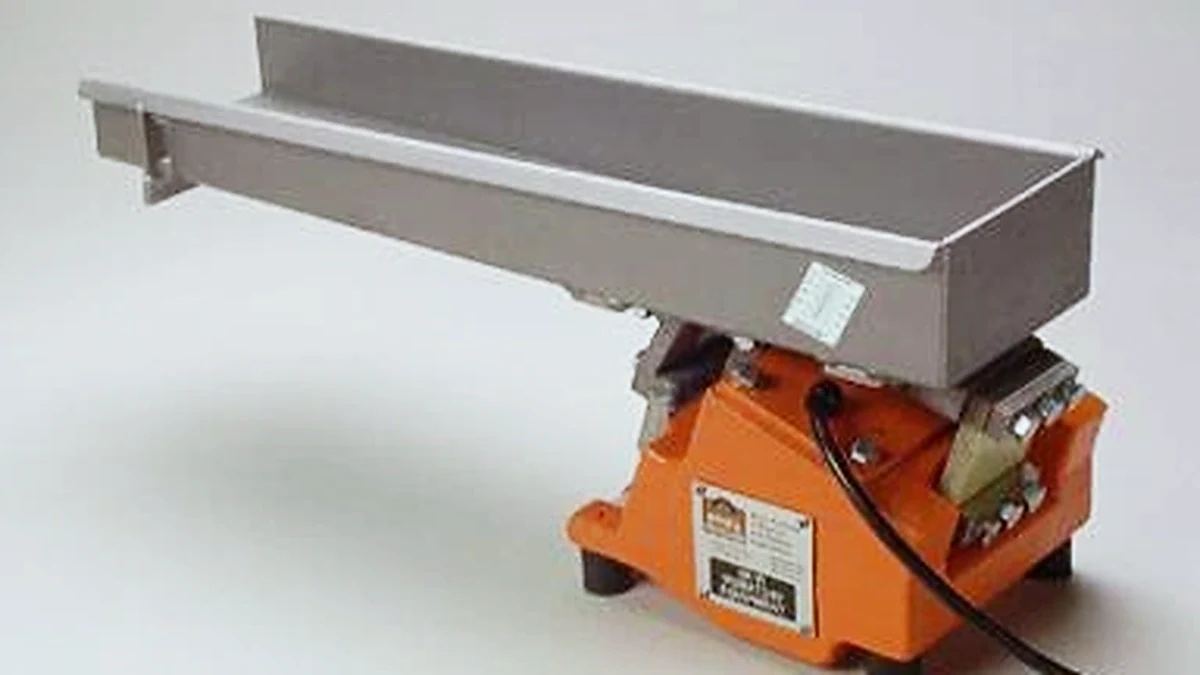
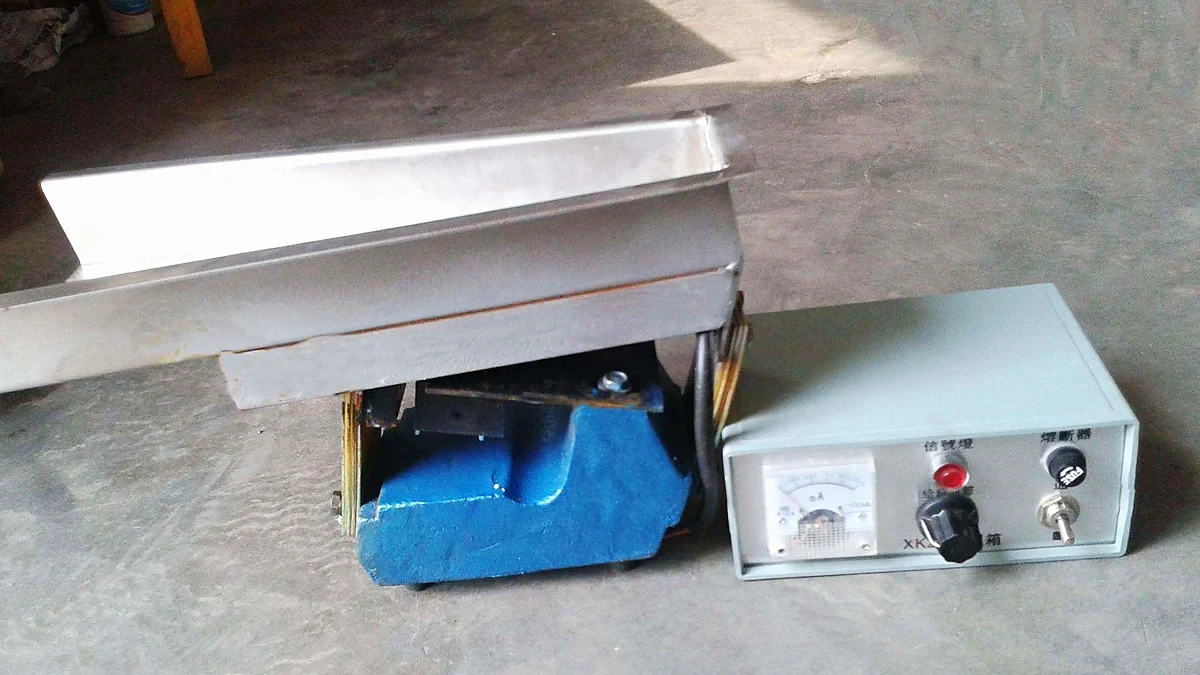
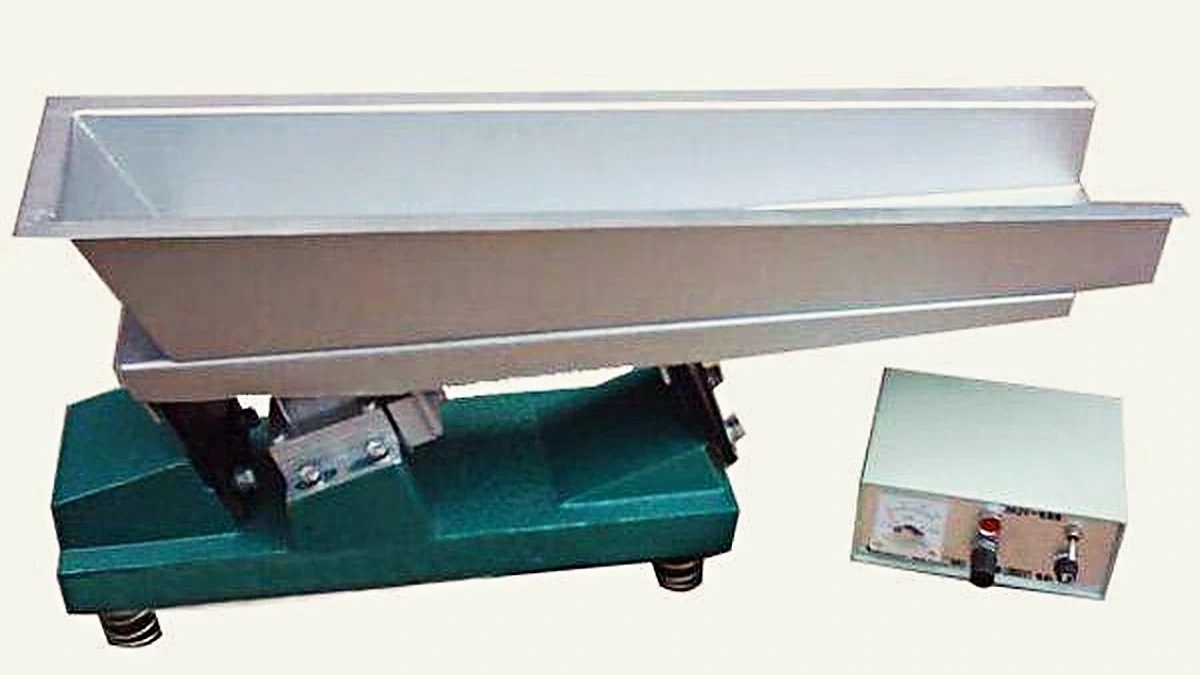
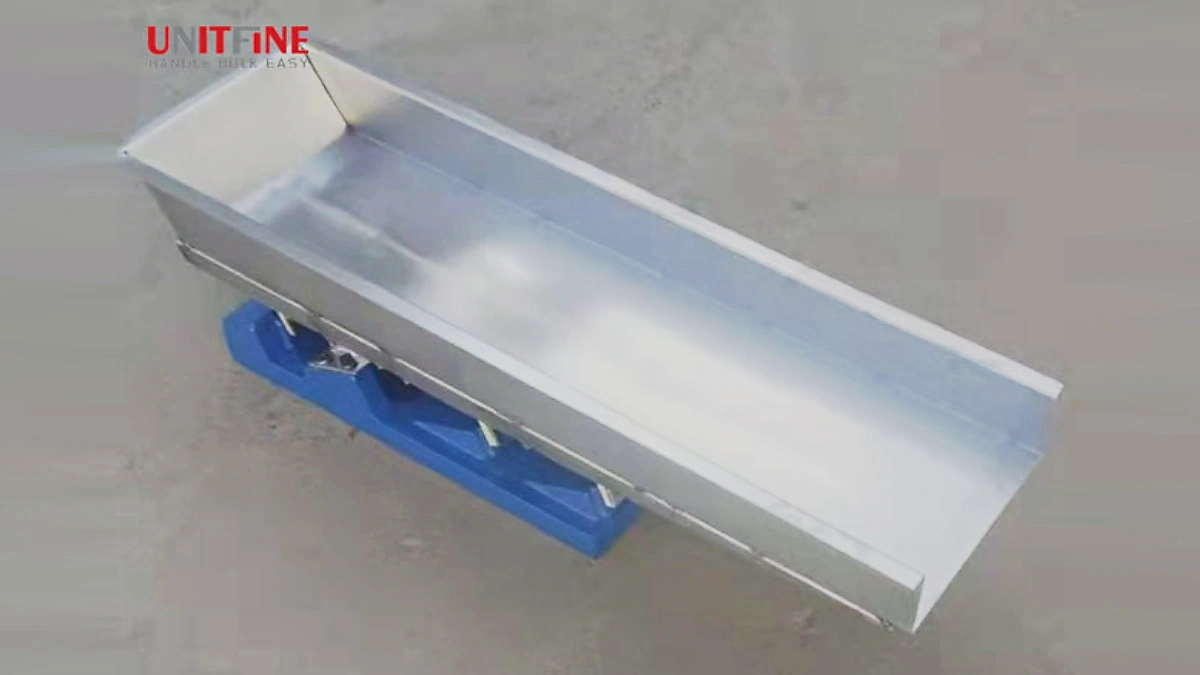
The UNITFINE GZV electromagnetic vibratory feeder moves powder and granules along a vibrating pan at an adjustable rate. Install it where a hopper must feed a sieve, blender or packer. Choose the drive and pan for the actual material, hopper outlet and feed pattern required by the next machine.
How the GZV electromagnetic vibratory feeder works
Material enters the feed trough from the upstream outlet. An electromagnetic drive vibrates the trough to move material toward the discharge. The controller adjusts the feeding action. Flow also depends on how the material enters and spreads across the pan. For example, a fluctuating hopper discharge can make the output vary even when the controller setting stays constant.
If your requirement is a measured mass per batch or per minute, specify how weight is measured and whether the control system must adjust the feed from that measurement. Set a target and acceptance tolerance for the complete installation. Feed adjustment by itself does not establish a weighing tolerance.
GZV model selection
The figures below are published specifications for initial model selection. The source table does not give the test material or feed conditions behind its capacity figures. Confirm achievable capacity, maximum particle size, electrical supply and the controller arrangement for the quoted unit before ordering.
| Model | Listed capacity (t/h) | Listed particle size (mm) | Overall W × L × H (mm) | Listed controller |
|---|---|---|---|---|
| GZV1 | 0.1 | 13 | 80 × 273 × 152 | XKZ-5G2 |
| GZV2 | 0.5 | 20 | 80 × 347 × 168 | XKZ-20G2 |
| GZV3 | 1 | 25 | 110 × 480 × 217 | XKZ-20G3 |
| GZV4 | 2 | 30 | 130 × 568 × 256 | XKZ-100G3 |
| GZV5 | 4 | 40 | 150 × 630 × 295 | XKZ-2003 |
Check the hopper, material and receiving equipment
Hopper outlet and pan loading
Provide the outlet dimensions, available headroom and intended mounting points. Show where material lands on the pan and where it must discharge. If the hopper bridges, leaks material around the pan or dumps unevenly during refill, note the condition so the interface can be reviewed alongside the feeder. Include the proposed access route for cleaning and removal.
Material flow and test conditions
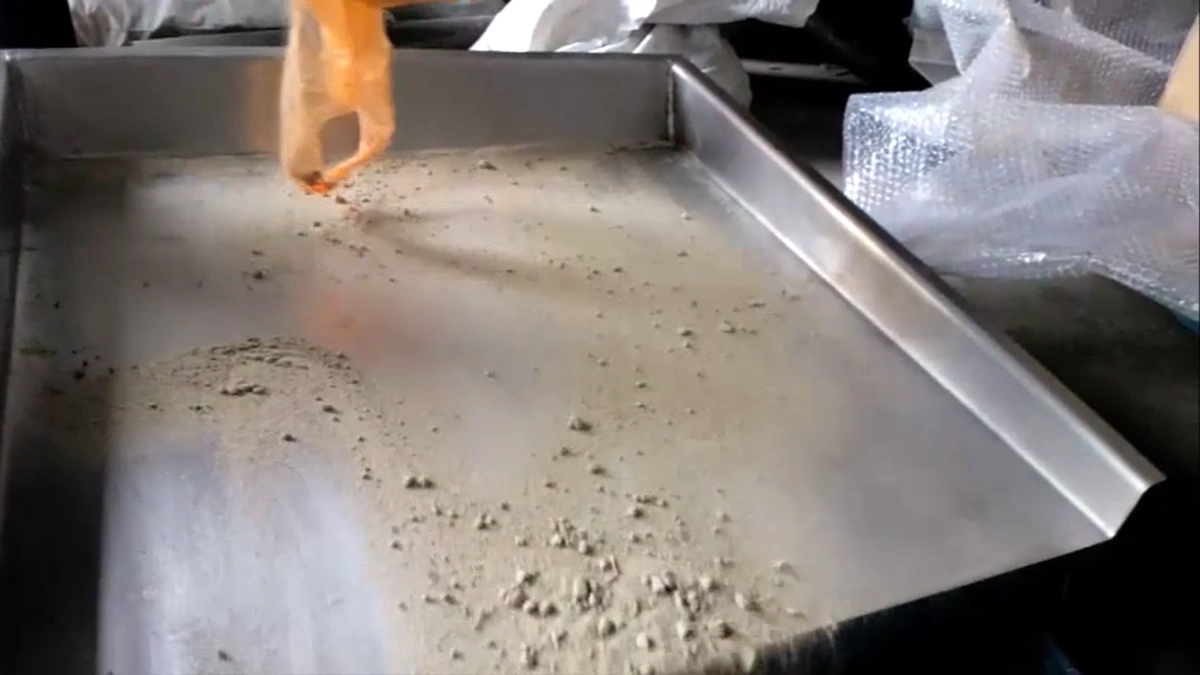
State the particle-size range and bulk density in the condition in which the material will be fed. Record moisture, lumps, cohesion, abrasiveness or a tendency to create dust where relevant. If the material changes between batches or after storage, provide samples representing that variation. A trial should record feed-rate changes at startup and refill as well as during steady operation.
What to measure in a sample trial
Start with the material as it will come out of the hopper. Agree on a collection interval and weigh the discharge over several runs at the minimum and maximum settings needed by the receiving machine. Record the hopper fill level, controller setting and material condition for each run. If startup and refill affect the process, record those separately from steady operation so the average does not hide short bursts or gaps.
Downstream feed demand
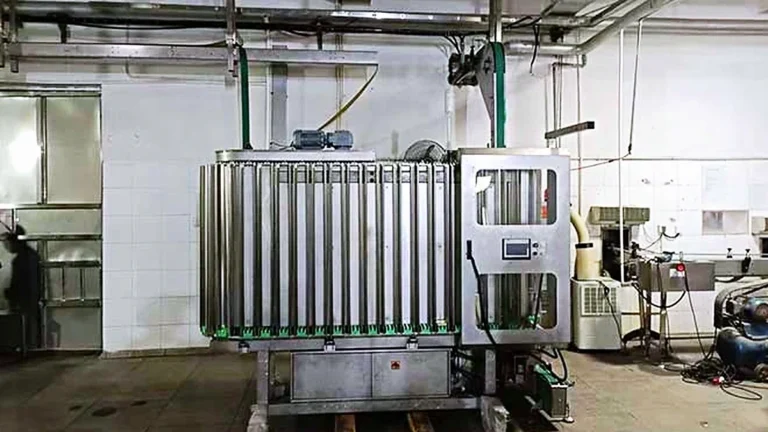
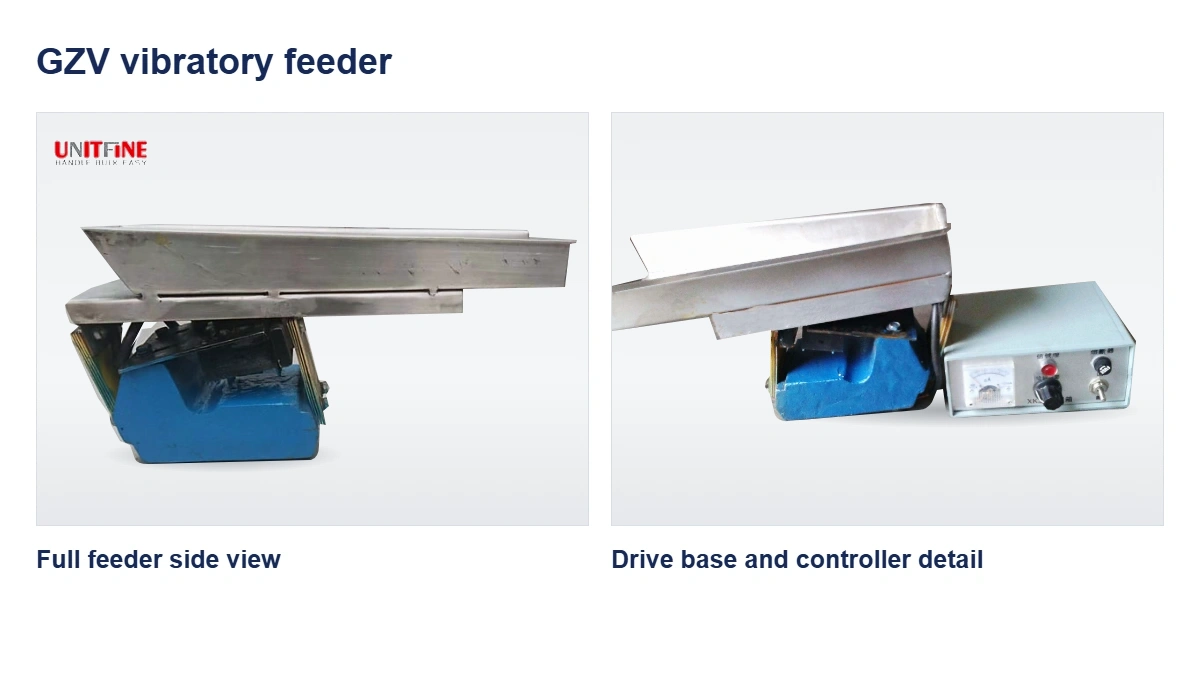
Ask the receiving equipment supplier for the smallest and largest feed rates it can accept and how it handles intermittent feed. For a rotary vibrating sieve, check how the discharge lands on the screen inlet. For a Z-type bucket elevator, check the drop point and the elevator intake. A feeder controls inlet flow; each downstream machine still needs to be sized for its own duty.
Operating and cleaning access
Show where the operator can reach the controller and where the pan and discharge can be inspected. If the line runs different materials, identify what must be cleaned at changeover and how the feeder is isolated and accessed under your site procedures. Share any required contact surfaces, finishes or dust controls with the quotation team so the proposed arrangement can be checked against the process.
What to include in an enquiry
- Material name, bulk density, particle-size range, moisture and representative sample.
- Target minimum and maximum feed rates, continuous or intermittent duty and any weighing tolerance.
- Hopper outlet sketch, discharge height and receiving-machine dimensions.
- Supply voltage and frequency, desired controls and space for inspection and cleaning.
Request a quote for your GZV feeder. Include your material details, required feed-rate range and layout drawing so the team can review the model, interfaces and sample-test requirements.
GZV feeder FAQ
What does a GZV electromagnetic vibratory feeder do?
It transfers powder or granular material along a vibrating pan and supplies a downstream process at an adjustable rate. A downstream sieve, weighing system or packer performs its own separate function.
Can a GZV feeder dose by weight?
Adjusting the feeder changes material flow. For a verified weight or dosing tolerance, define the weighing method, feedback controls and acceptance criteria, then test the actual material.
How should I read the capacity table?
Use the published values to shortlist models. The product page does not state the material or test conditions behind those figures. Confirm the achievable rate with your bulk density, material condition and hopper arrangement.
Can the feeder sit between a hopper and a vibrating sieve?
It can be considered for that arrangement. Review the outlet geometry, mounting space, discharge alignment and the feed range the sieve can handle.
What should I send with a GZV enquiry?
Send a material sample or datasheet, bulk density, particle-size range, moisture condition, target feed rates and drawings of the hopper and receiving equipment. Include power supply, cleaning and control requirements.